
How do you know if you have a fear of heights?
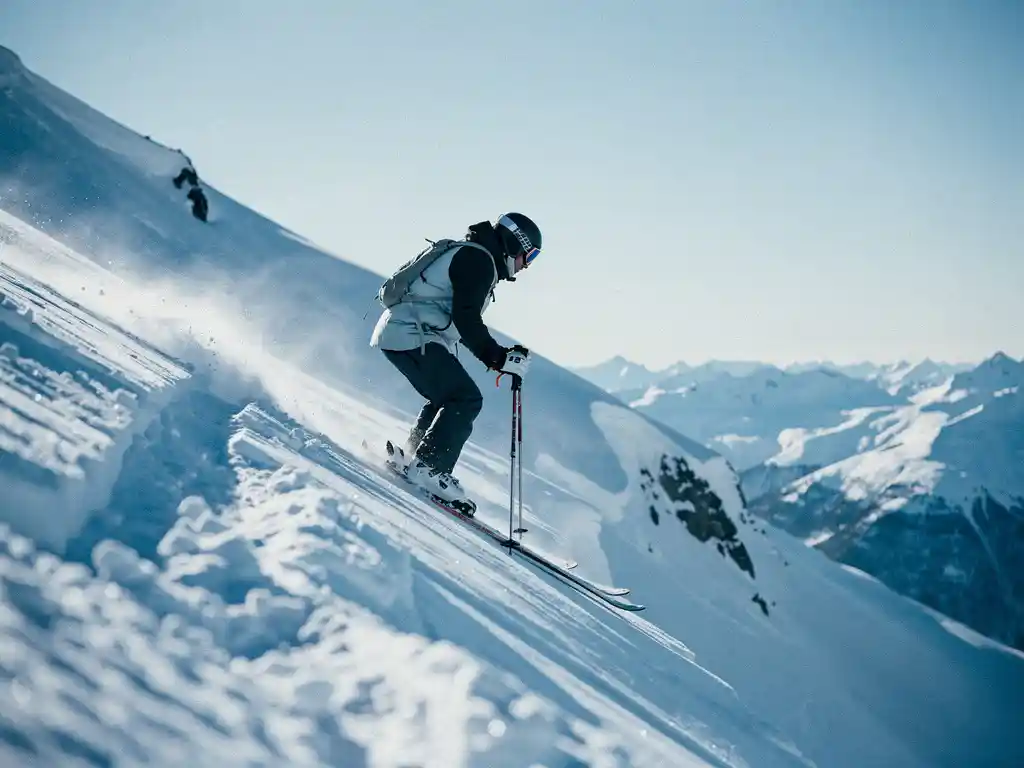
You have a fear of heights when being at elevation causes anxiety, panic, or physical symptoms that interfere with your daily functioning. Think of a racing heart, sweating, dizziness, or an overwhelming urge to flee. This goes beyond normal caution: a fear of heights is a specific phobia that can seriously get in the way on the ski slopes.
Whether you’re heading to the Alps for the first time or have already been on skis a few times, a fear of heights while skiing is a real phenomenon that affects more people than you might think. In this article, we answer the most frequently asked questions about a fear of heights, so you can head to the mountain fully prepared.
What are the most common symptoms of a fear of heights?
The most common symptoms of a fear of heights are a racing heart, sweating, trembling, dizziness, nausea, and a sense of panic as soon as you find yourself at elevation or look down. Some people also experience chest tightness, a dry mouth, or the feeling of losing control. These symptoms can occur at the mere thought of heights, even before you set foot on the mountain.
A fear of heights while skiing can manifest in several ways. On the slopes, you’ll notice it in situations such as:
- Chairlift or gondola: Many people with a fear of heights already feel anxious on a ski lift, especially when the ground is far below and the lift comes to a brief stop.
- Steep slope: Standing at the top of a steep run and looking down can trigger a wave of panic.
- Narrow mountain paths: Paths with a sheer drop on one side activate the flight response in many people.
- Freezing up: Some skiers with a fear of heights literally “freeze” on the slope and find themselves unable to move.
What makes a fear of heights particularly challenging while skiing is that the symptoms completely take over your concentration. Instead of enjoying the powder snow and the views, your brain is in full alarm mode. Does this sound familiar? Then there’s a good chance you’re genuinely dealing with a fear of heights.
What is the difference between a fear of heights and dizziness?
The difference between a fear of heights and dizziness is that a fear of heights is a psychological anxiety response, while dizziness is a physical balance problem. With a fear of heights, anxiety is the primary trigger — the dizziness you feel is a consequence of that anxiety. With ordinary dizziness, there is a physical cause, such as an inner ear problem or low blood pressure, with no anxiety involved.
In practice, these two conditions often overlap, which can be confusing. A few useful distinctions:
- Fear of heights: Occurs specifically when perceiving elevation or depth. The dizziness disappears as soon as you are no longer at height or are no longer looking down.
- Dizziness (vestibular cause): Can occur at any time, even on flat ground. It is not triggered by height and is accompanied by a spinning sensation regardless of the environment.
When skiing, the distinction matters because the approach differs. Dizziness caused by a medical condition calls for a visit to your doctor. A fear of heights is a phobia that can be addressed with the right techniques and guidance — including before your ski vacation.
How do you know whether you have a fear of heights or are simply being cautious?
You know you have a fear of heights when your anxiety at elevation is disproportionate to the actual danger and it interferes with your ability to function. Ordinary caution is rational and proportionate: you adjust your speed on a steep slope. A fear of heights is irrational and overwhelming: you panic in a gondola that is perfectly safe and used by hundreds of people every day.
A few questions you can ask yourself to tell the difference:
- Do you actively avoid certain situations? If you deliberately avoid certain lifts or slopes out of fear, even when others use them safely, that points to a fear of heights.
- Is the anxiety already present beforehand? A fear of heights often begins when you think about the situation, not just when you’re actually there.
- Do you lose control of your reaction? Caution is manageable. A fear of heights feels like a wave washing over you that you can’t stop.
- Does the anxiety linger after the situation? If you’re still thinking about the experience hours later and feel upset by it, there’s more going on than ordinary caution.
The good news: caution is a healthy trait, especially on the ski slopes. But if your fear is stopping you from enjoying your ski vacation, it’s worth doing something about it.
What causes a fear of heights?
A fear of heights develops through a combination of biological predisposition, previous negative experiences, and learned behavior. The brain associates height with danger, automatically triggering a fight-or-flight or freeze response. This is an ancient survival mechanism, but with a fear of heights the system overreacts and responds even to situations that are objectively safe.
The most common causes are:
- Innate sensitivity: Some people naturally have a more active anxiety response, making them more prone to developing phobias.
- Negative experience: A fall on the slopes, a frightening gondola ride, or another traumatic experience at elevation can trigger a fear of heights.
- Indirect learning: If you witnessed a parent or friend react strongly to heights as a child, you may have unconsciously adopted that fear.
- Gradual onset: A fear of heights can also develop slowly over time. Someone who skied for years without any issues may find that anxiety creeps in gradually, without any clear trigger.
When skiing, the combination of factors also plays a role: speed, cold temperatures, unfamiliar terrain, and a sense of losing control can together lower the anxiety threshold. This makes a fear of heights while skiing a specific challenge that calls for a targeted approach.
Can you overcome a fear of heights before your ski vacation?
Yes, in most cases a fear of heights can be overcome or significantly reduced — even in the short term before a ski vacation. The most effective approach combines gradual exposure to heights with relaxation techniques and, where needed, professional guidance. Many skiers notice a difference after just a few targeted exercises or lessons with an experienced instructor.
Practical steps you can take:
- Start small: Practice being at height in a safe environment, such as a climbing gym or a low hill. Build up exposure gradually.
- Learn breathing techniques: Controlled breathing calms the nervous system and helps you break through a wave of panic.
- Choose private lessons: A personal ski instructor can work at your pace, accommodate your anxiety, and guide you step by step on the slopes. This is very different from a group lesson where you have to keep up with others.
- Talk about it: Tell your instructor or travel companions about your fear of heights. Openness helps and prevents you from feeling ashamed or avoiding situations.
- Consider professional help: For severe fear of heights, a psychologist or therapist using cognitive behavioral therapy (CBT) or EMDR can achieve excellent results.
How Ski-Pro helps with a fear of heights on the slopes
If you have a fear of heights but still want to enjoy your ski vacation, the right guidance on the slopes is invaluable. We understand that better than anyone. At Ski-Pro, we connect you with more than 250 certified ski schools and instructors in the Alps, so you can find the support that truly suits you.
Here’s how we help:
- Easily compare private lessons: Private lessons are ideal for those with a fear of heights, as an instructor is fully focused on you and adjusts the pace to your comfort level.
- Filter by level and location: Whether you want to start on a quiet slope in Winterberg or explore the Tyrolean Alps, we show you the best options.
- Transparent pricing and reviews: No surprises — just honest reviews from fellow skiers so you know what to expect.
- Easy booking: Handle everything online, quickly and without hassle, so you can focus your mind on the mountain.
Don’t let a fear of heights get in the way of your ski vacation. Compare and book your ski lesson with Ski-Pro and head to the mountain fully prepared. The powder snow is waiting for you!
Frequently Asked Questions
Does a private ski lesson really help with a fear of heights, or should I see a therapist first?
A private ski lesson is an excellent first step if your fear of heights is mild to moderate. An experienced instructor can fully adapt the pace to your comfort level and guide you step by step on the slopes, which can already make a big difference. For severe fear of heights — where you already panic at the thought of the mountain — it is wise to consult a psychologist first for cognitive behavioral therapy (CBT) or EMDR, and then take the step onto the slopes.
What should I do if I suddenly freeze on the slopes due to a fear of heights?
Stand still, breathe slowly and deeply in through your nose and slowly out through your mouth — this immediately calms your nervous system. Don’t look down; instead, focus on a fixed point straight ahead on the slope. Tell your instructor or travel companion what’s happening so they can guide you to a calmer spot. Don’t try to force it: taking a short break is not a failure, but a smart strategy for regaining control.
Are there certain ski resorts or slope types that are better suited to skiers with a fear of heights?
Yes, definitely. Ski resorts with wide, well-maintained blue and red runs and few steep drop-offs are ideal for getting started comfortably. Resorts such as Winterberg, Serfaus-Fiss-Ladis, and Schladming are known for their accessible slopes and relaxed atmosphere. In the beginning, avoid narrow mountain paths, open chairlifts at great height, or black runs with steep headwalls — build up the challenge gradually as your confidence grows.
Can a fear of heights get worse during a ski vacation if I don't do anything about it?
Yes, that is a real risk. When you consistently avoid situations involving height, you unconsciously confirm to your brain that those situations are dangerous — which can cause the fear to increase rather than decrease. Active exposure, however small, is precisely the key to overcoming a fear of heights. By deliberately taking small steps — for example, starting on a low slope or a short chairlift — you teach your brain that the situation is safe.