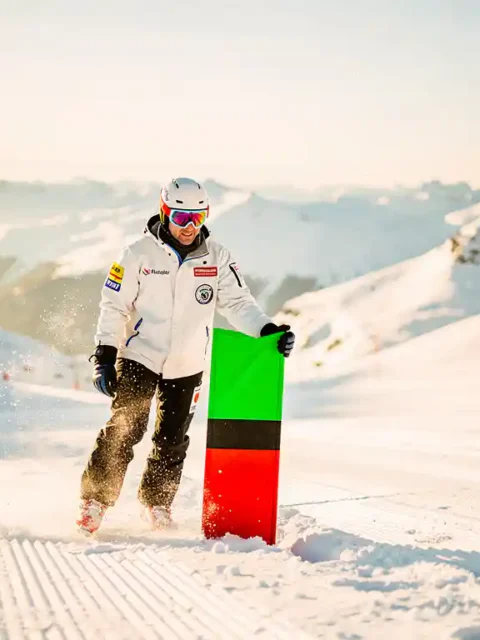

How do you know your skiing technique is improving?
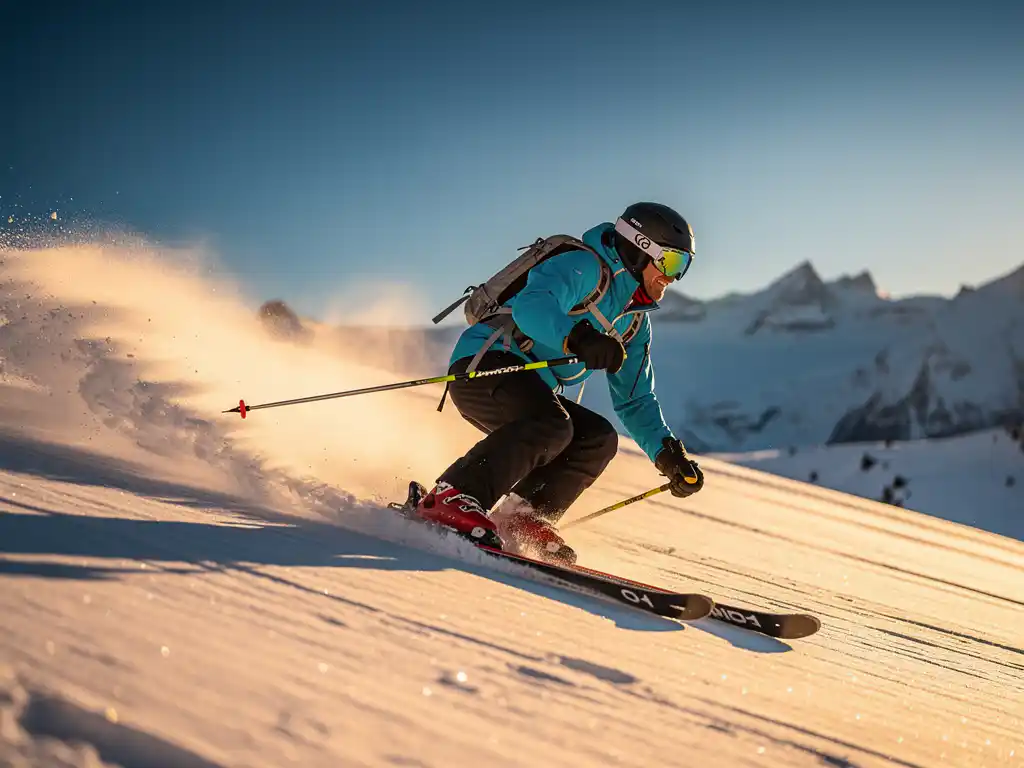
Your skiing technique is improving when you notice greater control over your speed, smoother turns, and less effort on steeper slopes. These are not random moments but concrete signs that your body and technique are adapting to the demands of the slope. In this article, we answer the most frequently asked questions about progress on skis, so you know exactly what to look for.
What physical signs show that your skiing technique is getting better?
Your skiing technique is improving when your body gets less tired after a day on the slopes, your muscles burn less, and you maintain your balance more easily. Beginners often use a lot of unnecessary muscle strength because their technique is not yet efficient. As your technique advances, skiing literally costs less energy — and you feel that directly in your legs and back.
Another strong sign is that your knees and hips bend more fluidly instead of staying rigid. Good skiing technique is largely about absorbing the unevenness of the slope through a flexible posture. When you notice that you naturally go with the terrain instead of fighting it, you have clearly made progress.
Pay attention to your hands and arm position as well. Beginners often hold their arms too far back or let them hang loosely. Once your hands stay calmly in front of your body and you plant your poles at the right moment, that is a sign your basic technique is solid. Your body has learned to coordinate multiple movements at the same time — and that is a major step forward.
How can you tell from your turns that your level is improving?
Your turns are improving when they become smoother, more consistent in shape, and you can control your speed better without having to brake or stop. Beginners often make jerky, irregular turns. When your turns develop a nice rhythmic cadence and you feel the skis carving rather than skidding, that is a clear sign of technical growth.
A concrete indicator is the difference between snowplowing and carving. In the beginning, most beginners use a V-shape (snowplow) to slow down. Once you can better distribute your weight over the outside ski and start keeping your skis parallel through turns, you are making the transition to a higher technical level. It feels like a kind of click: suddenly the skis glide exactly where you want to direct them.
The size and timing of your turns also say a lot. If you can consciously choose between short, quick turns on a steep slope or wide, sweeping turns on a broad run, you have control over your technique. That ability to choose is precisely what sets experienced skiers apart from beginners.
Why does skiing on more difficult slopes suddenly feel easier?
More difficult slopes feel easier because your technique has become more efficient and your body executes the movements automatically without having to consciously think about them. This phenomenon is called motor learning: skills you practice repeatedly are stored as automatic patterns in your nervous system. The result is that you use less mental energy and can enjoy the slope more.
A blue run that felt like a challenge at first feels like a relaxed descent after a few days of practice. That is no coincidence — it is proof that your technique has improved. Your brain has to work less hard because the movements have become familiar. This is also the moment when many skiers spontaneously decide to try a red run, and discover to their surprise that it is more manageable than expected.
More difficult slopes also train specific aspects of your technique that are not needed on easier runs, such as rapid weight shifts, dynamic balancing, and reading the terrain. When you notice that you are applying these elements instinctively, your skiing technique is clearly well on its way to improving.
What does feedback from your ski instructor say about your progress?
Feedback from a ski instructor is one of the most reliable indicators of your progress. If your instructor gives fewer corrections, introduces more complex exercises, or guides you toward more challenging terrain, that is direct confirmation that your technique is improving. A good instructor adjusts their guidance to match your current level.
Pay attention to the nature of the comments you receive. In the beginning, feedback focuses on basic posture, weight distribution, and how you use the snowplow. As you improve, the feedback shifts to finer details: the exact timing of your pole plant, the angle of your ankle, or how you position your hip in a turn. The more specific the feedback, the further along you already are.
Instructors also use non-verbal signals that reflect your progress. If they let you ski along on a more challenging route, give you more autonomy to choose your own exercises, or encourage you to help others in the group, they are trusting in your growth. That trust is itself evidence of technical advancement.
How quickly do beginners improve their skiing technique on average?
Most beginners notice a clear improvement in their basic control and confidence on the slopes after just two to three days of skiing. After a full ski vacation of five to seven days, many beginners can ski blue runs independently. The rate of improvement depends heavily on the frequency of lessons, the quality of instruction, and how consistently you practice.
Children generally learn faster than adults because their bodies are more flexible and they have less fear of falling. But adults can also make surprisingly rapid progress when they take regular lessons and actively focus on their technique. One hour of private instruction per day has a far greater effect than occasionally trying on your own without guidance.
Consistency across multiple seasons also makes a big difference. Someone who goes skiing for a week every year and takes structured lessons builds on what was learned in previous seasons. After three to four seasons, many beginners have grown into intermediate skiers who confidently tackle red runs.
Which exercises help improve your technique faster?
The exercises that improve your skiing technique most quickly focus on balance, weight transfer, and turn timing. None of these exercises require extreme speed or difficult terrain. It is precisely on quiet, wide slopes that you can make the most valuable technical improvements.
- One-ski exercise: Ski a section on just one ski to train your balance and weight control. This immediately reveals which side is weaker.
- Pole plant exercise: Consciously practice planting your pole before each turn. This significantly improves your timing and rhythm.
- Short turns on a blue run: Make small turns in quick succession to sharpen your reaction speed and coordination.
- Keep your hands in front: Hold your gloves or poles in front of your stomach and ski a run like that. This forces you to keep your upper body calm and still.
- Skiing without poles: Leaving your poles behind forces you to find your balance purely through body posture.
These exercises are most effective when an instructor goes through them with you and gives direct feedback on what they observe. Practicing on your own helps, but targeted guidance significantly accelerates your improvement.
How Ski-Pro helps you improve faster on the slopes
If you want to get serious about your skiing technique, it starts with the right instructor in the right place. At Ski-Pro, we understand better than anyone how overwhelming it can be for a beginner to choose the right ski school. Fortunately, you do not have to figure that out on your own. We help you quickly and easily find the perfect match, so you can focus on what really matters: enjoying the slopes.
- More than 250 certified ski schools and instructors in the Alps, from Austria to Switzerland and France
- Easy comparison by price, location, language, and lesson type (private or group)
- Transparent information on levels, availability, and quality
- Book directly online, without any hassle or intermediaries
- Suitable for all levels, from complete beginner to advanced skier
Whether you are stepping onto skis for the first time in Winterberg or planning your first week in Tyrol, we make sure you start your adventure well prepared and worry-free. Compare and book your ski lessons with Ski-Pro and take the first step toward better technique on the slopes this winter.
Frequently Asked Questions
How do I know if I'm ready to move from a blue to a red run?
You are ready for a red run when you can ski blue runs consistently and comfortably with smooth, parallel turns and good speed control. A good test is whether you can consciously vary your turn size and pace without losing your balance. Not sure? Ask your instructor for an honest assessment — they can objectively see whether your technique is strong enough for steeper and narrower terrain.
What are the most common mistakes that slow down my progress?
The most common mistake is moving to more difficult terrain too quickly before the basic technique has truly become automatic. Other frequent mistakes include leaning back out of fear (which causes you to lose control), holding your arms too far back, and not making enough use of your ankles and knees for absorption. By taking regular lessons and working specifically on these points, you can prevent bad habits from becoming ingrained.
Is it worth working on my technique outside of ski season?
Absolutely. Exercises such as ski gymnastics, balance boarding, and squat variations strengthen exactly the muscles you need for a stable skiing posture. Swimming and cycling improve your overall fitness and endurance, so you tire less quickly on the slopes. The better your physical foundation at the start of the season, the faster your technique will continue to develop once you are back on skis.
Are private lessons really that much better than group lessons for my technical development?
Private lessons are significantly more effective if you want to improve technically at a fast pace, because the instructor can tailor all their feedback specifically to your mistakes and learning style. In a group lesson, you wait more often for your turn and the instruction is more general. That said, group lessons are an excellent and cost-effective choice for beginners who are learning the fundamentals while also enjoying the social atmosphere of a group.