
What length ski poles do I need?
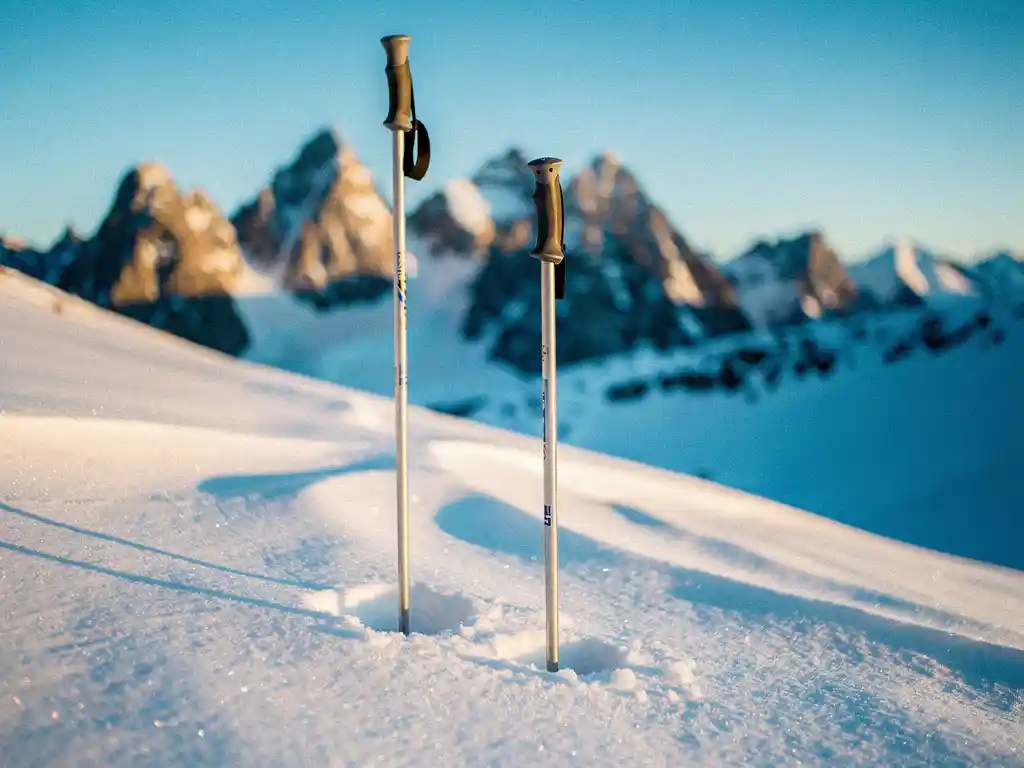
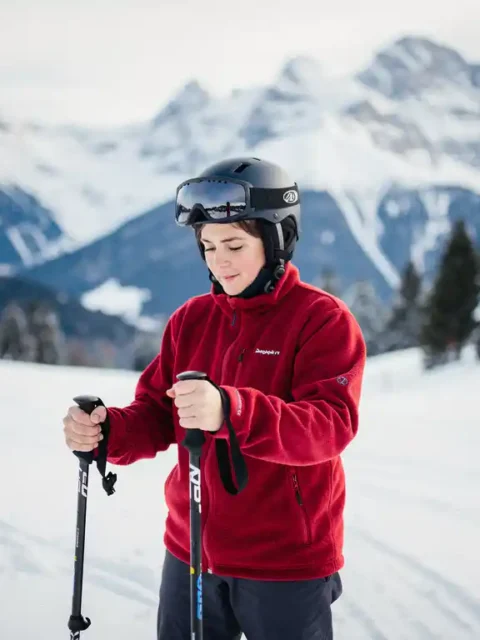
The easiest way to determine the correct length for ski poles is to hold the pole upside down, just below the basket (the disc near the top). Place the tip on the ground and grip the handle: your elbow should form an angle of approximately 90 degrees. For most adults, this works out to a pole length of 60 to 75% of your body height. In this article, we answer all the frequently asked questions about ski pole use, from finding the right size to the difference between renting and buying.
How do you measure the correct length for ski poles?
The golden rule for measuring the correct ski pole length is the 90-degree method: hold the pole upside down, just below the basket, place the tip on the ground, and grip the handle. If your elbow forms a right angle of 90 degrees, you’ve got the right length. For most adults, this works out to a pole length of roughly 65 to 70% of your total body height.
Want something more concrete? Use the following rule of thumb as a starting point:
- 5’3″ (160 cm): ski pole of approximately 100 to 105 cm
- 5’7″ (170 cm): ski pole of approximately 110 cm
- 5’11” (180 cm): ski pole of approximately 115 to 120 cm
- 6’3″ (190 cm): ski pole of approximately 120 to 125 cm
Keep in mind that ski boots add a few centimeters of extra height. Always adjust the length while wearing your ski boots, or add a centimeter or two if you’re measuring at home. The 90-degree method remains the most reliable way to quickly and accurately determine the right size.
What happens if your ski poles are too long or too short?
Ski poles that aren’t the right length will immediately throw off your balance and technique. Poles that are too long force your shoulders upward, causing you to adopt a tense and unnatural posture. Poles that are too short make you lean too far forward, which reduces your control and puts unnecessary strain on your back. Both situations make skiing less enjoyable and increase the risk of injury.
In practice, you’ll notice this in the following ways:
- Poles too long: your arms swing too far outward, your timing when planting the pole is off, and you lose your rhythmic movement through turns.
- Poles too short: you lean too far forward, your weight shifts to your heels, and you lack the support you need when initiating turns.
The correct pole length is especially important for beginners. When you’re still working on your basic stance and first turns, you want your equipment to support you rather than work against you. A pole of the wrong size can reinforce poor habits that are hard to unlearn later on.
Does the ideal pole length vary by skiing style?
Yes, the ideal ski pole length varies by skiing style. For recreational carving and piste skiing, the standard 90-degree method applies. For freestyle and off-piste skiing, you’ll generally want shorter poles, since you move more dynamically and rely less on the pole as a support point. Cross-country skiing and ski touring follow entirely different guidelines.
Piste skiing and carving
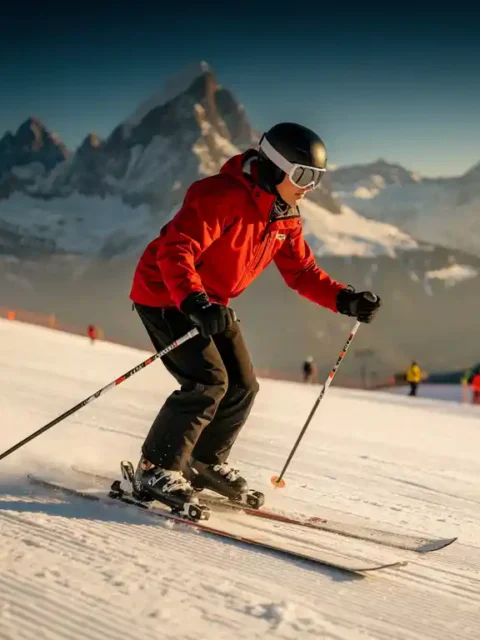
In regular piste skiing and carving, you use the pole as a rhythm aid and support when initiating turns. The standard length from the 90-degree method works well here. Slightly shorter poles can help if you adopt a more aggressive, forward-leaning stance when carving at higher speeds.
Freestyle and off-piste
Freestyle and freeride skiers often choose poles that are two to five centimeters shorter than the standard size. In the park and in powder, you want to move freely without long poles getting in the way. In deep snow, wider baskets are also important so the pole doesn’t sink in too far.
Do children need different ski poles than adults?
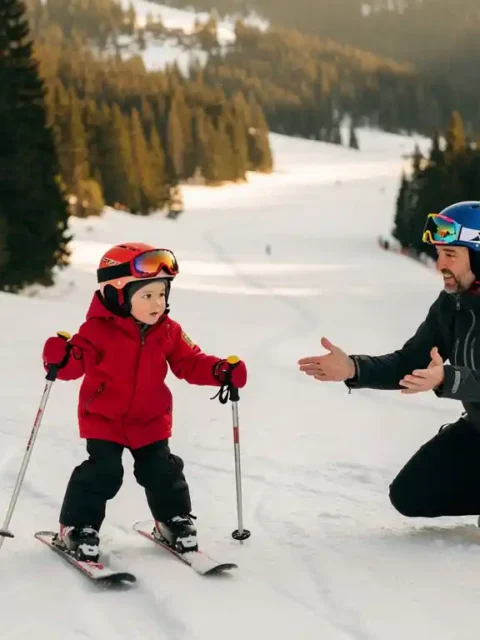
Yes, children need ski poles that are suited to their smaller build and lighter weight. Kids’ ski poles are not only shorter, but also lighter and feature smaller grips that fit better in little hands. The same 90-degree method applies to children, but pay extra attention to the weight of the pole — heavy poles tire young skiers out quickly.
For very young beginners — children under six or seven years old — many ski schools and instructors actually recommend starting without poles altogether. Without poles, children develop better balance and a more natural posture more quickly, since they aren’t tempted to lean on them. Once the basic skills are in place, poles can be introduced as a tool for rhythm and steering.
Are adjustable ski poles a good choice for beginners?
Adjustable ski poles are an excellent choice for beginners. They give you the flexibility to change the length while you’re still figuring out which size works best for you. They’re also handy if you want to share poles with a travel companion of a different height, or if you plan to ski both on the piste and in the backcountry.
There are a few things to watch out for with adjustable poles:
- Locking mechanism: choose a model with a reliable click system or twist lock so the pole doesn’t collapse unexpectedly while skiing.
- Weight: adjustable poles are generally slightly heavier than fixed poles of the same quality. For beginners, this makes little difference.
- Price: a good adjustable pole doesn’t have to be expensive. There are solid options available at every price point.
For beginners who may only hit the slopes a few times per season, an adjustable pole is definitely worth it. There’s no need to invest right away in a fixed pole of the perfect length when you’re still in the thick of learning.
Can you rent ski poles instead of buying them?
Yes, ski poles are available to rent at virtually every winter sports destination, often as part of a complete equipment rental package with skis and boots. Renting is a smart choice if you’re just starting out or only go skiing once or twice a year. You only pay for what you use and don’t have to haul anything on the plane or in the car.
Rental shops in ski resorts have staff who can help you choose the right pole length, which is especially convenient for beginners. That way, you can be sure you’re heading out onto the slopes with properly fitted equipment. Buying only really makes sense once you ski multiple times per season and know which style and length suits you best.
How Ski-Pro helps you find the perfect ski lesson
The right ski poles are just one piece of the puzzle. But perhaps even more important for beginners is a good ski lesson with a certified instructor who teaches you how to make the most of your equipment. That’s exactly where we come in. Through Ski-Pro, you can easily compare and book ski schools and instructors at more than 250 locations throughout the Alps. Whether you’re stepping onto skis for the first time in Winterberg or planning your first week in Tyrol, we make it easy to find the perfect lesson to match your level, preferences, and budget.
- Compare more than 250 certified ski schools and instructors
- Choose between private and group lessons, for children and adults
- Transparent pricing, no surprises afterward
- Available for all levels, from complete beginner to advanced skier
- Easy to book online, even last minute
Ready for your first or next snow adventure? Find your perfect ski lesson and hit the mountain with confidence!
Frequently Asked Questions
Should I adjust my ski poles when switching from piste skiing to off-piste skiing?
Yes, that is definitely recommended. For off-piste and freeride skiing, you'll generally want poles that are two to five centimeters shorter than your standard piste length. This gives you more freedom of movement and better suits the more dynamic stance required in deep snow or challenging terrain. If you have adjustable poles, you can easily change the length to suit the situation.
How do I know whether I'm better off renting or buying ski poles?
Do you go skiing once or twice a year and are you still learning? Then renting is the smartest choice: you only pay for what you use, the rental staff will help you find the right size, and you don't have to carry anything with you. Buying only becomes truly worthwhile once you ski multiple times per season and already know which style, length, and type of pole suits you best.
At what age can children start using ski poles?
Most ski schools and instructors recommend letting children under six or seven years old start without poles. Without poles, young skiers develop better balance and a more natural body posture more quickly, since they aren't tempted to lean on them. Once the basic skills are solid, poles can be gradually introduced as a tool for rhythm and steering.
Are there specific features I should look for when buying my first ski poles?
For your first pair of ski poles, three things matter most: the correct length (use the 90-degree method), a comfortable grip that sits well in your hand, and a reliable locking mechanism if you opt for adjustable poles. Adjustable poles are often the best choice for beginners, since you can still fine-tune the length as your technique develops. Expensive materials such as carbon are not necessary for beginners.