
What is the difference between a green and a blue slope?
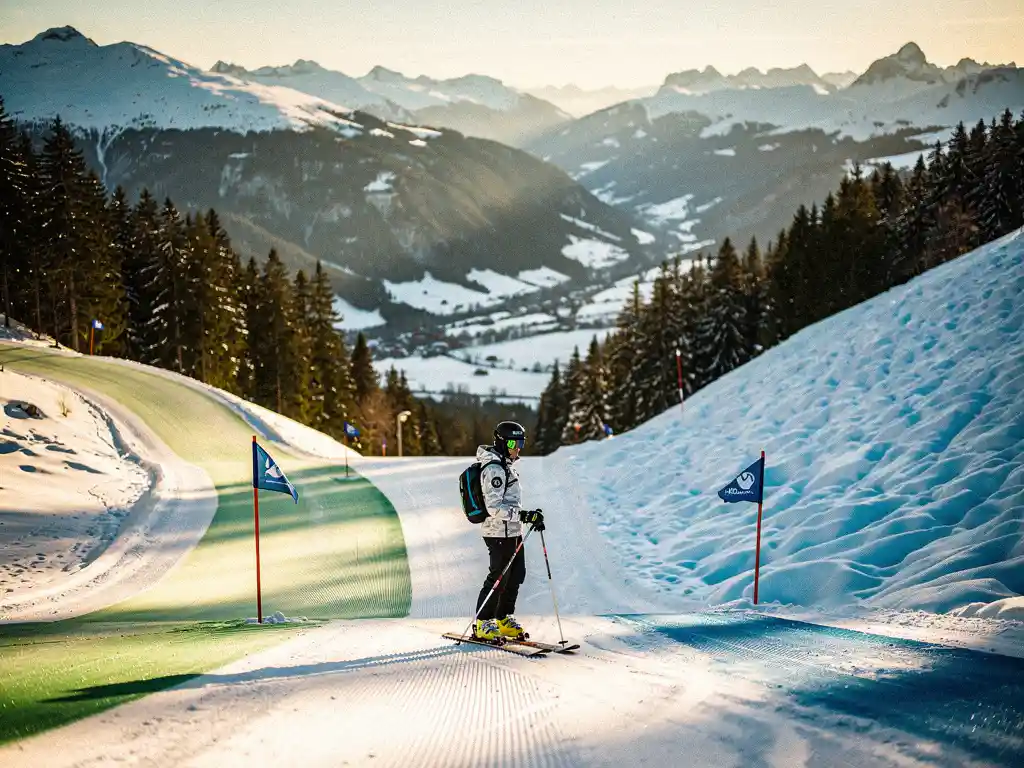
A green run is easier than a blue run. Green runs are the flattest and most accessible slopes on the mountain, designed for absolute beginners. Blue runs are somewhat steeper and more technically challenging, but still suitable for those who have just mastered the basics. Below, you’ll find exactly what the difference is and when you’re ready to take the next step.
What do ski run colors mean?
Ski run colors are an international system for indicating the difficulty level of a slope. Green represents the easiest runs, blue is intermediate, red is for advanced skiers, and black marks the most challenging descents. This system helps skiers of every level quickly choose the right run.
The color system is used in virtually all Alpine ski resorts, from Austria and Switzerland to France and Italy. The colors are not based solely on steepness, but also on factors such as width, visibility, and the presence of obstacles. This means the color gives you an instant, clear idea of what to expect when you head down the slope.
Important to note: the interpretation of run colors can vary slightly by country or resort. In North America, they use green, blue, black, and double black. In Europe, you have green, blue, red, and black. But the underlying logic is the same everywhere: the darker the color, the more challenging the run.
How steep is a green run exactly?
A green run has a gradient of roughly 8 to 12 degrees, which works out to a slope of less than 25 percent. That’s comparable to a gentle hill in a park. The run is wide, well-groomed, and free of sharp turns or steep sections.
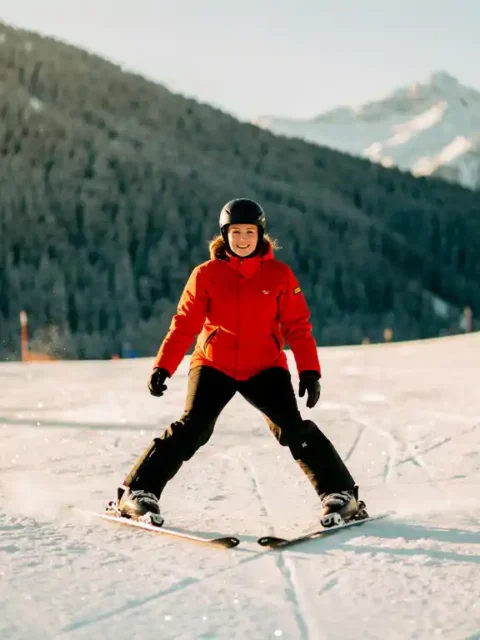
On a green run, you have plenty of space to practice your basic stance, braking, and steering at a relaxed pace. You build up speed on your own terms, without suddenly finding yourself at the top of a steep drop. Green runs also tend to be less crowded than blue or red runs, which is an added bonus when you’re still getting used to your surroundings.
In many ski resorts, green runs are located around the beginner zones or close to gondolas and chairlifts. They are deliberately designed so that beginners can practice without being thrown in at the deep end. Think wide, open stretches where you have all the room you need to make mistakes and learn from them.
How steep is a blue run compared to a green run?
A blue run has a gradient of roughly 12 to 25 degrees, which is considerably steeper than a green run. You notice this immediately: the descent feels faster, the turns are a bit sharper, and you need more control over your speed and direction.
The difference between green and blue may sound small in degrees, but on the slope it feels significant. On a blue run you need to actively brake and steer, whereas on a green run you can still get away with a more passive approach. That makes blue a genuine step up in difficulty.
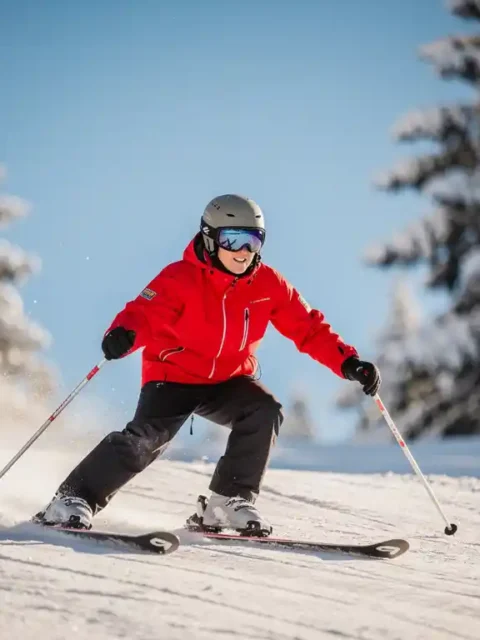
Even so, blue runs are still accessible to skiers who have mastered the basics. They are wide enough to turn comfortably, well-groomed, and clearly marked. These are the runs where you grow from beginner to advancing beginner, and where the real feeling of skiing starts to emerge.
When are you ready for a blue run?
You’re ready for a blue run when you can stop independently on a green run, make controlled turns, and manage your speed without panicking. You don’t need to ski perfectly, but you do need to have the fundamentals firmly under control.
In practical terms, this means you’ve mastered the following skills:
- Performing a snowplow stop or parallel stop whenever you choose
- Making controlled turns to the left and right
- Adjusting your speed to suit the situation
- Staying calm when the slope gets a little busier or steeper
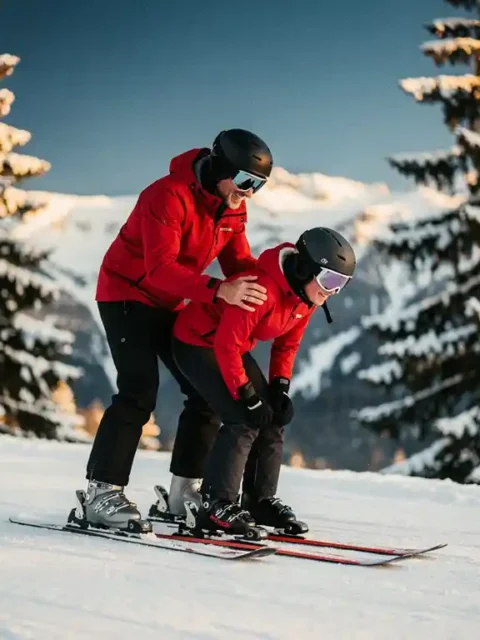
A good ski instructor can tell you exactly when you’re ready to make that move. They can see right away whether your technique is stable enough to take on the challenge. Trust that advice — moving to a blue run too soon can actually undermine your confidence rather than build it.
Why do most beginners start on a green run?
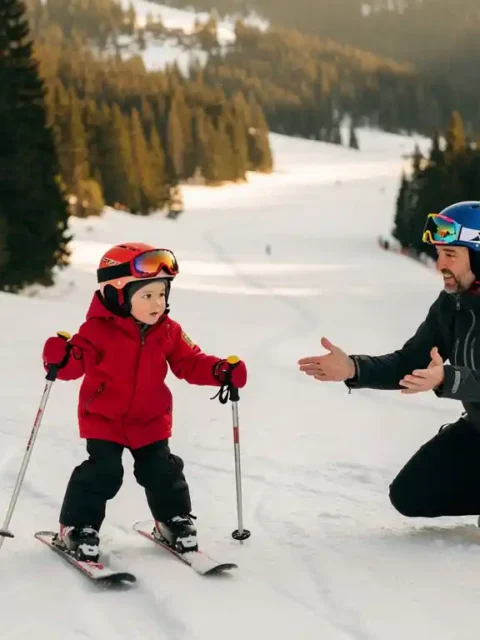
Most beginners start on a green run because the gentle gradient gives them enough space to learn the basic techniques without being overwhelmed by speed or steepness. On a green run, you can focus entirely on your posture, balance, and movement, without the mountain itself adding to the challenge.
Skiing is a motorically complex sport. You’re simultaneously learning to distribute your weight, bend your knees, use your arms, and direct your gaze. That requires concentration. On a green run, the environment is calm enough to practice all of those elements step by step, without also having to manage high speeds.
Safety is also a major factor. On a green run, the risk of hard falls is lower, which helps build confidence. And that confidence is exactly what you need to eventually move to a blue run with enjoyment. Skiing should be fun, not a struggle.
Which run is best for a first ski week?
For a first ski week, green runs are the best place to start, with the goal of being able to ski comfortably on a blue run by the end of the week. Most beginners make enough progress in one week to take that step, especially with good instruction.
A typical first ski week looks like this:
- Days 1 and 2: Getting familiar with the equipment, learning the basic stance, and practicing on the flattest green run
- Days 3 and 4: Refining turns, building speed, and descending the green run independently
- Days 5 and 6: First exploration of a blue run, preferably with an instructor
- Day 7: Consolidating and enjoying everything you’ve learned
The choice of resort also plays a role. Some resorts have extensive green run networks and excellent beginner zones, while others move quickly to red and black. Deliberately choose a resort that has a strong reputation for beginners.
How Ski-Pro helps you choose the right lesson
Whether you’re on your first day on a green run or already ready for your first blue descent, the right guidance makes all the difference. At Ski-Pro, we understand that better than anyone. We’re the snow-obsessed ones counting down the days until the season starts.
Through our platform, you can easily compare and book lessons with more than 250 certified ski schools and instructors in the Alps. That means:
- Comparing group lessons and private lessons by price, level, and location
- Finding instructors who specialize in beginners and children’s lessons
- Transparent pricing with no hidden costs
- Checking availability and booking directly, even for popular resorts in Austria, Switzerland, and France
You don’t need to figure out which ski school suits your level on your own. We do that for you. Compare ski schools and book your lesson and start your first ski week well prepared and full of confidence.
Frequently Asked Questions
Can I try a blue run straight away as a complete beginner if I'm athletic?
Being athletic certainly helps, but it's still wise to always start on a green run — even if you're in great shape. Skiing requires specific motor skills such as weight distribution, edge technique, and speed control that you simply need to build up. A blue run is unforgiving if you don't yet have that basic control, which increases your risk of a fall or injury.
What if I get stuck halfway down a blue run and find it too steep?
Don't panic: turn yourself sideways across the slope and take a moment to calm down. You can always make your way down the slope sideways in small sections, or ask an instructor or slope patrol member for help. Treat it as a learning experience, then head back to the green run to strengthen your technique further before trying again.
Does it matter which ski resort I choose as a beginner?
Absolutely — not every ski resort is equally suited to beginners. Resorts such as Sölden, Zell am See, or Les Gets are known for their extensive green run networks and excellent beginner zones. Avoid areas where green and blue runs are scarce and red and black dominate, as you'll quickly find yourself on slopes that are too challenging for your level.
Do I need private lessons, or are group lessons good enough for a beginner?
Group lessons are an excellent choice for most beginners: they're more affordable, sociable, and the instructor is experienced at guiding multiple people at the same level simultaneously. Private lessons are ideal if you want to progress faster, need extra attention, or want to ski at specific times. Through Ski-Pro, you can easily compare both options by price and availability, so you can make the choice that suits you best.