
What are the most common posture mistakes in skiing?
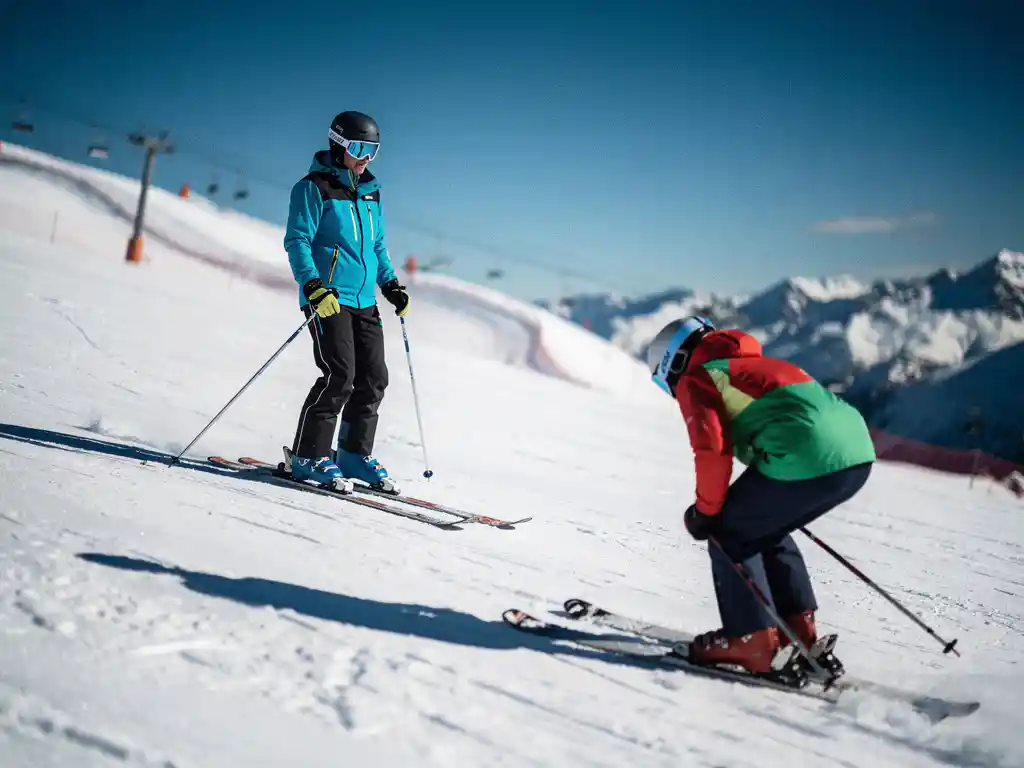
The most common skiing posture mistakes are leaning back, not bending the knees enough, hunching the shoulders forward, and distributing weight unevenly across the skis. These mistakes almost always stem from nervousness or tension and can be corrected quickly with the right guidance. In this article, we answer the most frequently asked questions about ski posture, from the basics for beginners to practical tips for fixing mistakes on the slope.
What is the best body position for beginner skiers?
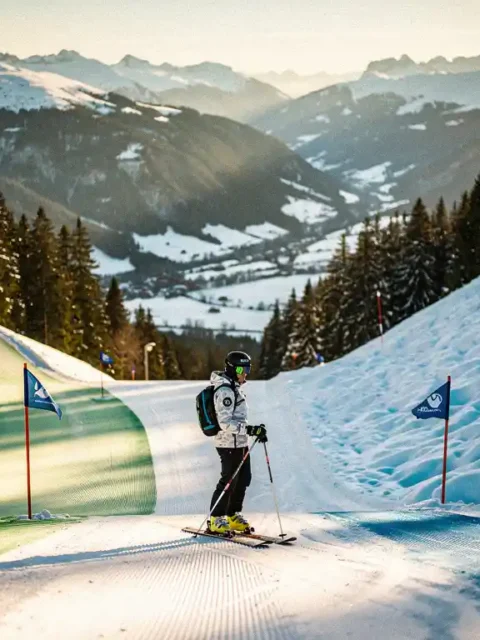
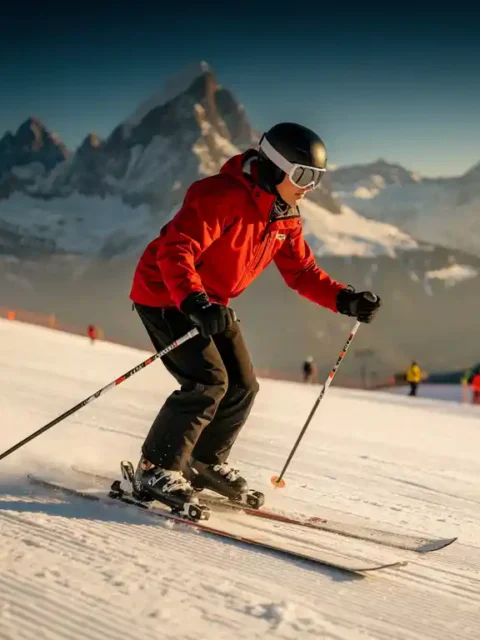
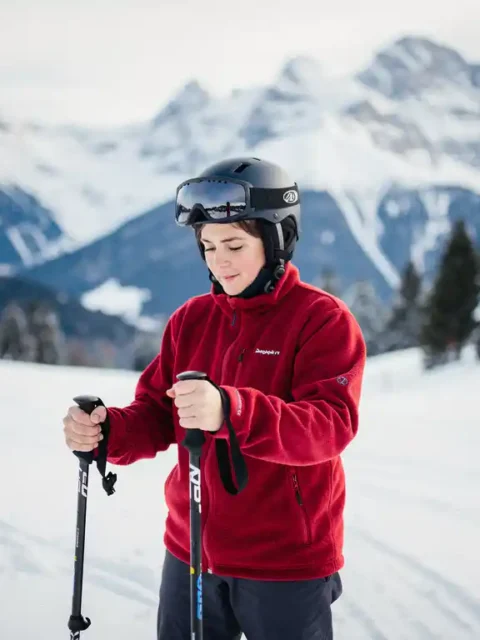
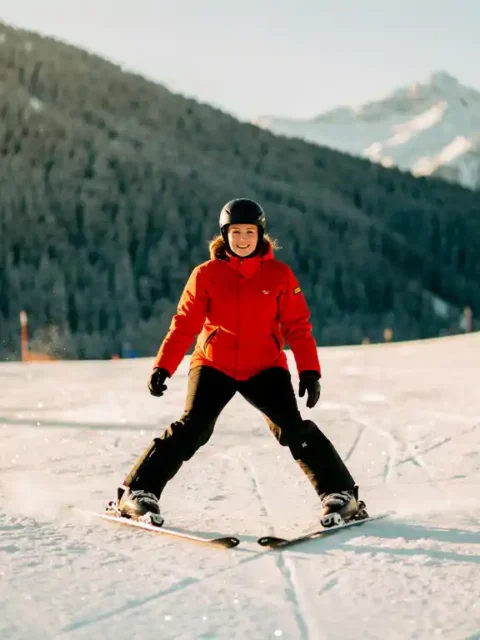
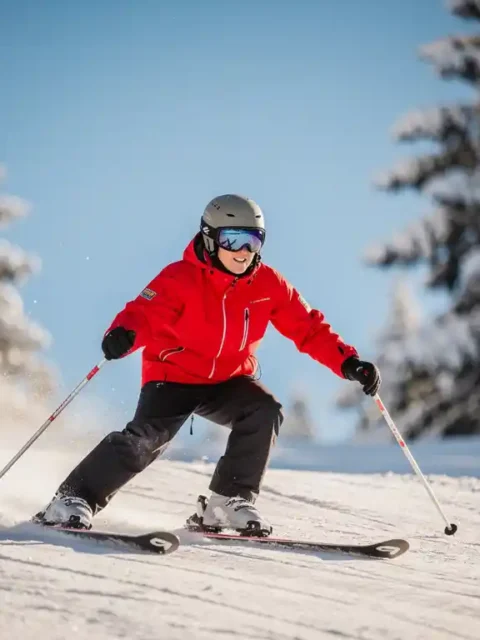
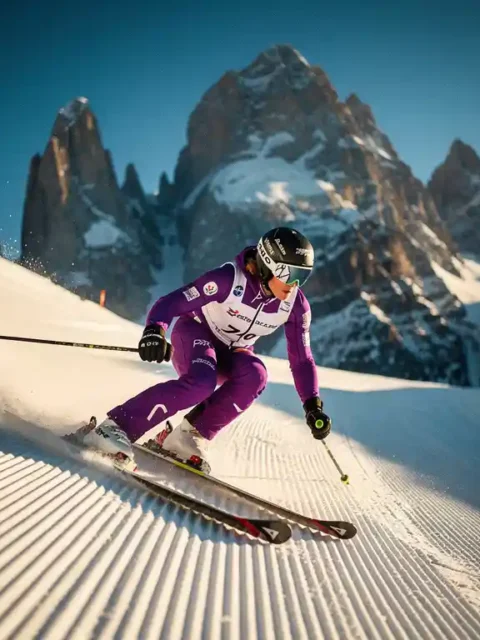
The best skiing posture for beginners is a slightly forward-leaning position with bent knees, weight on the front of the ski boot, and arms relaxed in front of the body. Think of an athletic ready stance — as if you’re just about to jump. Your back is straight, your gaze is directed down the slope ahead of you, and your hips are tilted slightly forward.
This basic position gives you control, balance, and the ability to react quickly to whatever happens on the slope. Many beginners think skiing is mainly about steering the skis, but in reality it all starts with a stable, dynamic body position. As long as your body is in the right position, the skis will follow naturally.
Specifically, pay attention to the following points:
- Knees bent: not just slightly, but visibly bent — as if you’re sitting on an invisible chair
- Weight forward: your shin presses lightly against the front of the ski boot
- Arms in front of the body: keep your ski poles angled slightly forward, not behind your back
- Relaxed shoulders: avoid tense or raised shoulders
- Eyes up: look ahead, not down at your skis
Once you’ve mastered this basic position, you’ll notice that everything on the slope becomes much smoother. Turning, braking, and accelerating will suddenly feel a lot more intuitive.
What are the most common posture mistakes in skiing?
The most common skiing posture mistakes are leaning back, insufficient knee bend, raised shoulders, looking down, and distributing weight unevenly across both skis. Almost every beginner makes one or more of these mistakes, and that’s completely normal. Correct ski posture feels unnatural at first.
Here is an overview of the mistakes we see most often on the slopes:
- Leaning back: weight shifts to the heel instead of the ball of the foot, causing you to lose control of the skis
- Straight knees: standing stiff gives a sense of security but actually makes steering harder
- Hunching the shoulders forward: this pulls your center of gravity too far forward and disrupts your balance
- Looking at your skis: this causes you to lose your overview of the slope and react too slowly to what lies ahead
- Uneven weight distribution: putting more pressure on one ski throws you off balance, especially in turns
- Arms at your sides: this makes it harder to maintain balance when unexpected movements occur
The good news? All of these mistakes can be corrected. They almost always result from tension or nervousness, not a lack of talent. With a little awareness and focused practice, they disappear quickly.
Why do so many skiers unconsciously lean back?
So many skiers lean back because the body instinctively reacts to fear and uncertainty. When you look down a steep slope or pick up speed, your brain sends a signal to protect you by leaning backward, away from the perceived danger. That feels safer, but it has the opposite effect on the slope.
Leaning back is one of the most persistent reflexes in beginner skiers, and it’s completely understandable. When you’re on skis for the first time and see the slope ahead of you, the urge to shift your weight backward is almost irresistible. You’re essentially trying to brake with your entire body.
The problem is that this actually gives you less control. Your skis shoot forward, you lose grip on the snow, and steering becomes nearly impossible. On top of that, leaning back puts strain on your knees and back in a way that tires you out quickly and can even lead to injury.
Other reasons skiers unconsciously lean back:
- Ski boots that don’t fit properly or have too little forward flex
- Fatigue in the leg muscles, causing the knees to bend less
- Insufficient warm-up, leaving the muscles stiff
- Progressing too quickly to more difficult slopes
Awareness is the first step. Once you know your body has this reflex, you can actively work against it by focusing your attention on your shin pressing against the front of the boot.
How do you correct poor ski posture on the slope?
You correct poor ski posture by consciously focusing on three key points: bending your knees, shifting your weight forward, and keeping your gaze up. Practice this on a quiet, gentle section of slope and take the time to feel each correction before moving on to steeper terrain.
Here are practical exercises and tips that deliver immediate results:
- Shin pressure exercise: consciously press your shin against the front of the ski boot. Can you feel that pressure? Then your weight is in the right place
- Squat position: practice at home or on the slope with a deep squat and hold that position while slowly skiing down a gentle slope
- Eyes up: pick a point further down the slope and keep your eyes fixed on it, not on your skis
- Arms in front of the body: hold your ski poles out in front of you, as if you’re carrying a tray
- Start slow: always practice posture corrections on easy slopes first, not on challenging terrain
Give yourself room to make mistakes and correct them. Good ski posture doesn’t develop in a single day, but every conscious correction brings you one step closer to smooth, confident skiing.
When is a ski lesson the best solution for posture problems?
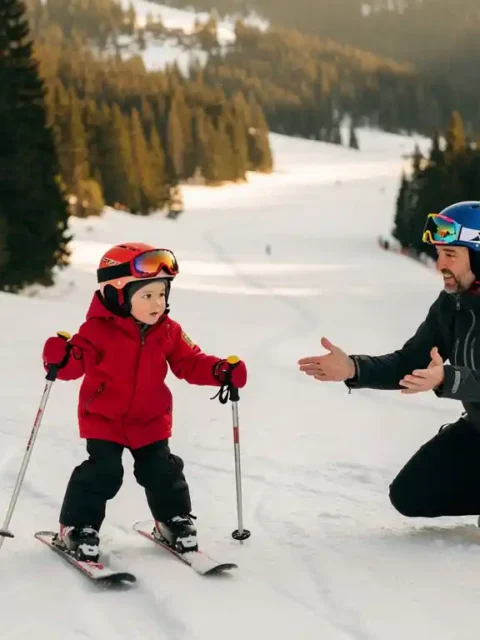
A ski lesson is the best solution for posture problems as soon as you notice you keep repeating the same mistakes despite your own attempts to correct them. A certified ski instructor can see at a glance what’s going wrong and provide targeted feedback that you would never discover on your own nearly as quickly.
Correcting your posture on your own based on tips is a good start, but it has clear limitations. Without external feedback, you don’t always know what your body is actually doing. What you feel and what is really happening are often two very different things in skiing. A ski instructor sees exactly where things go wrong and tailors their explanation to your specific body and learning style.
A ski lesson is definitely recommended if:
- You keep making the same mistake and don’t know how to break the habit
- You experience fear or nervousness that affects your posture
- You want to progress faster than practicing on your own allows
- You’re on skis for the first time and want to build a solid foundation
- You’re returning to the slopes after an injury
Both private lessons and group lessons can work excellently for posture correction. With a private lesson, you get the instructor’s full attention, which is ideal for specific technical issues. In a group lesson, you also learn from fellow skiers, and the atmosphere is often extra motivating.
How Ski-Pro helps you with proper ski posture
Good ski posture starts with the right guidance, and we’re here to help. Through our platform, you can quickly and easily find the perfect ski lesson, tailored to your level, location, and preferences. Whether you’re on skis for the first time or want to address a specific technical mistake, we connect you with more than 250 certified ski schools and instructors throughout the Alps.
What you can expect from us:
- Compare and choose: browse offerings, prices, and reviews from hundreds of ski schools in one place
- Private or group lesson: choose the lesson format that suits you best
- All levels: from complete beginner to advanced skier looking to refine their technique
- Top destinations: from Tyrol and Switzerland to the French Alps
- Easy booking: sorted in just a few clicks, hassle-free
Ready to leave those posture mistakes behind for good and hit the slopes with confidence? Compare and book your ski lesson and make your winter vacation an unforgettable experience.
Frequently Asked Questions
How quickly can I unlearn poor ski posture?
Most posture mistakes show noticeable improvement within a few days of practice, provided you're actively working on them. With targeted exercises on gentle slopes and, if needed, a ski lesson, you can make significant progress even within a single ski vacation. Consistency matters more than speed here: it's better to practice consciously for half an hour every day than to train intensively just once.
Does the type of ski boot matter for my posture?
Absolutely. Ski boots that don't fit properly or have too little forward flex make it nearly impossible to adopt the correct posture. Make sure your boots fit snugly but comfortably and offer enough flex to allow your shin to press forward. Not sure? Ask a specialist at a ski rental shop for advice on the right fit and flex rating for your level.
Can I improve my ski posture off the slopes?
Yes, and it's actually highly recommended. Exercises such as squats, lunges, and balance work on a BOSU ball strengthen the muscles you need for a stable ski posture. You can also practice your basic position at home in front of a mirror: knees bent, weight slightly forward, and arms in front of the body. The better your fitness and body awareness before your ski vacation, the faster you'll pick up the correct posture on the slopes.
Is a private lesson or group lesson better for correcting my posture?
For specific posture issues, a private lesson is generally more effective, because the instructor focuses entirely on you and the feedback is immediate and personal. However, a group lesson can also work well if you're motivated by a social environment and your mistakes aren't too technical in nature. Through Ski-Pro, you can easily compare both options and choose what best suits your situation.