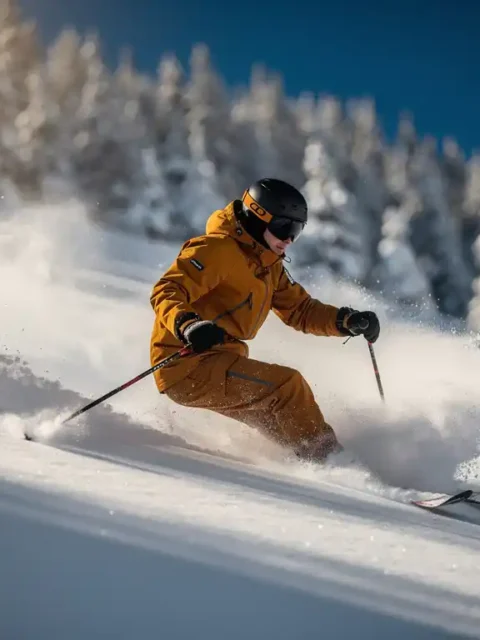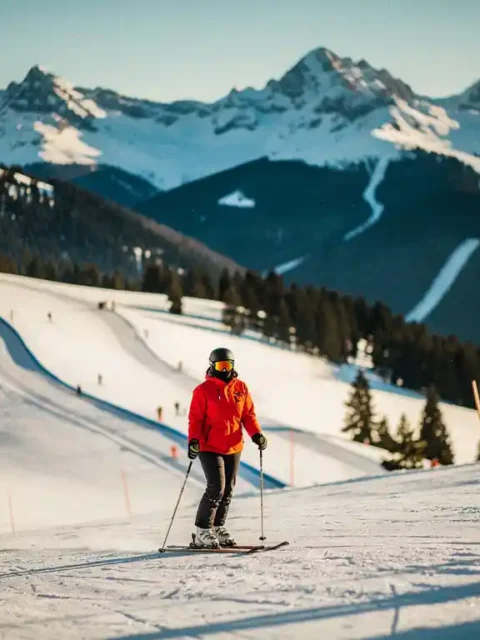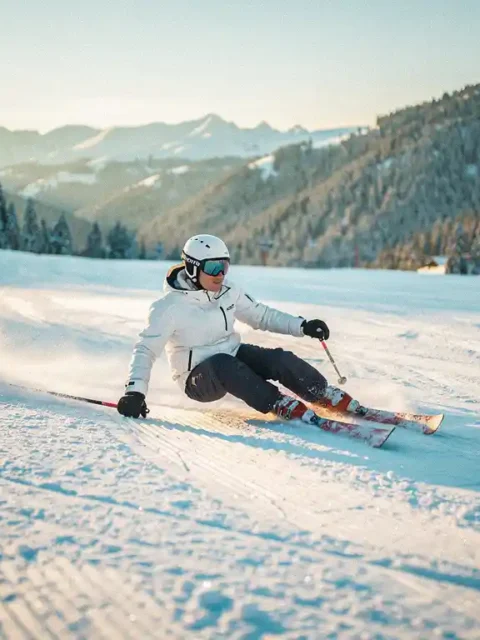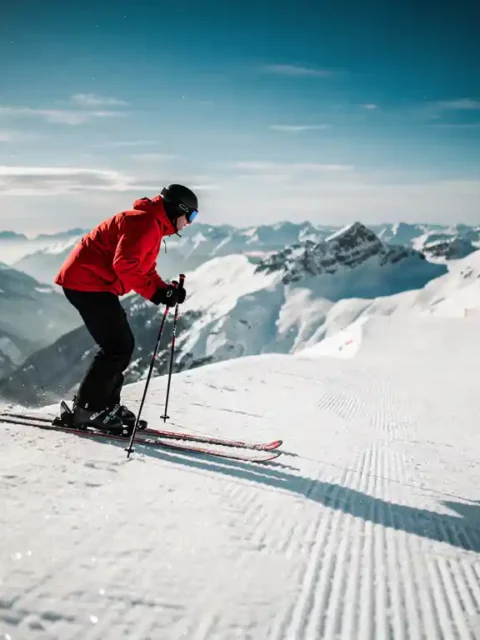

What is the purpose of ski poles?
Ski poles help you maintain balance, initiate turns, and find your rhythm on the slopes. They aren’t a mandatory accessory for every skier, but for most people they are a valuable tool that supports your technique and makes your movements more efficient. In this article, we answer the most frequently asked questions about using ski poles — from when you actually need them to how to hold them correctly.
When do you actually need ski poles as a skier?
As a skier, you truly need ski poles once you start carving turns on steeper slopes and want to develop your technique further. On blue and red runs, poles help you time your turns and maintain proper posture. On flat sections and when pushing off, they are practically indispensable.
In practice, absolute beginners on green runs can get along just fine without poles. Many instructors actually recommend this, as it allows you to focus entirely on your posture and weight distribution without the distraction of something in your hands. However, once you start exploring more terrain and picking up speed, ski poles become a logical and useful part of your equipment.
Ski poles are also very handy off the slope itself: on the ski lift, when pushing off on flat sections, and when getting up after a fall. They give you extra support and control in situations where your skis alone don’t provide enough stability.
What do ski poles do for your balance and technique?
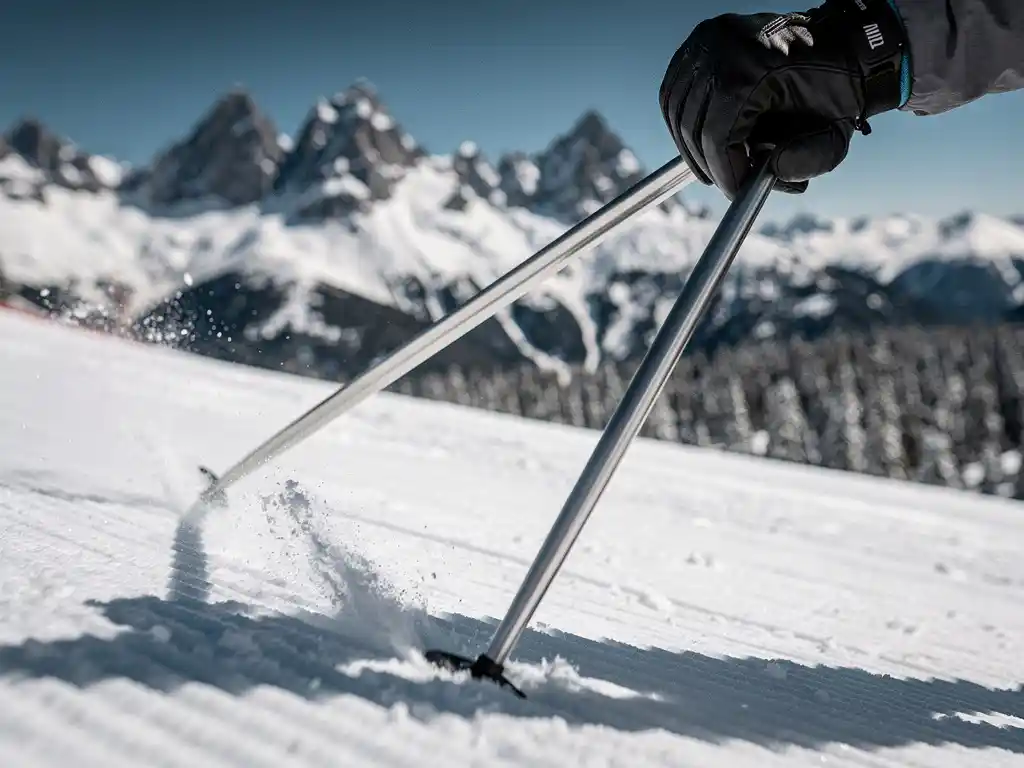
Ski poles improve your balance and technique by giving your upper body a stable point of reference. The so-called pole plant — planting the pole in the snow at the start of a turn — helps you shift your weight at the right moment and time your turns smoothly. This makes your movements more rhythmic and controlled.
Technically speaking, the pole plant sends a clear signal to your body: it’s time to change direction. Without poles, many skiers lose this rhythm, which can lead to irregular turns and a less controlled descent. With poles, you learn to keep your upper body calm and stable while your legs do the work.
Ski poles also help you lean forward into the correct skiing stance. Many beginners tend to lean back, which reduces control. By actively using your poles, you naturally stay more forward-facing, which benefits both your speed and steering.
Can ski poles actually get in the way for beginners?
Yes, ski poles can definitely get in the way for beginners, and this is a commonly heard argument among ski instructors. If you’re still working on finding your balance and mastering the basic stance, having poles in your hands can distract you from what you should actually be focusing on: your knees, your weight, and your skis.
Beginners often hold poles incorrectly, drag them passively, or use them as crutches to lean on. The latter is actually counterproductive, as it disrupts your posture rather than supporting it. A good ski instructor will therefore often recommend in the first few lessons that you set the poles aside or hold them loosely without actively using them.
Once the basic skills are in place, however, it makes sense to learn how to work with poles. At that point, they genuinely add value to your technique rather than presenting an extra challenge. It’s simply a matter of choosing the right moment.
How do you choose the right ski pole length?
To choose the right ski pole length, hold the pole upside down just below the tip and check whether your elbow forms an angle of approximately 90 degrees. This is the most reliable rule of thumb for alpine skiers on the slopes. The pole tip should rest on the ground while you stand upright.
As a quick reference, you can also use your height as a starting point:
- Up to 5’3″ (1.60 m): poles of 100 to 105 cm
- 5’3″ to 5’7″ (1.60 to 1.70 m): poles of 105 to 110 cm
- 5’7″ to 5’11” (1.70 to 1.80 m): poles of 110 to 115 cm
- Above 5’11” (1.80 m): poles of 115 to 125 cm
Also consider the type of skiing you do. For steeper slopes and technical skiing, choose slightly shorter poles for greater control. For leisurely touring or beginner lessons, a slightly longer pole can sometimes be more comfortable. Children need special youth poles that can be adjusted as they grow.
What is the difference between renting and buying ski poles?
The biggest difference between renting and buying ski poles comes down to cost, quality, and convenience. Renting is ideal if you go on a ski trip once or twice a year and don’t want to travel with equipment. Buying makes sense once you go more frequently, have a personal preference for certain gear, or want to invest in better quality.
Advantages of renting
- No upfront cost and no hassle with luggage
- You can try a different size or type each season
- Perfect for beginners who aren’t yet sure what they want
- Maintenance and repairs are the rental company’s responsibility
Advantages of buying
- More cost-effective in the long run if you ski regularly
- You choose equipment that perfectly suits your style and height
- Familiar gear always at hand, even at unfamiliar destinations
- Higher-quality poles are lighter and more durable than average rental equipment
For most beginners, renting is the smartest choice for the first few seasons. That way, you can take your time discovering whether skiing is really for you before investing in your own equipment.
How do you hold ski poles correctly on the slopes?
You hold ski poles correctly by putting your hand up through the wrist strap from below and then gripping the handle, so that the strap runs across the back of your hand. This way, the strap bears the weight of the pole when you plant it, and you don’t need to grip tightly. Your hand stays relaxed and you can easily let go of the pole if you fall.
A common mistake is not using the wrist strap at all, or simply grabbing the handle from the top. This wastes energy in your forearms and increases the risk of wrist injuries in a fall, because you instinctively hold on to the pole when you should actually be able to release it.
Keep your arms slightly bent and your elbows a little away from your body. Point the poles diagonally backward — not straight forward or to the side. When planting the pole, make a small, controlled movement from your wrist, not your entire arm. The more relaxed your grip, the more fluidly you’ll move on the slopes.
How Ski-Pro helps you take your first steps on the slopes
Whether you’re unsure about using ski poles or simply want to know which ski school suits you best, we’re here to help. As a platform for winter sports enthusiasts, we know better than anyone how overwhelming the choices can be — especially when you’re stepping onto skis for the first time. That’s why we bring everything together in one place, so you can focus on the best part: the snow.
Through our platform, you can easily:
- Compare more than 250 certified ski schools and instructors in the Alps
- Compare group lessons and private lessons side by side by price, location, and level
- Book directly online without any hassle, for destinations in Austria, Switzerland, France, and more
- Find the right match as a beginner, even if you’ve never put on a pair of skis before
Ready to plan your first — or next — snow adventure? Compare and book your ski lesson and hit the mountain fully prepared!
Frequently Asked Questions
Should I use ski poles right away during my first ski lesson as a beginner?
No, you don’t have to. Most ski instructors recommend that beginners skip the poles for the first few lessons, so you can focus entirely on your posture, weight distribution, and getting a feel for your skis. Once you’ve got the basics down and move on to blue or red runs, it’s a good idea to introduce poles and learn how to apply the pole plant correctly.
How do I know if my ski poles are too long or too short on the slopes?
A quick check on the slopes: hold the pole upside down just below the tip and plant it next to you in the snow. If your elbow forms an angle of roughly 90 degrees, you’re good. If your shoulders rise up or you have to lean forward to reach the pole, your poles are too short or too long, respectively. Adjust the length or swap them out with the rental shop.
What are the most common mistakes when using ski poles?
The three most common mistakes are: not using the wrist strap (which leads to a tense grip and wrist injuries in a fall), pointing the poles straight forward instead of diagonally backward, and using the poles as a support to lean on rather than as a rhythm and timing aid. All of these mistakes disrupt your posture and slow down your technical development. A few lessons with a certified instructor will help you break these habits quickly.
Are more expensive ski poles worth it if I only ski a few times a year?
For someone who goes on a ski trip once or twice a year, it’s generally not necessary to buy expensive poles. Rental poles are perfectly adequate in that case and save you both the investment and the luggage hassle. If you ski more frequently or want to seriously improve your technique, lighter and more ergonomically designed poles are definitely worth the extra cost, as they reduce fatigue and better match your skiing style.