
What is the difference between an open and closed ski stance?

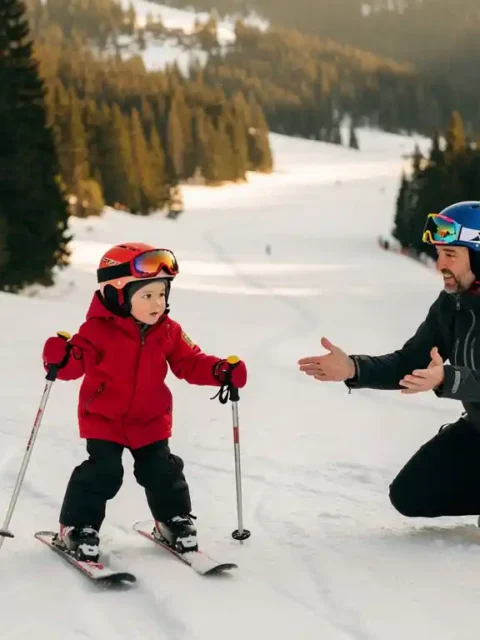
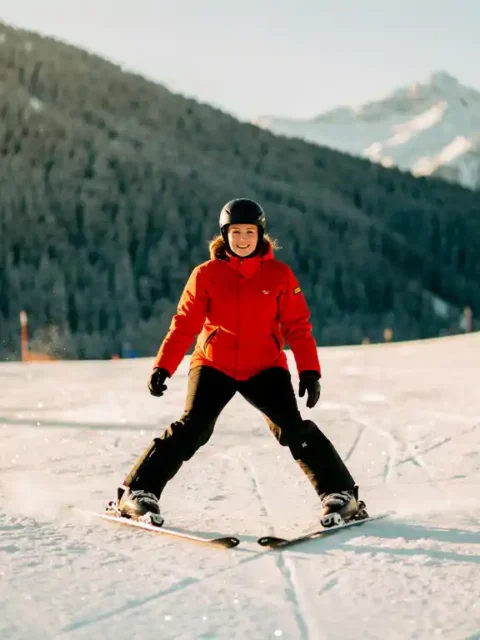
The difference between an open and closed ski stance comes down to the position of your feet and skis relative to each other. In an open ski stance, your skis form a V-shape (also known as the snowplow or wedge position), with the tips pointing toward each other. In a closed ski stance, your skis run parallel to each other, allowing for greater control and speed. For beginners, the open stance is the ideal starting position, while the closed stance becomes the goal as you gain more experience. In this article, we answer the most frequently asked questions about the correct ski stance, so you know exactly what to do and when.
When should you use an open or closed ski stance?
Use an open ski stance as a beginner or on challenging sections of terrain where you need to control your speed. Switch to the closed stance once you have a better feel for your skis, can handle higher speeds, and want to make smooth turns on blue and red runs. The choice depends on your skill level, the gradient, and the conditions on the slope.
In practice, even experienced skiers consciously switch between the two stances. On a steep, icy slope or in a crowded area, it can be smart to drop back into a wider stance for extra stability. The right ski stance isn’t about “better” or “worse” — it’s about what the situation calls for.
Think of the open stance as your brake and steering wheel combined. Once you’ve mastered that, you gradually work toward the parallel stance, where your skis move together as one fluid unit.
What are the benefits of an open ski stance for beginners?
The open ski stance offers beginners three major advantages: stability, the ability to brake, and speed control. Because the skis form a V-shape, your base of support increases significantly. This makes it much easier to keep your balance without falling — which gives enormous confidence to someone stepping onto skis for the first time.
More specifically, the open stance helps you in the following ways:
- Controlling speed: By making the V narrower or wider, you can easily adjust how fast you go.
- Maintaining balance: The wide base of support prevents you from tipping sideways too easily.
- Building confidence: Feeling more stable means less fear and faster learning.
- Initiating turns: Even in the snowplow position, you can make simple turns by shifting your weight.
The open stance is intentionally designed as a learning phase. Using it isn’t a mistake — it’s actually the smartest way to learn skiing safely, one step at a time.
What does a correct closed ski stance look like?
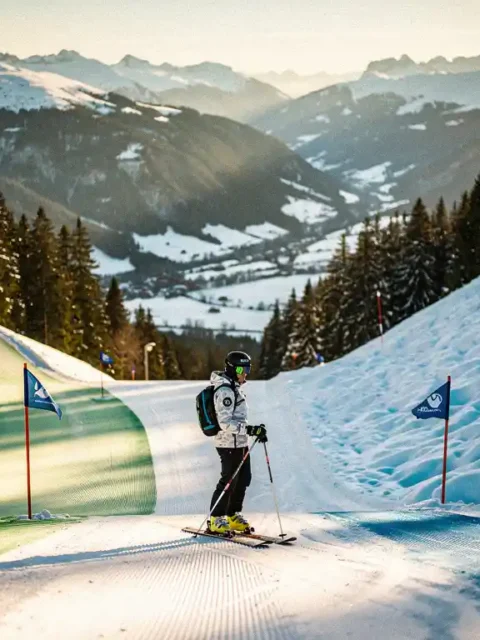
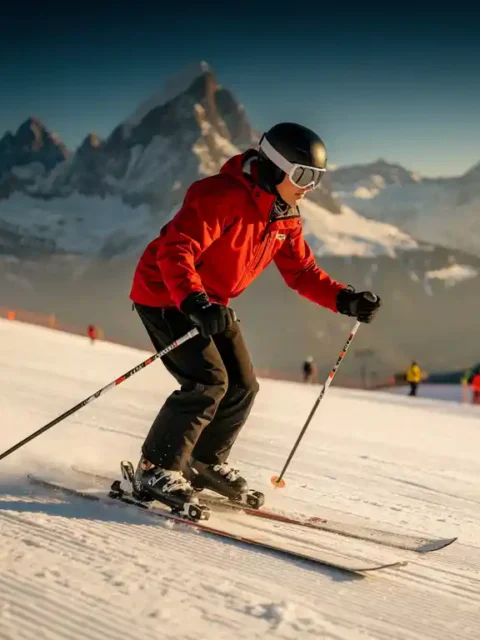
In a correct closed ski stance, your skis run parallel to each other, roughly hip-width apart. Your knees are slightly bent, your upper body leans slightly forward, and your weight is distributed evenly across both skis. Your arms hang relaxed in front of your body, ready to use your poles for direction and rhythm.
A few details that make all the difference:
- Knees: Always slightly bent, never straight. Straight knees make you rigid and vulnerable to bumps.
- Upper body: Lean slightly forward, not backward. Leaning back is one of the most common mistakes skiers make.
- Weight distribution: Evenly balanced, but shift your weight to the outside ski when turning.
- Gaze: Look ahead toward where you want to go, not down at your skis.
- Hips: Keep your hips square and facing in the direction of travel.
The closed stance requires body awareness and muscle strength that you’ll still need to develop as a beginner. That’s completely normal — and exactly why good instruction is so valuable.
Which ski stance is better for making turns?
For making smooth, controlled turns, the closed ski stance is clearly superior. With parallel skis, you can edge both skis simultaneously (carving), making your turns much more fluid and efficient. In the open stance, you turn by shifting your weight, which works but is far less dynamic.
In the snowplow, you essentially turn by putting more pressure on one ski than the other, resulting in a fairly wide, slow-moving arc. That’s perfectly fine when you’re learning, but at higher speeds or on narrow runs, the wedge position falls short.
With the parallel stance, you learn to carve: the skis cut through the snow on their edges, and you follow the turn almost effortlessly. Not only does it feel fantastic, it’s also safer on more challenging slopes. The right stance for turning depends on your level, but the end goal is always the parallel stance.
Should beginners learn the closed stance right away?
No, as a beginner you don’t need to learn the closed ski stance straight away. The open stance (snowplow) is deliberately the first step in every good ski lesson program. Trying to ski parallel before mastering the basics often leads to unsafe situations, frustration, and bad habits that are hard to unlearn later.
A good ski instructor builds progression logically:
- Getting used to the skis: Shuffling, falling and getting up, sliding in a straight line.
- Mastering the snowplow: Braking, controlling speed, and making your first turns.
- Refining wedge turns: Steering more smoothly and deliberately using weight shifts.
- Transitioning to parallel: Gradually bringing the skis closer together through the turns.
- Parallel turns: Fully carving on both skis.
Don’t rush through these stages. Each step builds a solid foundation for the next. Skiers who work through the wedge phase properly often make the switch to the closed stance surprisingly quickly.
What are the most common mistakes beginners make with their ski stance?
The most common ski stance mistakes among beginners are leaning back, straightening the knees, looking down at the skis, and holding the arms too low or too far behind the body. These mistakes may seem minor, but they throw off your balance and make skiing far harder than it needs to be.
Here’s a rundown of the most frequent errors:
- Leaning back: Out of fear, beginners tend to lean backward — but this actually gives you less control. Lean slightly forward over your ski boots.
- Straight knees: Stiff legs make you rigid and vulnerable. Always keep your knees slightly bent, like a spring.
- Looking at your skis: Your gaze guides your body. Always look ahead down the slope.
- Moving to parallel too soon: Skipping or leaving the wedge phase too early leads to loss of control on more difficult terrain.
- Skiing with tension: Tension in your shoulders and arms disrupts your balance. Make a conscious effort to relax.
- Equal weight on both skis in turns: When turning, you need to shift your weight to the outside ski — not keep it evenly distributed.
The good news: all of these mistakes are easy to correct with the right guidance. An experienced instructor can spot what’s going wrong in a single run and help you fix it on the spot.
How Ski-Pro helps you find the right ski stance
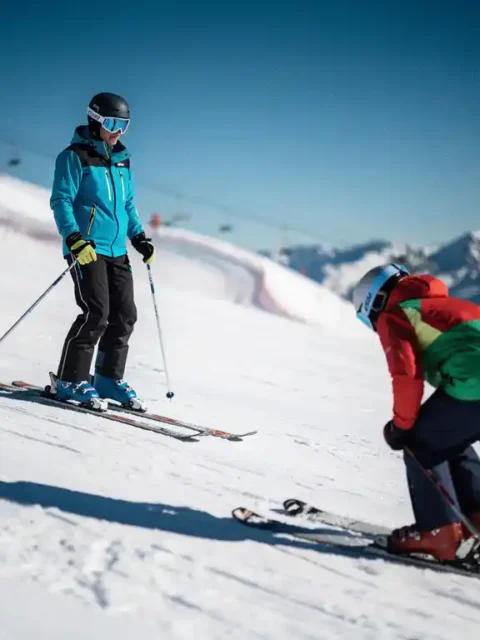
Knowing what the correct ski stance is and actually learning it on the slope are two very different things — and for the latter, you need a great instructor. We understand that better than anyone. Ski-Pro connects you with more than 250 certified ski schools and instructors throughout the Alps, making it quick and easy to find the perfect lesson for your level and goals.
Here’s what we take care of for you:
- Compare ski schools and instructors by location, price, and availability
- Choose between group lessons (fun and affordable) or private lessons (faster results)
- Book easily online, without any hassle
- Find lessons for all levels, from complete beginner to advanced skier
- Access top destinations in Austria, Switzerland, France, and more
Whether you’re stepping onto skis for the very first time or planning your first week in Tyrol, we make sure you hit the slopes well prepared and with a big smile on your face. Compare and book your ski lesson and nail that very first perfect turn.
Frequently Asked Questions
How long does it take to transition from an open to a closed ski stance?
It varies from person to person, but most beginners make the switch within three to five days of intensive skiing. The faster you master the snowplow, the smoother the transition to the parallel stance will be. With private lessons, this process often goes faster than in a group lesson, since the instructor can focus entirely on your progress.
Can I practice the correct ski stance at home before hitting the slopes?
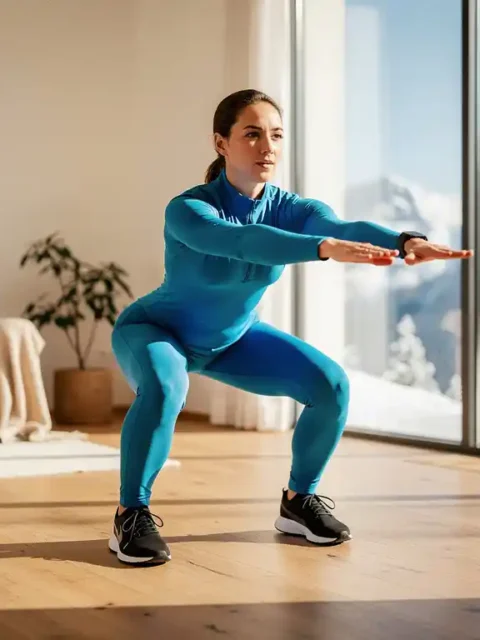
Yes, absolutely. You can get used to the basic stance at home by standing in front of a mirror, bending your knees slightly, tilting your upper body a little forward, and distributing your weight evenly. Building this muscle memory will help you adopt the correct position on the slope more quickly. Balance boards and squat exercises are also great preparation for building the muscle strength you'll need.
What level do I need to be to book private lessons with Ski-Pro?
Ski-Pro offers lessons for every level, from complete beginner to advanced skier. You don't need any prior experience to book a private lesson. Simply indicate your current level when booking, and you'll be matched with an instructor who knows exactly how to help you progress.
What if I notice my ski stance deteriorating again after my lessons?
That's completely normal, especially when you get tired or move onto more challenging terrain. Fatigue is one of the biggest causes of regression in posture and technique. Make sure to schedule deliberate rest breaks during a ski day, and consider booking a refresher lesson at the start of your next ski vacation to correct any bad habits before they take hold.