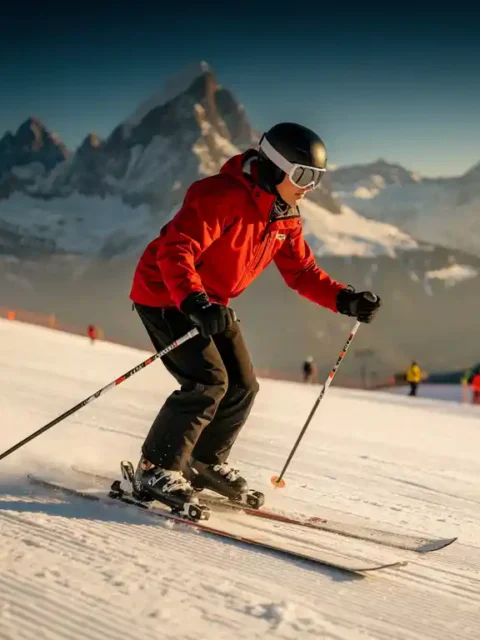

How do you make a plow turn step by step?
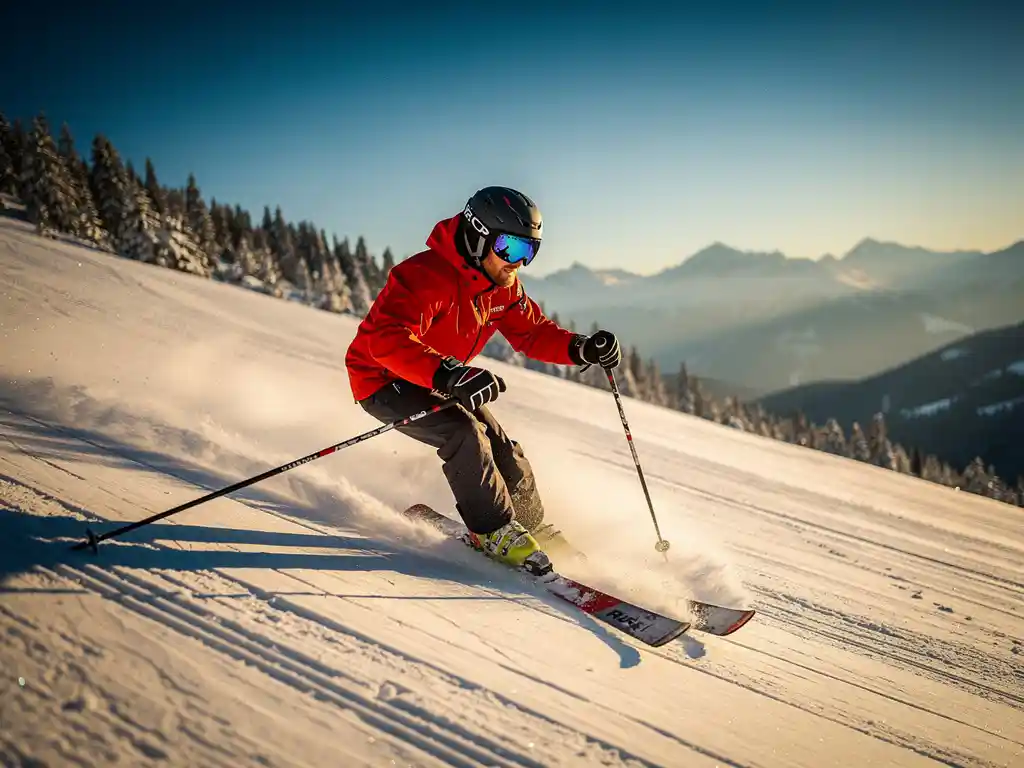
A snowplow turn is made by shifting your weight onto the outside ski from a snowplow stance, while edging that ski slightly and guiding your body into the turn. This is the first real steering movement you learn as a beginner skier, and it forms the foundation for everything that follows. In this article, we answer the most frequently asked questions about the snowplow turn, from proper body position to knowing when you’re ready for parallel turns.
What is the difference between a snowplow stance and a snowplow turn?
The snowplow stance is a static position in which your skis form a V-shape with the tips pointed toward each other and the tails spread wide apart. The snowplow turn is the dynamic movement you make from that position: by shifting your weight, you actively steer in a chosen direction. The snowplow stance is the foundation; the snowplow turn is the skill you develop from it.
In the snowplow stance, you slow down or come to a stop on the slope. The moment you deliberately shift your weight onto one ski and edge it slightly, the turn begins. Your left ski takes you to the right, and vice versa. That sounds simple — and it is — but it does require proper coordination and a relaxed posture. Many beginners confuse the two: they stand in a snowplow stance but don’t dare shift their weight, causing them to go straight down the hill without steering. The difference, then, lies not in the position of your skis, but in what you do with your body afterward.
What body position do you need for a snowplow turn?
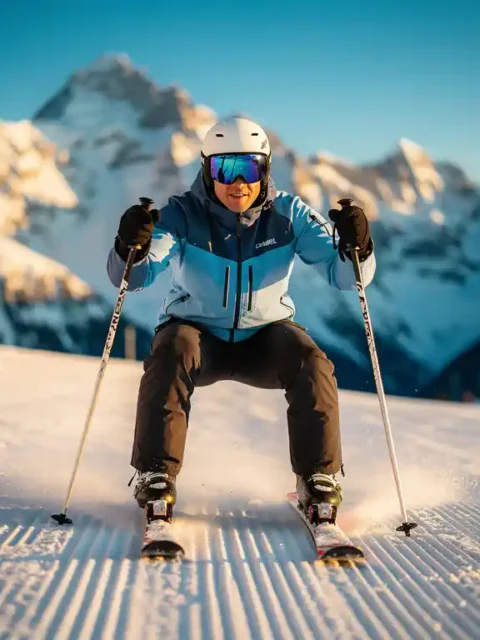
A good snowplow turn requires a relaxed, slightly forward-leaning posture with your knees gently bent, your weight evenly distributed over both feet, and your gaze directed at the slope ahead. Hold your arms slightly in front of your body, as if you were carrying a large tray. This basic position gives you control and balance throughout the turn.
A common mistake is leaning back. It may feel safer, but it lifts the weight off the ski tips and causes you to lose control. Make sure your shin presses lightly against the front of your ski boot — that’s the sign that your weight is properly forward. Relaxed shoulders are also important: tense shoulders lead to stiff movements, and stiff movements make steering harder. Think smooth and fluid, not rigid and forced.
How do you make a snowplow turn step by step?
A snowplow turn is made in five steps: adopt the basic stance, push your skis into a snowplow position, shift your weight onto the outside ski, edge that ski slightly onto its inside edge, and let the turn complete smoothly before initiating the next one. Repeat this to the left and right to glide down the slope in control.
- Adopt the basic stance: Knees slightly bent, weight slightly forward, gaze directed at the slope. Arms relaxed in front of your body.
- Set the snowplow: Push the tails of your skis outward so the tips form a V. Keep the pressure evenly distributed on both skis.
- Shift your weight: Want to go right? Shift your weight onto your left ski. Press your shin gently forward into the boot.
- Edge the ski: Tilt the weighted ski slightly onto its inside edge (the edge closest to the other ski). This helps the ski guide the turn.
- Complete the turn: Let the ski do its work and follow the arc through calmly. Once you’re pointing straight again, initiate the next turn by shifting to the other ski.
Start slowly and give yourself time to feel each step. Snowplow turns are not about speed — they’re about control. The more you practice, the smoother the transition between left and right becomes.
Why isn’t my snowplow turn working?
The most common reason a snowplow turn fails is that you don’t dare shift your weight onto the outside ski. This feels counterintuitive: you want to go right, but you have to put your weight to the left. Other common causes include leaning back, standing too stiffly, or trying to go too fast before the movement becomes automatic.
Here are the most common problems and how to fix them:
- You’re not turning the right way: Check whether your weight is truly on the outside ski. Many beginners think they’re shifting, but actually remain centered.
- Your skis come together: This means the snowplow is collapsing. Focus on actively keeping the tails pushed outward.
- You’re losing your balance: You’re probably leaning back. Consciously press your shin forward into the boot.
- Your turns feel jerky: Relax your shoulders and knees. Stiffness makes every movement abrupt.
Don’t get discouraged if it doesn’t click right away. Snowplow turns are a technical skill that takes time and repetition. A good ski instructor can spot exactly what’s going wrong within minutes and give you immediate feedback.
What slope is best for practicing snowplow turns?
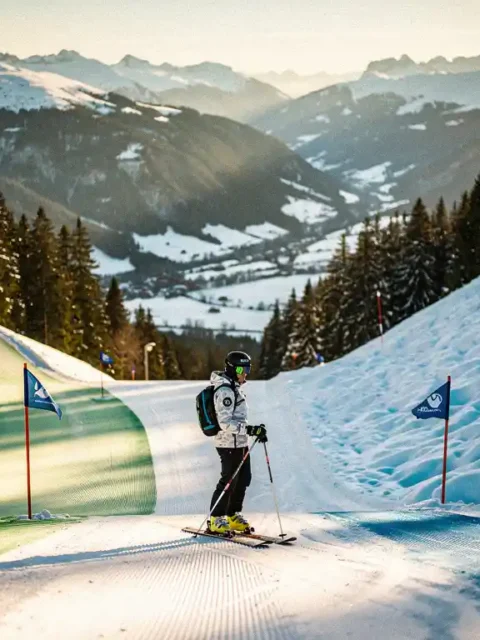
Snowplow turns are best practiced on a wide, quiet blue run with a gentle gradient. A slope that’s too steep creates too much speed and stress, while one that’s too flat doesn’t provide enough momentum to feel the turn. A children’s slope or a dedicated beginner area is ideal for your first attempts.
When choosing a practice spot, keep the following in mind:
- Crowds: Choose a quiet time or a less busy run. A crowded slope makes it harder to concentrate and increases the risk of collisions.
- Snow quality: Soft, well-groomed runs are much more pleasant to practice on than hard or icy surfaces. On ice, skis behave less predictably.
- Width: A wide run gives you the space to make large, relaxed turns without immediately reaching the edge.
Many ski resorts have dedicated beginner zones or practice slopes near the base of the mountain. Make the most of these early on, even if they seem boring. The stronger your foundation, the faster you’ll progress to more exciting runs.
When are you ready to move from snowplow turns to parallel turns?
You’re ready for parallel turns when you can make snowplow turns smoothly and in control on blue runs, without having to think about each individual step. When the movement feels automatic and you comfortably switch from left to right at a consistent speed, moving on to parallel turns is the logical next step.
There are a few concrete signs that you’re ready:
- You complete turns without losing speed unexpectedly or feeling startled.
- Your snowplow stance is stable and your skis don’t accidentally come together.
- You can feel the difference between a good turn and a poor one, and you can make adjustments.
- You ski comfortably on multiple blue runs without becoming exhausted by the technique itself.
The transition to parallel turns doesn’t happen overnight. Many skiers start with a half-parallel turn: the skis come parallel at the end of the turn but still start from a snowplow position. That’s a perfectly fine intermediate step. A ski instructor can tell you exactly when you’re technically ready and how to make the transition as smoothly as possible.
How Ski-Pro helps you learn the snowplow turn
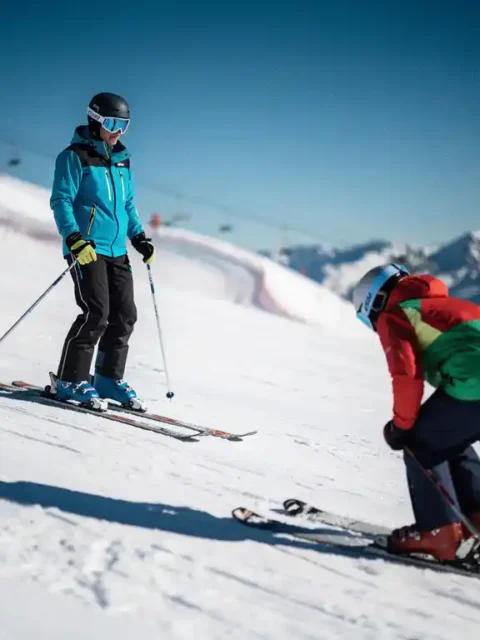
You won’t learn the snowplow turn from an article alone, no matter how good it is. You need a qualified instructor who can see your posture, correct your movements, and guide you forward at exactly the right moment. That’s precisely what we at Ski-Pro are here for.
Through our platform, you can easily compare and book ski lessons with more than 250 certified ski schools and instructors across the Alps. Whether you want to start your first day on the slopes in Winterberg or plan your first week in Tyrol, we’ll help you find the perfect lesson to match your level, location, and budget. Here’s what we offer beginners:
- An overview of group lessons and private lessons for complete beginners
- Transparent price comparisons between ski schools
- Reviews from other skiers so you know what to expect
- Easy online booking, hassle-free
Ready to make your first snowplow turns on real snow? Compare ski schools and book your lesson through Ski-Pro and hit the slopes fully prepared!
Frequently Asked Questions
Do I need a private lesson or a group lesson to learn the snowplow turn?
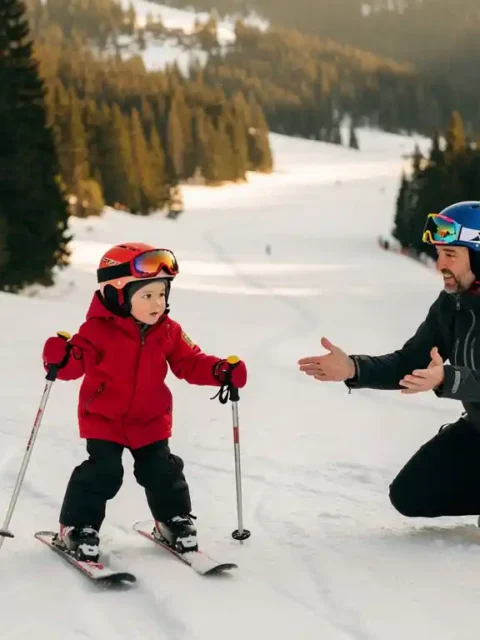
Both options work well, but each has its advantages. In a group lesson, you learn alongside other beginners at a similar pace, which can be motivating. A private lesson gives your instructor the space to focus entirely on your specific mistakes and areas for improvement, which often means faster progress. For complete beginners who want to learn quickly, a private lesson or a small group lesson is the most efficient choice.
How many lessons does it typically take to master the snowplow turn?
Most beginners get the hang of the basic snowplow turn movement within one to three lesson days. How long it takes you exactly depends on your coordination, athletic background, and how often you practice outside of lessons. Don’t expect the technique to feel fully automatic after just one lesson — repeating it daily on the slope significantly speeds up the learning process.
Can I learn snowplow turns without ski lessons, just from videos and articles?
Articles and videos are great preparation, but they don’t replace a ski instructor. An instructor can immediately see whether you’re leaning back, shifting your weight incorrectly, or letting your snowplow collapse — things you often can’t feel yourself. Without in-the-moment correction, you risk developing bad habits that become harder to break later on.
Does it matter what type of ski boots or skis I use as a beginner?
Yes, equipment makes a difference. Beginner skis are shorter, softer, and more forgiving, making them easier to steer in a snowplow stance. Ski boots that fit well and provide adequate support are essential for transferring pressure to your skis correctly. When renting, ask for equipment suited to your skill level and body weight — your rental shop or ski school can advise you.