
What ski techniques are there?
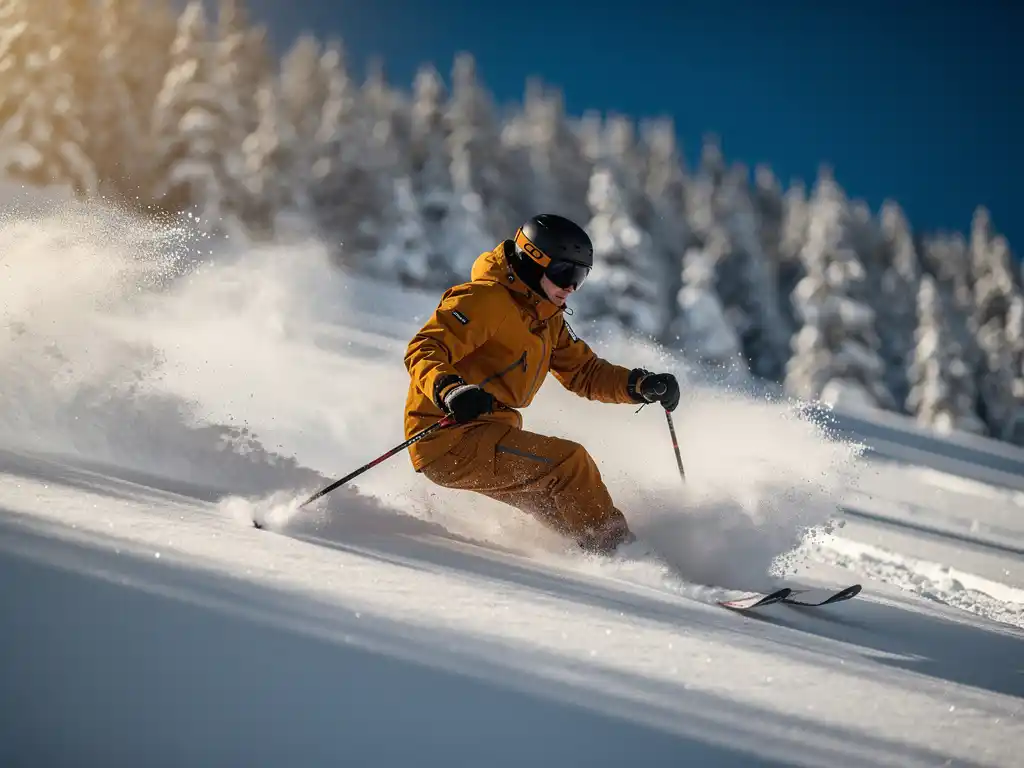
There are several skiing techniques you can master as a skier, from the snowplow for absolute beginners to carving and parallel skiing for advanced skiers. Which technique suits you best depends on your level and experience on the slopes. In this article, we answer the most frequently asked questions about skiing techniques, so you know exactly where you stand.
What skiing techniques do you learn as a complete beginner?
As a complete beginner, you first learn the basic skills: standing on skis, falling and getting up, braking with the snowplow, and making simple turns. The first skiing technique you’ll master is the snowplow, also known as the pizza wedge or wedge position. From there, you build on your technique step by step.
The learning process on skis happens in stages. You start from absolute zero: how do you put your skis on, how do you walk in them on flat ground, and how do you brake without panicking? Only once those basic skills are in place do you head onto the slope. The first day may feel awkward, but most beginners are cautiously gliding after just a few hours.
The general order in which beginners learn techniques looks like this:
- Snowplow (wedge position): the first and most important braking technique
- Wedge turns: making turns while staying in the wedge position
- Parallel turns (basic): bringing the skis closer together through the turn
- Carving: tilting the skis onto their edges for sharp, controlled turns
As a beginner, you don’t need to try to master everything at once. Focus on one technique at a time and build your confidence. A good instructor will help you enormously with this.
How does the snowplow work and when do you use it?
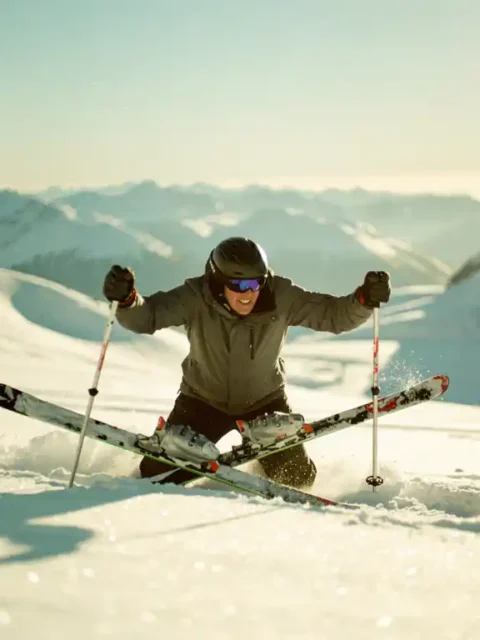
The snowplow works by pointing your ski tips toward each other and pushing the tails apart, so your skis form a V-shape. This position creates resistance against the snow, which slows you down. You use the snowplow to brake, reduce speed, and make your first turns on gentle slopes.
The strength of the snowplow lies in its simplicity. The harder you press the V-shape, the more you slow down. By shifting slightly more weight onto one ski, you turn in the opposite direction. This way, you learn the combination of braking and steering early on.
The snowplow is the perfect starting technique, but it does have its limits. On steeper slopes or at higher speeds, it becomes harder to control the wedge position. That’s the point at which you’re ready for the next step: parallel skiing or carving. Even so, the snowplow remains useful for advanced skiers too — for example, when slowly descending a busy slope or navigating narrow passages.
What is the difference between carving and parallel skiing?
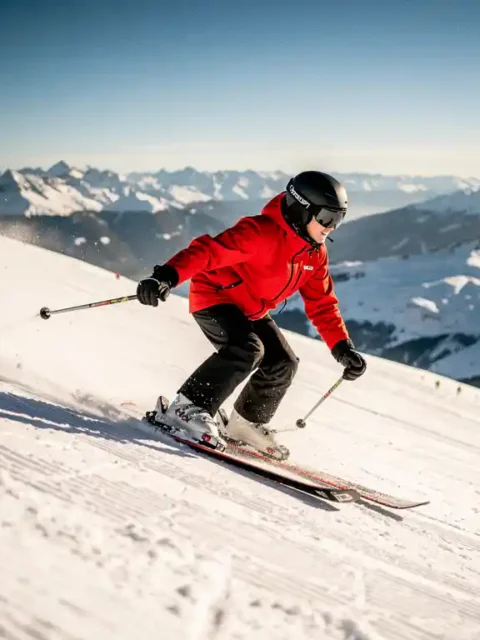
In parallel skiing, you keep your skis parallel to each other while making turns, shifting your weight to change direction. Carving takes it a step further: you tilt the skis onto their edges, allowing them to follow their natural curved shape and cut clean, sharp arcs into the snow. Carving feels faster and more dynamic.
Parallel skiing: control and versatility
Parallel skiing is the standard technique for most skiers on the slope. Your skis are side by side, your knees bend slightly, and your weight shifts smoothly from one ski to the other. It’s a versatile technique that works on virtually any slope, from blue to red. Beginners who have mastered the snowplow learn parallel skiing as the natural next step.
Carving: the technique for advanced skiers
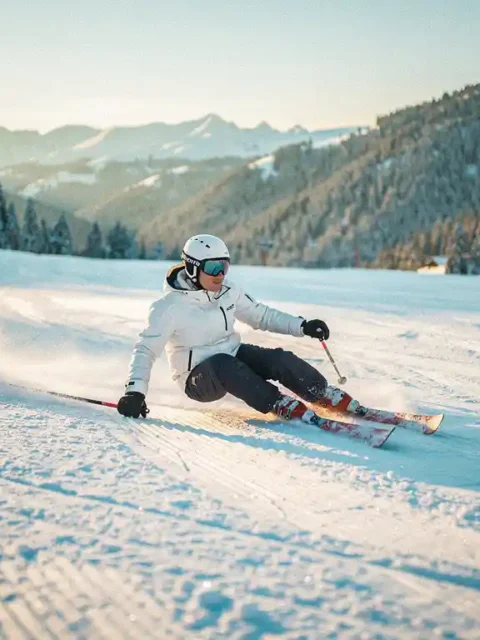
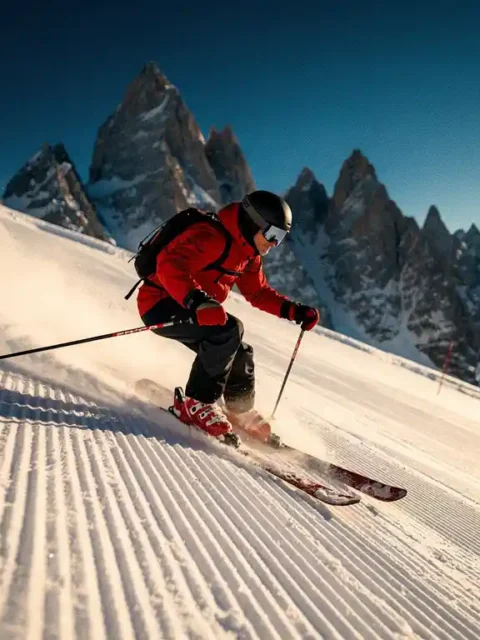
Carving is the technique you see used by racers and advanced skiers making tight, elegant turns. You tilt the skis onto their inner edges, allowing the curved shape of the ski itself to do the work. The result is a clean line in the snow with no sideways skidding. Carving requires a solid basic stance, leg strength, and a feel for the skis. It’s not for day one, but once you experience it, you’ll never want to ski any other way.
How do you improve your skiing faster without picking up bad habits?
You improve your skiing faster without picking up bad habits by taking lessons from a certified instructor from the very beginning — someone who steps in immediately if your posture or technique is off. Figuring it out on your own on the slope sounds adventurous, but incorrect movement patterns are hard to break once they become ingrained.
A few practical tips to improve your skiing technique quickly:
- Look ahead, not at your skis. Looking at your feet causes you to lose balance and awareness.
- Keep your knees bent. An upright posture makes you stiff and vulnerable to bumps.
- Use your poles actively. A good pole plant helps with timing and balance in turns.
- Ski slower than you think you can. Speed will come naturally once your technique is solid.
- Take breaks. Fatigue is the biggest enemy of good technique.
Regular feedback from an instructor is the fastest path to progress. Even one or two lessons per season can make the difference between stagnation and real improvement.
Which skiing technique suits my level best?
Which skiing technique suits you best depends on how far along you are. Complete beginners start with the snowplow, beginners who have skied a few times work on wedge turns and basic parallel turns, and advanced skiers dive deeper into carving and technique on more challenging slopes.
A useful guideline:
- Never skied before: snowplow and first turns on a gentle slope
- Skied a few times: refining wedge turns, working toward parallel skiing
- Comfortable on blue slopes: improving parallel skiing, trying your first carving techniques
- Comfortable on red slopes: carving, higher speeds, and more challenging terrain
Not sure about your level? Be honest with yourself and your instructor. Starting at too difficult a level leads to frustration and bad habits. Starting at the right level builds your confidence and leads to faster progress.
What do you learn in a ski lesson as a beginner?
In a beginner ski lesson, you learn the fundamental skills to get down the slope safely and in control: the correct stance, braking with the snowplow, making simple turns, and dealing with other skiers on the slope. A good lesson gives you a solid foundation in a short amount of time.
A typical beginner ski lesson looks like this:
- Equipment check and introduction: how to put on your skis and move in them
- Balance and feel: exercises on flat ground or a very gentle slope
- Braking: learning the snowplow and building confidence
- First turns: changing direction through weight shifting
- First slope experience: descending a quiet blue slope under supervision
Group lessons are ideal if you enjoy learning together and laughing at each other’s tumbles. Private lessons give you more personal attention and are perfect if you want to progress faster or have specific challenges to work on. Both options are valuable — it simply depends on what works best for you.
How Ski-Pro helps you with the right skiing technique
Once you know which skiing technique you want to learn, the next step is finding the right instructor or ski school. That’s exactly what we at Ski-Pro are here for. We help beginners find the best ski lesson quickly and easily, without spending hours searching and comparing.
Here’s what we do for you:
- Access to more than 250 certified ski schools and instructors in the Alps
- Easy comparison by price, location, level, and lesson type (private or group)
- Transparent information so you know exactly what you’re booking
- Available for popular destinations in Austria, Switzerland, France, and more
- Suitable for all levels, from first time on skis to advanced
Whether you want to stand on skis for the first time or take your technique to the next level: compare and book your ski lesson easily through our platform and head to the mountain with complete peace of mind!
Frequently Asked Questions
How long does it take to move from the snowplow to parallel skiing?
This varies from person to person, but most skiers make this transition after 3 to 5 days of active skiing. With regular lessons from a certified instructor, the process goes considerably faster, as they can see exactly when you are technically ready for the next step. Try not to rush the transition — a smooth switch only happens once wedge turns truly feel automatic.
Can I learn to carve without a private lesson, or do I really need one?
Carving is technical enough that guidance is definitely beneficial, but a private lesson isn’t strictly necessary. A good group lesson at an advanced level can go a long way, as long as the instructor pays sufficient attention to your stance and edge angle. However, if you want quick results or have specific technical flaws you want to correct, a private lesson is the most efficient investment.
What are the most common mistakes beginners make on skis?
The most common mistakes are: leaning back out of fear (which actually gives you less control), looking at your ski tips instead of ahead, and not bending your knees enough. These habits creep in quickly when you learn without guidance. Have an instructor look at your posture early on — mistakes corrected in the first few days won’t need to be painfully unlearned later.
What type of slope is best for practicing skiing technique?
Beginners practice best on blue slopes: wide, calm, and with a gentle gradient that offers enough challenge without being intimidating. Advanced skiers looking to perfect their carving prefer red slopes with a consistent gradient and little traffic. Avoid overly busy slopes when practicing — space and calm give you the freedom to focus on technique rather than on other skiers.