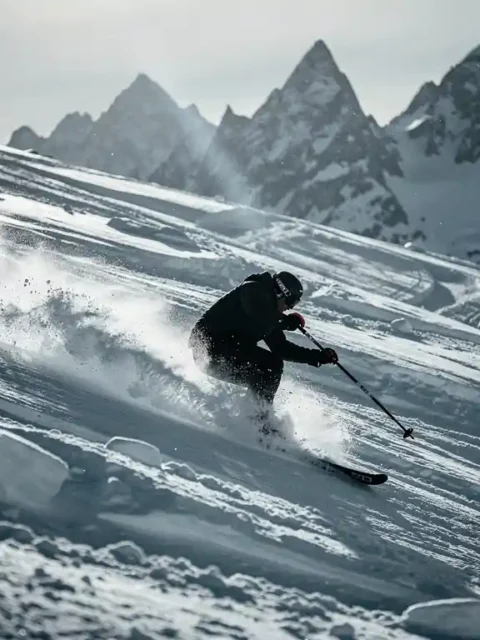

How can you be less stiff while skiing?
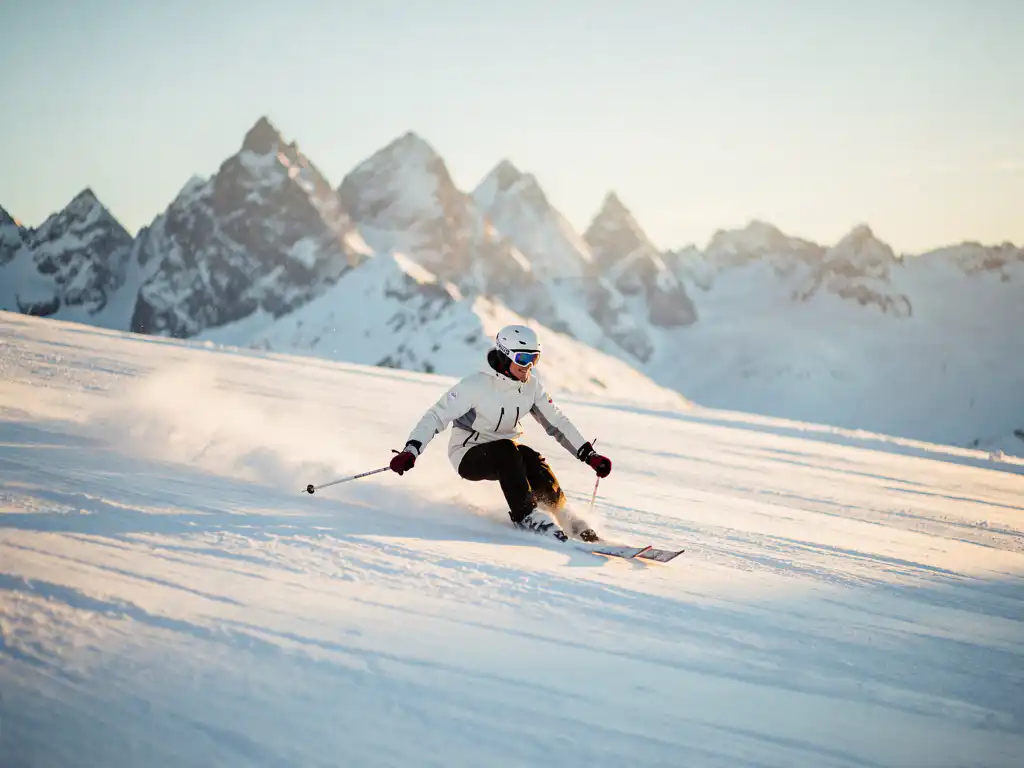
You can avoid getting stiff while skiing by consciously relaxing, maintaining the correct body position, and properly loosening your muscles before you hit the slopes. Stiffness is one of the most common challenges for beginner skiers and almost always results from a combination of tension, fear, and unfamiliarity with the movements required on skis. In this article, we answer the most frequently asked questions about stiffness on the slopes, from causes to solutions.
Why do beginner skiers get stiff so quickly on the slopes?
Beginner skiers get stiff quickly because the body automatically reacts to an unfamiliar situation that it perceives as dangerous. When you stand on skis for the first time, your body tenses up as a protective mechanism: muscles contract, knees lock, and breathing becomes shallow. This is a completely normal response, but it actually makes skiing harder rather than easier.
The combination of altitude, speed, and a slippery surface puts your brain into a kind of alarm mode. You are literally in survival mode rather than skiing mode. The unfamiliar equipment plays a major role as well: heavy ski boots, long planks attached to your feet, and a slope that bears no resemblance to anything you experience at home. Processing all of those stimuli at once takes energy and leads to muscle tension throughout the entire body.
Fear of falling is the biggest culprit of all. The more afraid you are of falling, the harder you tense your muscles. And the stiffer you are, the greater the chance that you actually do fall. That is the vicious cycle many beginners find themselves in. The good news: once you understand what is happening, you can actively work to break it.
How does muscle tension affect your balance and control on skis?
Muscle tension disrupts your balance and control on skis because stiff muscles block the small, continuous adjustments your body needs to stay stable. Good skiing requires fluid, dynamic balance — not a forced, rigid posture. The more tension you carry, the less you can respond to what the slope demands of you.
Think of the difference between a stiff plank and a flexible branch in the wind. The plank breaks; the branch bends. On skis, you want to be the branch. When your knees are locked and your core is rigid, you lose the ability to absorb what is happening beneath your skis. Small bumps, changes in snow conditions, or a slight incline then become major obstacles.
Muscle tension also has a direct effect on your skiing technique. Stiff ankles mean you cannot distribute your weight properly across the ski. Tense hips hinder turning and steering. And a stiff back causes you to stand too upright or lean too far forward, making you lose control of your skis. Relaxation is therefore not a luxury — it is a technical requirement for skiing well.
What exercises help you relax before and during skiing?
Exercises that help you relax before skiing include dynamic stretching, targeted breathing exercises, and simple balance training. During skiing, conscious breathing, small movement tasks, and short breaks all help release muscle tension and keep your body loose.
Before your first run
- Dynamic stretching: Make large circles with your hips, shake out your arms, and do high knee lifts. Avoid static stretching, as it actually makes muscles looser than you want them to be. Dynamic movement activates your muscles in the right way.
- Deep breathing: Breathe in deeply through your nose three times and exhale slowly through your mouth. This lowers your heart rate and signals to your brain that it is safe to relax.
- Small hops: Bounce gently up and down on your skis a few times on flat terrain. Loosening your ankles and knees this way helps you feel how the skis respond without having to think about balance.
During skiing
- Hum or sing softly: It sounds odd, but singing naturally keeps your breathing steady. Regular breathing breaks muscle tension immediately.
- Look further ahead: Fix your gaze on a point further down the slope rather than directly at your feet. This relaxes your neck and shoulders and gives you more time to react.
- Shake out your hands: Consciously release your grip on your poles and give your hands a quick shake. When your hands are relaxed, the rest of your upper body quickly follows.
- Take breaks: Stop regularly, take a breath, and consciously check in with how your body feels. Sometimes simply standing still for a moment is enough to reset the tension.
What is the correct ski stance to prevent stiffness?
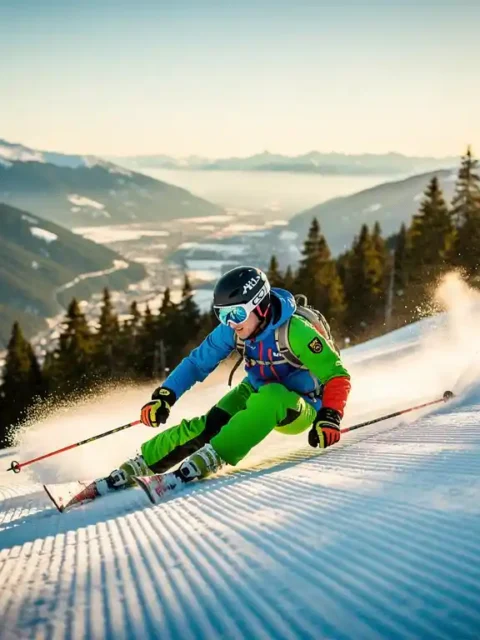
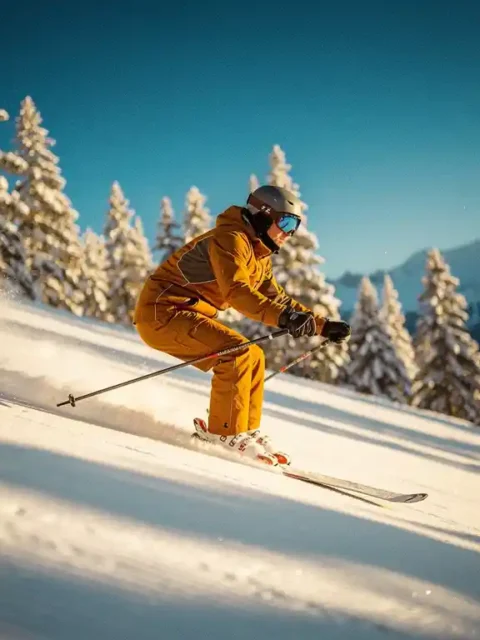
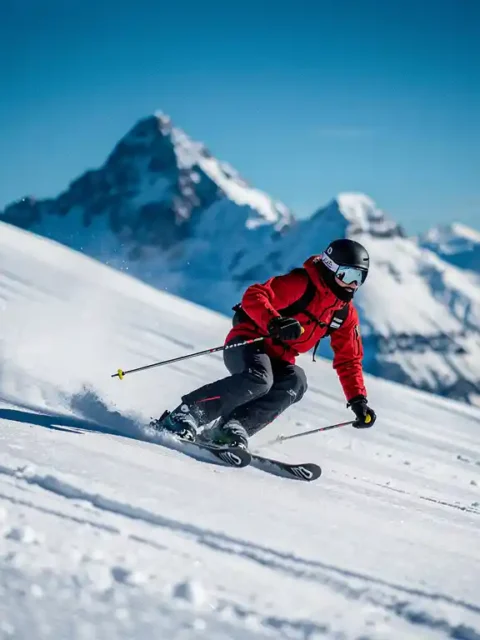
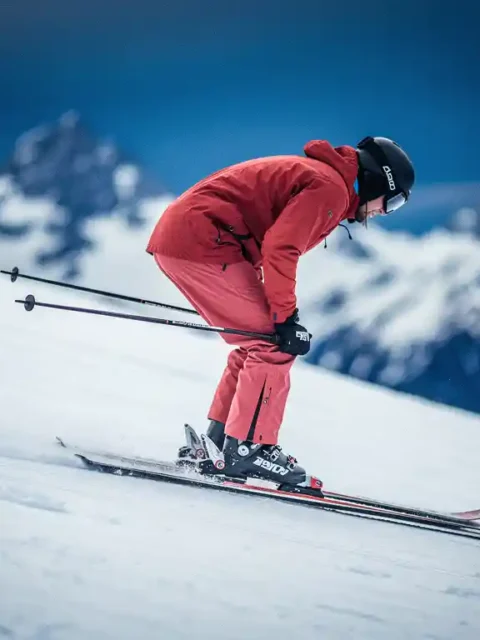
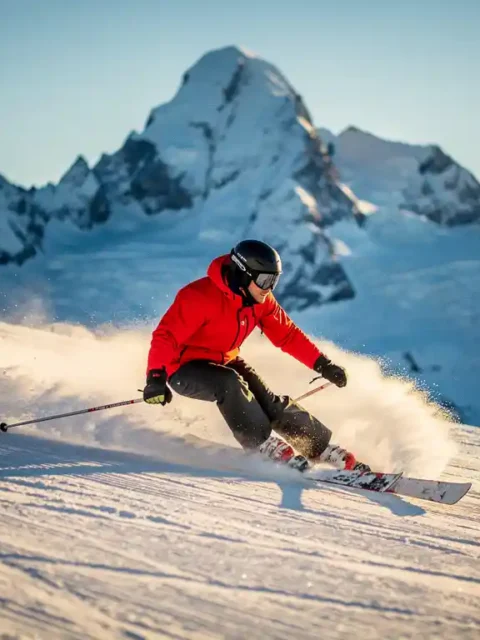
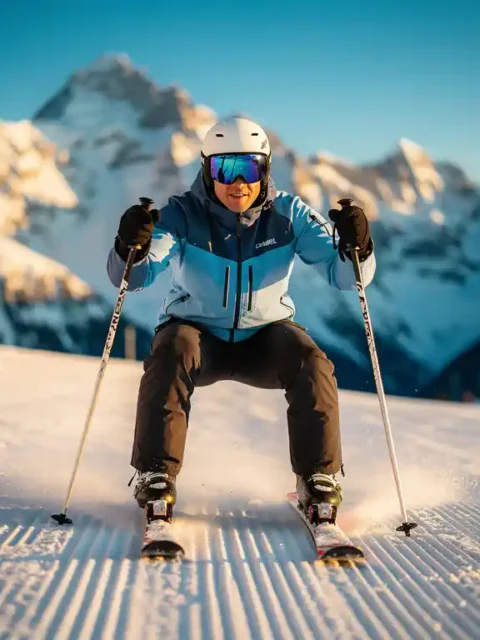
The correct ski stance to prevent stiffness is a slightly flexed, athletic base position in which the knees are softly bent, the weight leans slightly forward, and the arms hang relaxed in front of the body. This position gives your body the freedom to move and react without locking up.
Many beginners make the mistake of standing too upright or leaning too far back because they are afraid of the slope. Both postures are counterproductive: standing too upright makes you stiff, and leaning back gives you no control over your skis. The solution is to bend your knees as if you are about to sit down on an invisible chair — not too deep, but enough to feel a sense of spring and readiness.
Your arms also play an important role. Keep them in front of your body, as if you are carrying a tray. Arms that hang behind you or are pressed tightly against your sides pull your torso along with them and disrupt your balance. Keeping relaxed arms in front of your body holds you in the correct position and makes it easier to plant your poles.
Finally: look where you want to go, not at your skis. Your body automatically follows your gaze. Anyone who stares down at their own skis will hunch forward and lose the upright, balanced posture that is so important for relaxed skiing.
Does a ski lesson really help you become less stiff?
Yes, a ski lesson demonstrably helps you become less stiff. A good instructor quickly identifies where the tension is coming from, provides targeted feedback on your posture, and offers tailored exercises that build your confidence. That growing confidence is precisely what breaks the cycle of muscle tension, because stiffness is largely a mental response to uncertainty.
In a ski lesson, you learn not only the technique but also how to use your body in an environment that is new and challenging for you. An instructor can help you feel what a relaxed posture actually feels like — something you can never fully absorb from a video or article alone. That direct, physical learning experience is irreplaceable.
Whether you choose a group lesson or a private lesson also makes a difference. In a group lesson, you see other beginners struggling with the same challenges, which eases your own tension and shows you that stiffness is completely normal. A private lesson offers more personal attention and progresses at your own pace, which is ideal if you feel particularly uncertain or want to learn more quickly.
How Ski-Pro helps you hit the slopes feeling relaxed
Now that you know that the right guidance can make a real difference in how fluidly you ski, but you are not yet sure which ski school or instructor is the right fit for you — that is exactly where we come in. Through Ski-Pro, you can easily compare more than 250 certified ski schools and instructors across the Alps, from Austria to Switzerland and France. That way, you find a lesson that matches your level, your pace, and your budget.
- Compare group lessons and private lessons side by side, including prices and availability
- Read reviews from other beginners who have taken the same step
- Book directly and securely online, without any hassle or long wait times
- Find the perfect match based on destination, age, and experience level
Whether you are stepping onto skis for the very first time in Winterberg or planning your first week in Tyrol, we are here to help you start your winter sports adventure well prepared and stress-free. Compare, book, and hit the slopes with a smile!
Frequently Asked Questions
How long does it take for a beginner to become less stiff on skis?
Most beginners notice a clear difference after just one or two days on the slopes, especially when they consciously focus on relaxation and correct posture. The pace varies from person to person: those who are naturally anxious or have little sporting experience may need a bit more time. With guidance from a certified instructor, this process goes considerably faster, as you receive immediate feedback on where you are holding unnecessary tension.
What should I do if I completely seize up with tension in the middle of a slope?
Stop in a safe spot at the edge of the slope, plant your poles, and take three slow, deep breaths in and out. Then shake out your hands, shoulders, and knees, and consciously look further down the slope rather than straight down at your feet. This quickly breaks the vicious cycle of fear and tension, allowing you to continue skiing with greater control.
Does it matter which ski boots I wear when it comes to stiffness?
Yes, absolutely. Ski boots that are too stiff, too tight, or incorrectly adjusted can significantly increase muscle tension in your ankles and calves. Make sure your boots are professionally fitted and adjusted to your skill level: beginners benefit from a softer flex that allows more freedom of movement. Always ask for advice based on your level when renting or buying.
Are breathing and relaxation techniques useful even if I already have some experience?
Absolutely — relaxation techniques are not only valuable for complete beginners. More advanced skiers also use conscious breathing and body scanning to release tension, for example in challenging terrain conditions or on unfamiliar slopes. The more aware you become of your body on skis, the better you can refine your technique and the more enjoyment you get out of skiing.