
How do you prevent back pain caused by poor skiing posture?
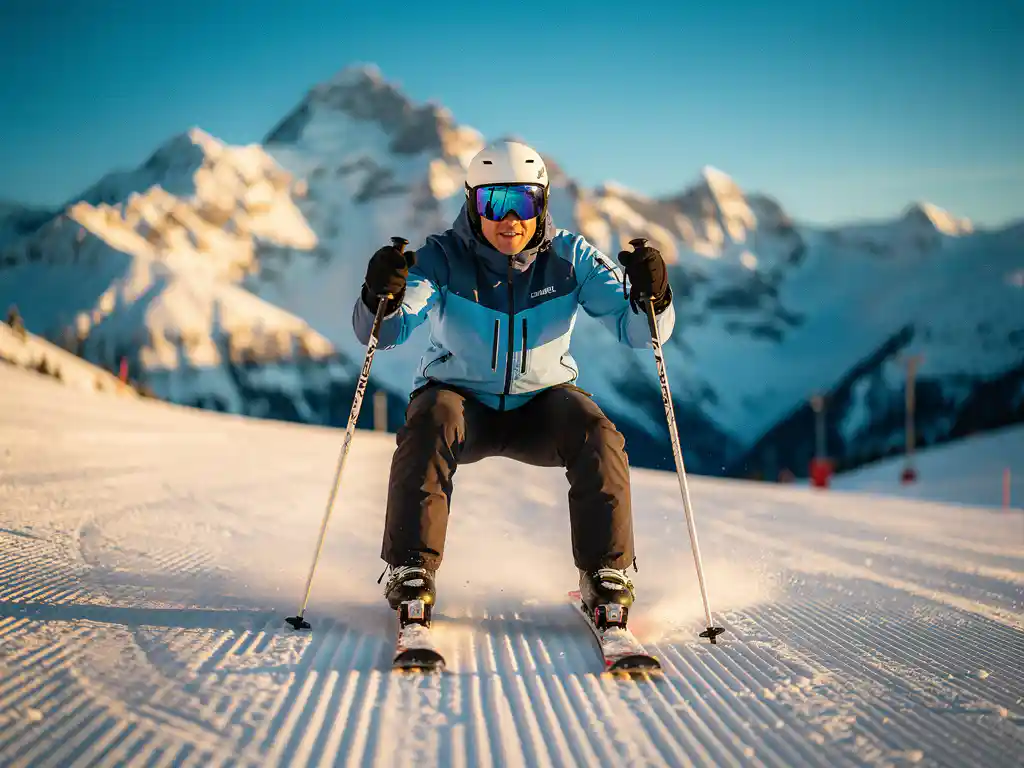
You can largely prevent back pain from skiing by learning a proper ski stance before bad habits take hold. The foundation of that stance: slightly bent knees, a straight but relaxed back, and your weight forward over your ski boots. Beginners who get this right from the start save themselves a great deal of pain and frustration on the slopes.
Below, we answer the most frequently asked questions about ski stance and back pain, from the most common posture mistakes to practical exercises and what to do when the pain has already set in.
What does a poor ski stance do to your back?
A poor ski stance places excessive pressure on the muscles and joints of your lower back. When you stand too upright, lean too far back, or twist your torso with every turn, your back muscles are constantly compensating for the instability. After a few hours on the slopes, that results in tight muscles, stiffness, and sometimes even acute pain.
The frustrating thing is that most beginners don’t realize their posture is wrong until the pain has already started. Your back only sends out warning signals once the muscles are already significantly overloaded. On top of that, skiing adds vibrations from the slope, heavy ski boots that put extra strain on your leg muscles, and unfamiliar movements your body isn’t used to yet. That combination makes the back vulnerable.
In the long term, a structurally poor ski stance can even lead to problems with the intervertebral discs, but for most beginners it stays at muscle soreness and stiffness that disappears after a day of rest. Still, prevention is far better than cure — especially if you want to enjoy a full ski week without spending the last few days hobbling on the sidelines.
What posture mistakes do beginners make most often?
The most common posture mistake among beginners is leaning back: the instinct to lean away from the mountain when the slope gets steep. This feels safer, but it shifts your weight onto your heels, causing your back to round and your back muscles to work overtime to keep you balanced.
Other frequently made mistakes include:
- Standing too stiff: Straight knees and a tense posture absorb no shock, meaning every bump travels straight into your spine.
- Bending forward from the hips: Leaning forward from the hips rather than the ankles overloads the lower back.
- Turning with the shoulders: Rotating your torso to initiate a turn instead of using your knees and hips places a twisting force on the spine.
- Letting your arms hang at your sides: Without actively using your ski poles, you lose balance and unconsciously compensate with your back.
- Looking down: Anyone who looks at their own skis automatically tilts their entire posture in the wrong direction.
Do you recognize yourself in any of these mistakes? Don’t worry — they’re all correctable. But you do need someone alongside you to point them out, because from your own perspective on the slope, you’ll rarely spot them yourself.
What exactly does a correct ski stance look like?
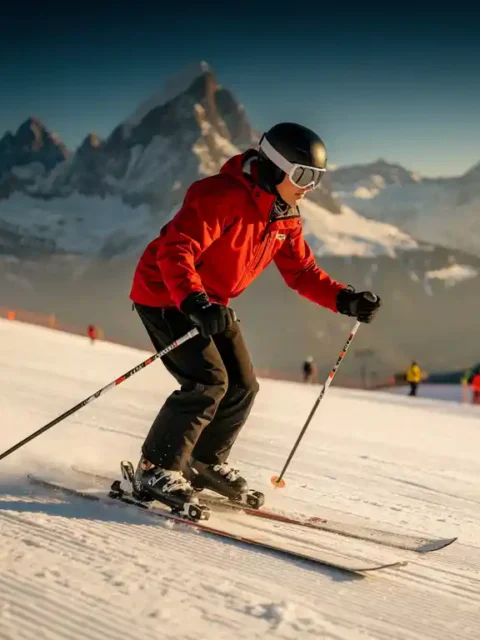
The correct ski stance is athletic, dynamic, and relaxed all at once. You stand with your feet hip-width apart, knees slightly bent, weight evenly distributed across the full sole of your foot with a slight emphasis toward the toes of your ski boots. Your torso is upright but not stiff, and your gaze is directed at the slope ahead of you.
Imagine you’re about to sit down on an invisible stool that’s just a little too high. That’s the basic position. Your knees bend, your hips drop slightly, but your back stays straight. From that position, you can react quickly to changes in the slope and absorb shocks through your legs rather than your spine.
Concrete checkpoints for a correct ski stance:
- Knees visibly bent, even on flat terrain
- Shins leaning lightly against the front of the ski boot
- Hips above the feet, not behind the heels
- Shoulders relaxed, arms slightly in front of the body
- Ski poles actively used for rhythm and balance
- Gaze always directed forward, not downward
The good news: after a few hours of practice, this stance already starts to feel much more natural. The bad news: without guidance, the mistakes creep back in quickly — especially once the slope gets steep or you start to get tired.
What exercises help prevent back pain when skiing?
Exercises that strengthen the core muscles, glutes, and leg muscles are the most effective at preventing back pain when skiing. A strong core supports the spine with every movement on the slope, reducing the amount the back has to compensate for weak or tired muscles elsewhere.
Exercises to do at home, weeks before your ski trip
Start the following exercises at least four to six weeks before your ski vacation:
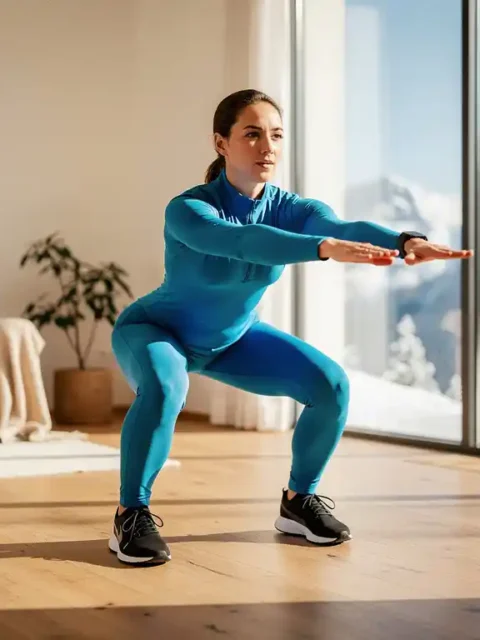
- Squats and wall sits: Train the quadriceps and glutes, which keep the knees stable in a ski stance.
- Plank variations: Strengthen the deep abdominal and back muscles that keep your torso stable.
- Glute bridges: Activate the glutes that support the lower back during forward movement.
- Rotational core exercises with resistance: Train the oblique abdominal muscles so you make turns using the right muscle groups.
- Balance on a wobble board or BOSU ball: Improves proprioception — your sense of balance and body position.
Stretching and recovery on the slopes
On the slopes themselves, it’s equally important to let your body recover. After each session, make time for:
- Hamstring and hip flexor stretches to relieve the lower back
- Side stretches for the flanks and torso
- Slow knee movements to keep the joints supple
And don’t forget: skiing is physically demanding. Deliberately plan rest breaks — especially as a beginner. Fatigue is the biggest enemy of good posture.
Can a ski lesson prevent back pain in beginners?
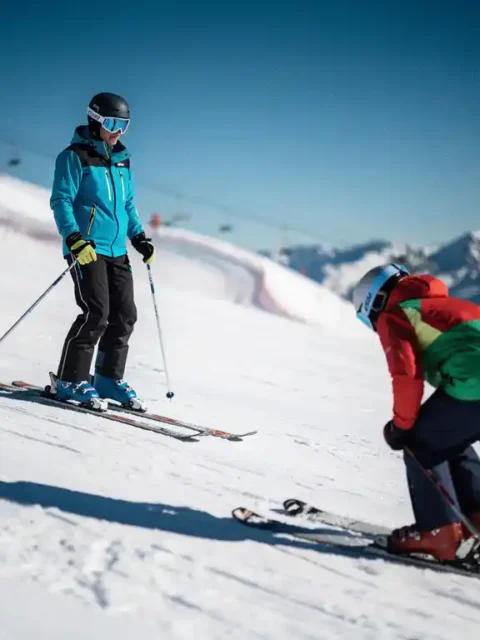
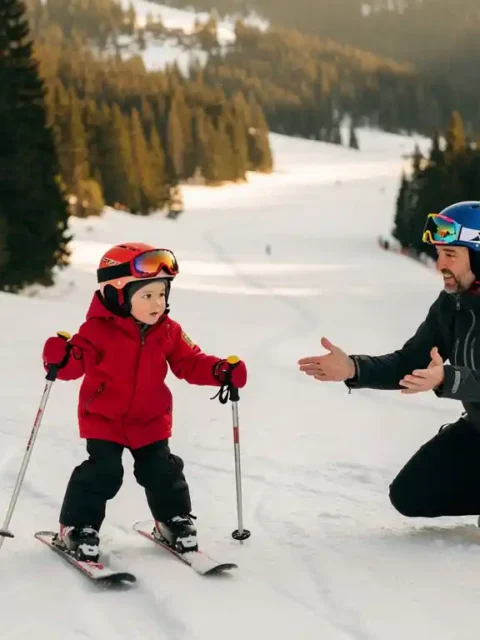
Yes, a professional ski lesson is one of the most effective ways to prevent back pain as a beginner. A certified ski instructor immediately sees which posture mistakes you’re making, corrects them before they become ingrained, and teaches you the right technique in a way that suits your body and skill level.
Many beginners try to learn skiing through YouTube videos or tips from friends on the slopes. At best, that produces a reasonable foundation, but the subtle posture errors that cause back pain are nearly impossible to spot from a distance. An instructor stands beside you, watches from multiple angles, and gives direct feedback at the moment it matters most.
Group lessons are a great and affordable option for beginners. You learn alongside others at the same level, which is motivating and lowers the barrier to entry. If you want to progress faster or have specific needs, a private lesson is well worth it. In either case: the investment in a good lesson pays off in a pain-free and far more enjoyable ski week.
Through Ski-Pro, you can easily compare more than 250 certified ski schools and instructors in the Alps, so you find exactly the lesson that fits your level, location, and budget. Whether you’re hitting the slopes for the first time in Tyrol or Switzerland, we’ll help you start your adventure well prepared and free from back pain.
What should you do if you get back pain while skiing?
If you develop back pain while skiing, stop skiing immediately and rest. Pushing through pain makes the problem worse and can turn a minor muscle strain into a more serious issue that sidelines you for the rest of the week.
Follow these steps when pain strikes:
- Stop and rest: Get off the slope and sit or lie down in a comfortable position. Don’t force your body to continue.
- Heat or cold: For acute muscle pain, heat helps relax the muscles. For a possible injury or swelling, cold is better. Not sure? Choose heat for muscle pain, cold after an impact or fall.
- Light movement: After resting, gentle movement helps loosen the muscles. Think a slow walk or light stretching — not another ski run.
- Evaluate your posture: Honestly ask yourself what mistake you may have made. Were you too tense? Were you leaning back? Use those insights the following day.
- Consult a doctor if the pain persists: If the pain doesn’t go away after a night’s rest, or if it radiates down into your leg, seek medical attention. This may indicate a herniated disc or another condition requiring professional care.
Prevention remains the single most important thing. A proper warm-up before skiing, regular breaks, adequate hydration, and the right technique are the best insurance against back problems on the slopes. And if you’re not yet fully confident that your posture is correct, book a lesson. Your back will thank you.
Frequently Asked Questions
How quickly will you notice improvement in your ski stance after a professional lesson?
Most beginners notice a clear difference during the very first lesson, because an instructor corrects posture mistakes the moment they occur. After one or two lessons, the basic stance is often already significantly better, though it takes a full ski week to truly make the correct posture automatic. Consistent practice and ongoing feedback remain essential throughout.
Are there specific ski boots or equipment that can reduce back pain?
Yes, well-fitting ski boots play a major role. A boot that fits too loosely forces you to unconsciously compensate your posture, which puts direct pressure on your back. Have your ski boots professionally fitted at a ski rental shop, and consider custom insoles for extra support. In addition, shorter skis for beginners can improve control, which indirectly reduces the load on your back as well.
Can I keep skiing if I wake up with back muscle soreness the next morning?
Mild muscle soreness after the first few days of skiing is normal and doesn’t necessarily mean you should stay off the slopes — as long as the pain doesn’t radiate into your legs and there’s no sharp or stabbing pain. Do start the day with a proper warm-up and stretch your back muscles before heading out. Dial back the intensity and take more frequent breaks than the day before, giving your body the chance to recover while you still enjoy the slopes.
How do I stop my posture from deteriorating as I get more tired on the slopes?
Fatigue is the biggest saboteur of good ski posture, so deliberately taking breaks is the key strategy. Plan a rest break every 45 to 60 minutes, even if you feel like you could keep going. Use that break to reset your posture: stand still, run through the checkpoints (bent knees, weight forward, relaxed shoulders), and only then continue. A quick mental check-in prevents bad habits from creeping in unnoticed once you start to tire.