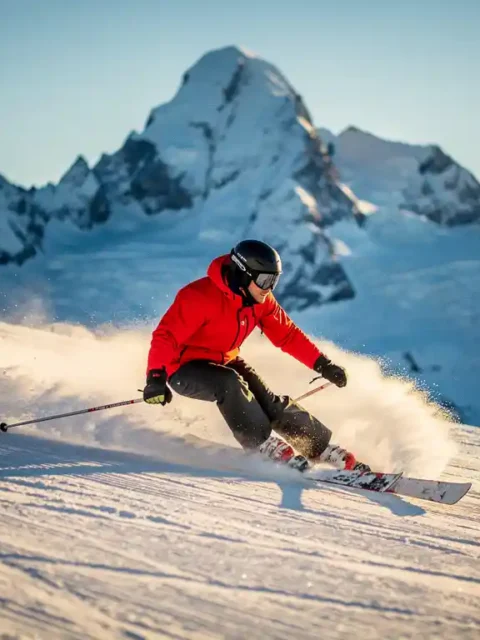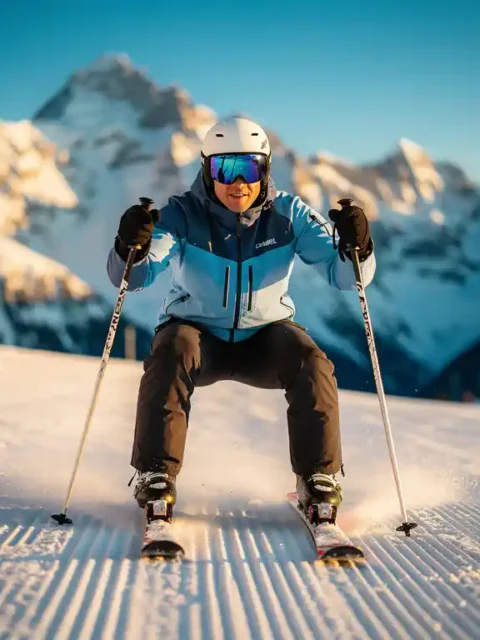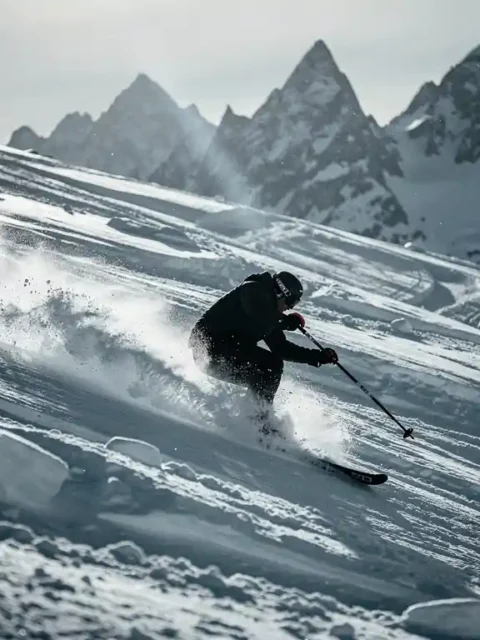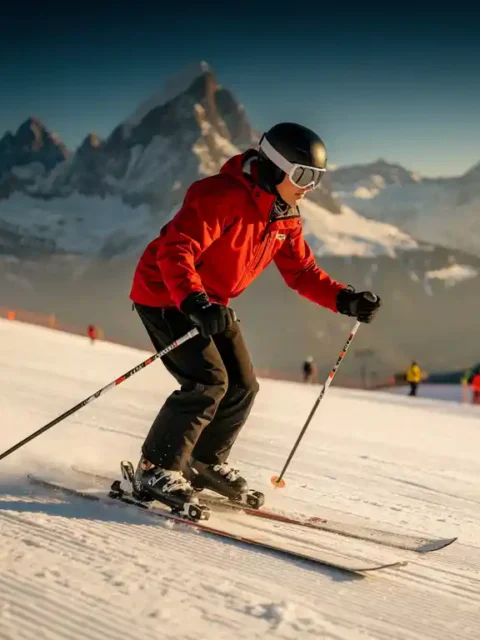

What does poor skiing posture do to your body?
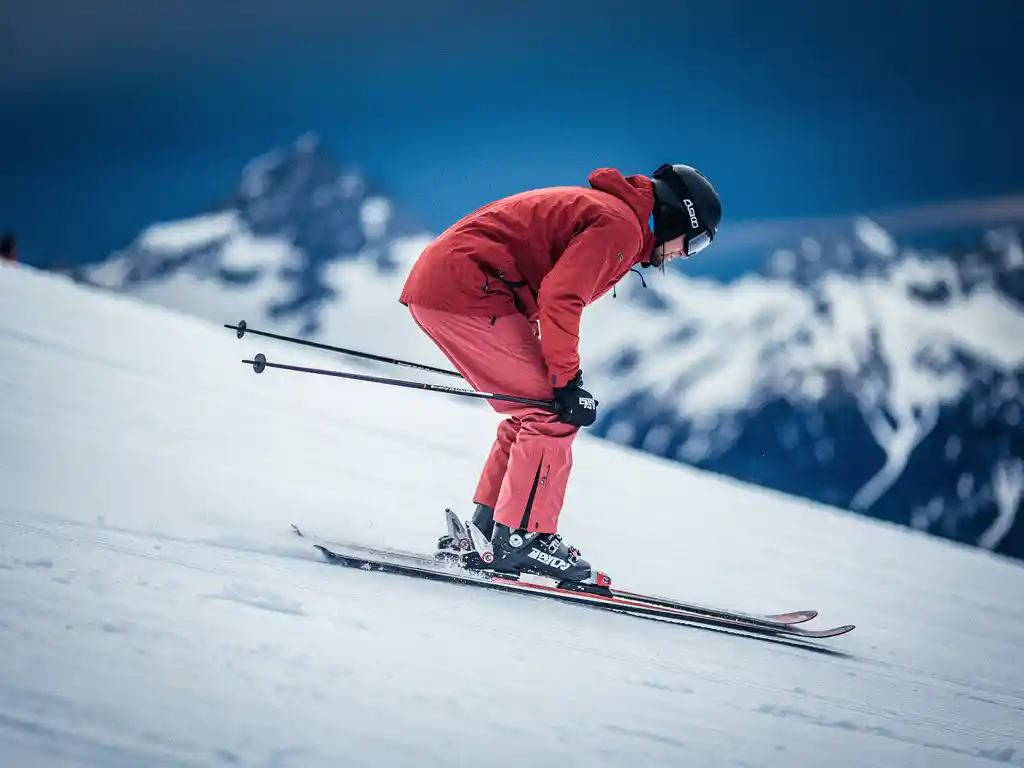
Poor skiing posture does more to your body than you might think. Your knees, back, and hips absorb extra punishment with every incorrect movement, which can lead to muscle soreness, overuse injuries, and in the worst case, a serious injury. This is a particularly important point for beginners: anyone who hits the slopes without proper skiing posture will feel it in their muscles after just half a day. In this article, we answer the most frequently asked questions about posture on skis, from the most vulnerable body parts to how you can recognize when something is off.
Which body parts suffer most from poor skiing posture?
The knees, lower back, and hips are the biggest victims of incorrect skiing posture. Standing too upright, leaning too far back, or not bending the knees enough forces these joints and muscle groups to absorb an excessive amount of force. You’ll feel it on day one — and even more so by day three.
The knees are the most vulnerable because they constantly act as shock absorbers when skiing. An incorrect position — for example, knees collapsing inward or legs too straight — places enormous pressure on the knee ligaments and menisci. The lower back suffers when you stand too upright or lean too far forward, because the back muscles then have to work overtime to keep you balanced. And the hips? They become overloaded when you fail to engage your leg muscles and start using your hips to compensate.
The ankles also deserve attention. Anyone who doesn’t use their ski boots properly or fails to actively engage the ankle for steering shifts the load higher up the leg, which in turn puts extra strain on the knee. In short, poor posture is rarely a problem in just one place — it’s a chain reaction throughout your entire body.
Why do so many beginners get injured due to poor posture?
Beginners are more likely to get injured from poor skiing posture because they have a natural tendency to lean back out of fear of speed. That instinctive reaction is understandable, but it’s precisely what causes you to lose control and strain your body in all the wrong places. Fear and poor posture feed off each other.
On the slopes, you activate muscle groups that are barely used in everyday life: the inner thigh muscles, the shin muscles, and the stabilizers around the knee. When those muscles aren’t strong enough and your posture is off on top of that, overuse is only a matter of time. Beginners also haven’t yet developed a feel for what a correct position looks like, which means small mistakes go unnoticed until the pain sets in.
Another factor is fatigue. As the day goes on, posture naturally deteriorates if you haven’t yet mastered the technique. Muscles become exhausted and beginners start to compensate, increasing the risk of a fall or injury. That’s also why beginners benefit from short sessions and regular breaks, especially in the first few days.
What are the most common posture mistakes beginner skiers make?
The most common posture mistakes among beginner skiers are leaning back, not bending the knees, holding the arms too low, and tilting the upper body too far forward. Each of these mistakes disrupts your balance and places unnecessary strain on muscles and joints.
- Leaning too far back: the classic beginner response to fear. Your weight shifts to your heels, you lose grip on the skis, and your knees and back have to absorb the damage.
- Not bending the knees enough: straight legs are stiff legs. They don’t absorb shocks and make it nearly impossible to steer. Your knees should always be slightly bent — no exceptions.
- Arms too low or too far back: your arms are your balancing weight. Holding them too low or too far back tilts your upper body along with them, throwing off your balance.
- Upper body too far forward: sometimes beginners try to correct the backward lean by going too far in the opposite direction. That’s not right either — the hips drop too low and the back becomes overloaded.
- Skis too far apart or too close together: a stance that’s too wide or too narrow makes steering more difficult and places unnatural strain on the hips and knees.
The tricky part is that beginners rarely notice these mistakes themselves. They may feel reasonably stable, while an experienced instructor can immediately see that the posture is off.
How can you tell when your own posture is wrong?
You can recognize poor skiing posture through a combination of signals: you lose your balance quickly, you struggle to steer, your skis slide away when you don’t want them to, or you feel fatigue in the wrong muscles after just a few runs. Your body sends clear signals when your technique is off.
A few concrete things to watch for:
- You feel your weight mainly on your heels rather than the middle or front of your foot.
- Your knees ache after a short time on the slopes, even though you’ve barely fallen.
- You have to wave your arms around to maintain your balance.
- Your back is already stiff or sore after half a day.
- Turning feels labored and you sense that you’re “dragging” the skis rather than steering them.
A useful self-check is to stop on a flat section and consciously notice where your weight is sitting. Is it on your heels? Then you’re leaning too far back. Do your knees feel straight? Then you’re missing the basic bend that every good skiing posture requires. It can also help to ask a fellow skier or instructor to watch you for a moment, because posture mistakes are much easier to spot from the outside.
Can poor skiing posture cause long-term damage?
Yes, poor skiing posture can cause long-term damage, particularly to the knees, lower back, and hips. Anyone who skis season after season with incorrect technique repeatedly exposes these joints to overuse, which can lead to chronic complaints or premature wear.
The knees are most vulnerable to long-term damage. Repeated incorrect loading of the knee ligaments and cartilage accumulates over time. This doesn’t necessarily lead to an acute injury right away, but it can manifest as chronic knee pain, instability, or an increased risk of a more serious knee injury down the line.
The lower back is a second area of concern. Anyone who habitually stands too upright or uses their hips incorrectly unknowingly trains an unhealthy movement pattern. That pattern isn’t confined to the ski slope — it can carry over into your everyday posture and lead to back problems outside of ski season.
The good news is that most posture issues are entirely correctable, especially if you address them early. Beginners who learn to ski correctly from the start build a technical foundation that protects their body for years to come.
How does a ski lesson help beginners develop good posture?
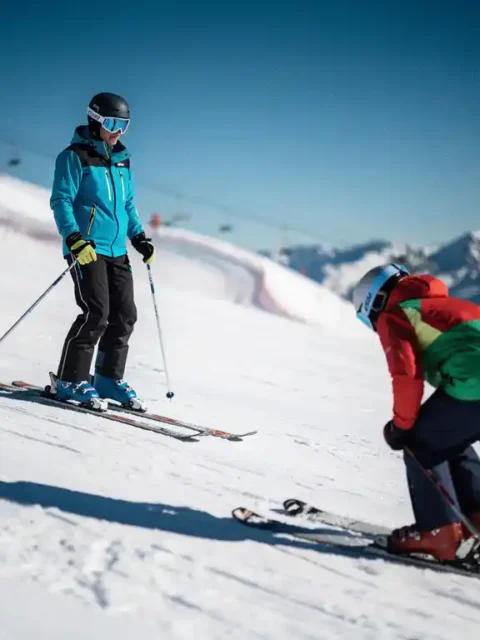
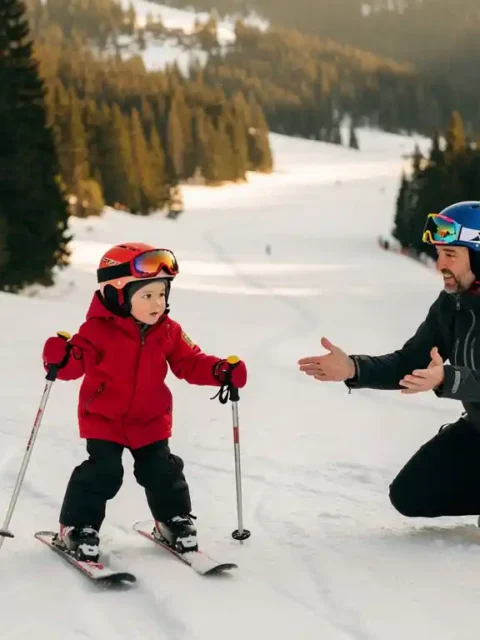
A ski lesson helps beginners develop good posture by providing direct, personal feedback at the moment a mistake occurs. A certified instructor can see at a glance which posture errors you’re making and corrects them before they become habits — something you simply cannot achieve on your own.
In a ski lesson, you learn to build the correct skiing posture step by step: from the basic stance with bent knees and weight on the middle of the foot, to actively using your ankles and keeping your upper body calm. Instructors use exercises and visual cues that help your body feel the right position, not just understand it.
With Ski-Pro, you can easily compare and book ski lessons with more than 250 certified ski schools and instructors in the Alps. Whether you choose a group lesson or a private lesson, our platform helps you find the option that best suits your level, destination, and budget.
Here’s how a ski lesson concretely helps you develop proper posture:
- Immediate feedback: an instructor corrects your posture in real time, so mistakes don’t become ingrained.
- Building muscle memory: through targeted exercises, you learn to feel the correct stance even when you’re no longer thinking about it.
- Safe progression: you only move on to more challenging slopes once your posture is stable enough, which helps prevent injuries.
- Building confidence: good posture gives you control, and control makes skiing enjoyable.
Want to start this season right — without unnecessary pain and with maximum enjoyment on the snow? Compare ski schools and book your lesson through Ski-Pro and take your first steps on the slope with the right technique from the very beginning.
Frequently Asked Questions
How long does it take a beginner to master good skiing posture?
Most beginners notice a clear difference in their posture and control on skis after just 2 to 3 days of lessons. That doesn’t mean the technique is perfect by then, but the basic posture — bent knees, weight on the middle of the foot, calm upper body — can be automated within a few days for most people. Regular lessons and short, focused sessions on the slopes speed up this process considerably.
Can I improve my skiing posture outside of ski season?
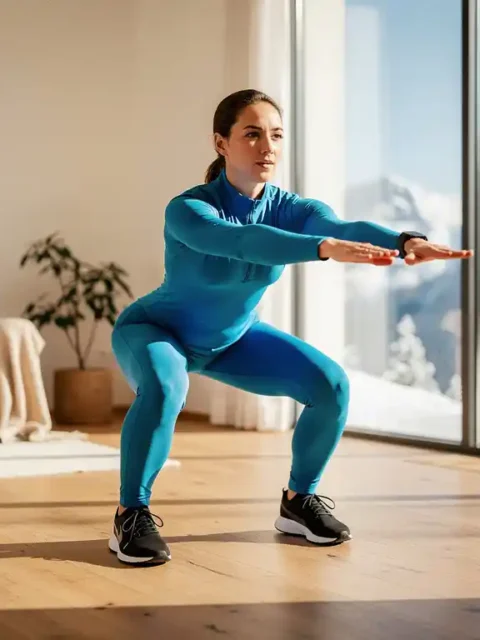
Absolutely. Targeted strength training for the quadriceps, hamstrings, glutes, and the stabilizers around the knee builds a strong physical foundation for better posture on skis. Exercises such as squats, lunges, and balance work on a BOSU ball are particularly effective. The stronger and more stable your body is when you hit the slopes, the easier it is to maintain proper technique — even when you’re tired.
Is a private lesson better than a group lesson if I specifically want to work on my posture?
For targeted posture correction, a private lesson has a clear advantage: the instructor can focus entirely on you and fine-tune your technique step by step without having to consider the rest of a group. A group lesson is great for learning the basic principles, but if you find yourself making the same posture mistake repeatedly or want to make rapid progress, one or two private lessons is a smart investment. Through Ski-Pro, you can easily find both options with certified instructors in the Alps.
What equipment can help support good skiing posture?
Well-fitting ski boots are by far the most important piece of equipment for correct posture. A boot that’s too loose provides insufficient ankle support and makes precise steering nearly impossible, which directly affects the load placed on your knees and back. Have your ski boots professionally fitted at a specialist shop, and consider knee pads if you want extra support during your first seasons on the slopes.