
How long does it take to learn how to ski?
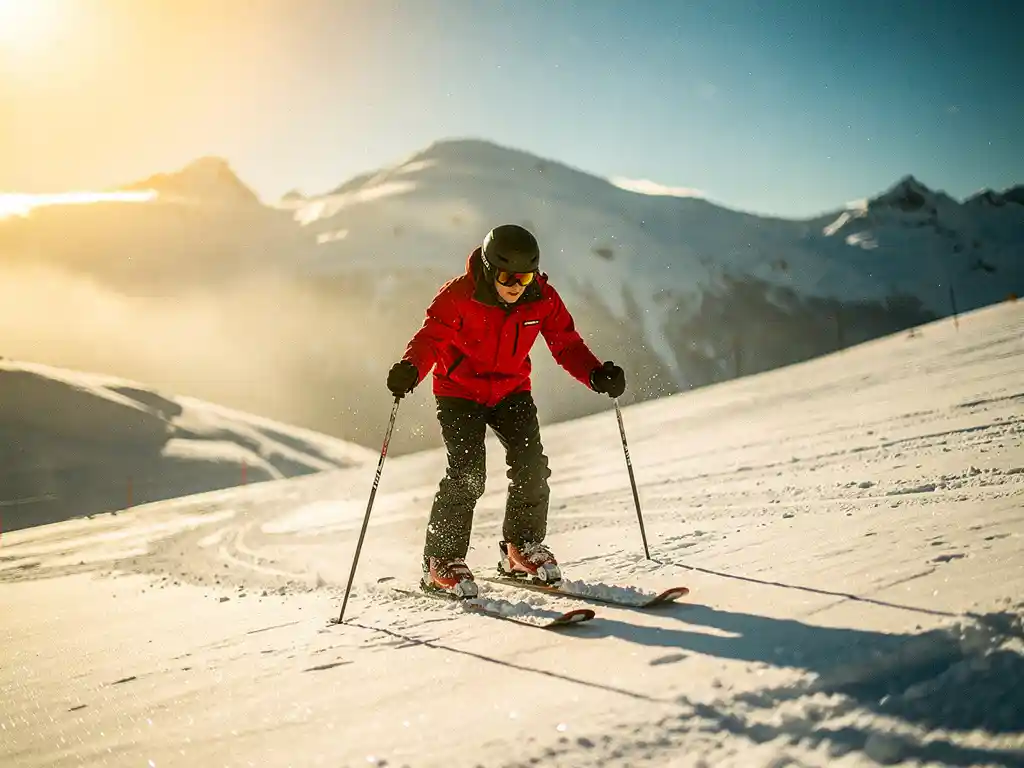
Most beginners learn the absolute basics of skiing, including making turns, stopping, and safely using a ski lift, within three to five days. That may sound surprisingly fast, but it’s true: with proper instruction, you’ll be skiing independently sooner than you think. Exactly how quickly you progress depends on factors such as your age, fitness level, quality of instruction, and how often you practice. In this article, we answer the most frequently asked questions about learning to ski, so you can start your first snow adventure fully prepared.
How quickly can you learn the basics of skiing?
Most beginners master the fundamental skiing skills — including making simple turns, braking with a snowplow, and skiing down a blue run independently — after three to five full days of lessons. After a week of intensive practice, many people already feel comfortable on easy and intermediate slopes. Progress often comes faster than expected, especially with a good instructor.
One of the great things about skiing is that after just the first day, you start to feel the snow beneath your skis. Day one is usually all about falling and getting back up — literally. But by day three, the movements start to come naturally. Your body learns to balance, shift weight, and respond to the slope almost automatically once you put in enough hours.
What “mastering the basics” actually means varies from person to person. For some, it means getting safely down a blue run. For others, it means carving smooth turns on a red run. Set yourself a realistic goal for your first trip: skiing safely and independently on an easy slope. Anything beyond that is a bonus.
What factors determine how quickly you learn to ski?
How fast you learn to ski depends on a combination of personal and practical factors. The most important ones are your age, your general athleticism, the quality of your instructor, how often you practice, and whether you have prior experience with similar sports such as snowboarding, ice skating, or surfing.
Here are the factors that make the biggest difference:
- Athletic background: Anyone used to balancing on a board or ice skating has a head start. The coordination and sense of balance are already there.
- Fitness and muscle strength: Skiing puts a lot of demand on your legs and core. The fitter you are, the longer you can practice without getting tired.
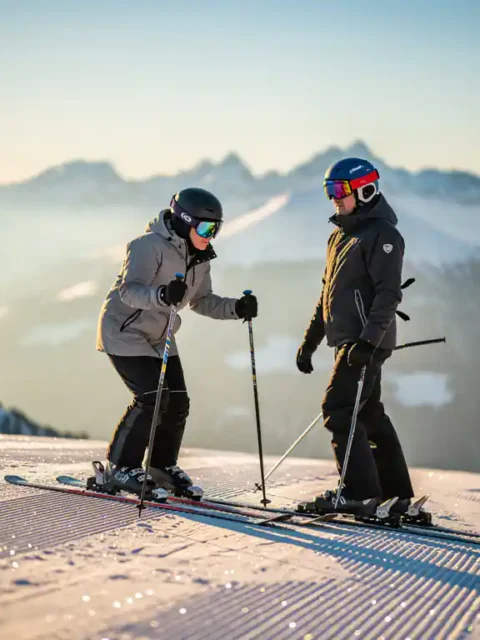
- Quality of instruction: An experienced instructor who explains and corrects technique well will significantly speed up your learning process.
- Mindset: People who aren’t afraid to fall and are willing to make mistakes learn faster. Fear holds back progress.
- Practice time: More hours on skis means building more feel for the sport. Someone who skis every day progresses much faster than someone who takes lessons every other day.
One factor people often underestimate is equipment. Skis that aren’t properly adjusted, or boots that don’t fit correctly, make learning significantly harder. Always make sure your gear fits well before hitting the slopes.
How many ski lessons do you need as a complete beginner?
As a complete beginner, you need a minimum of three to five lessons to get a handle on the basic skiing skills. With five to seven lessons, you’ll be able to ski a blue run independently and make simple turns. More lessons lead to greater confidence and better technique.
Many ski schools offer five-day beginner courses, and that’s no coincidence. Over five days, you build up step by step: from your first shuffling movements on flat ground to skiing down a slope on your own. Each day builds on the previous one, which helps the skills stick.
Going on a shorter trip of three or four days? Then it’s smart to take a lesson every day. Don’t skip a day as a beginner — your body needs repetition to make the movements automatic. After your first week, you’ll have a clear sense of your level and how many additional lessons you need to keep improving.
Do you learn to ski faster with private lessons or group lessons?
You learn to ski faster with private lessons than in a group. A private instructor tailors the pace, exercises, and explanations entirely to your level and learning style. In a group lesson, you share the instructor’s attention with other participants, which slows individual progress. That said, group lessons have their own advantages, such as lower costs and a social atmosphere.
Advantages of private lessons
- The instructor focuses entirely on your technique and gives immediate corrections
- You set the pace — no waiting for others
- Ideal if you want to progress faster or have specific goals
- Great for people who benefit from more one-on-one guidance
Advantages of group lessons
- Less expensive than private lessons
- You learn from fellow skiers and their mistakes
- Fun and motivating, especially for children and teenagers
- Great for people who enjoy learning alongside others
The right choice depends on your budget, your learning style, and how quickly you want to progress. Want to get as far as possible in one week? Go with private lessons. Heading out for the first time with friends or family and want to keep it social? Then group lessons are a great option.
At what age is it easiest to learn to ski?
Children between the ages of four and twelve find it easiest to learn to ski. At a young age, the brain is particularly good at picking up new motor skills, and children naturally have less fear of falling. Adults can absolutely learn too, but it generally takes a little more patience and time.
Children have a low center of gravity, which makes them more stable on skis. They fall without thinking, get back up, and simply try again. That fearlessness is a huge advantage. Many children who start young are already skiing independently on easy slopes after just a few days.
But don’t be discouraged as an adult beginner. People who step onto skis for the first time in their thirties, forties, or even fifties learn just fine. It might take a little more effort to quiet that inner voice saying “careful, you might fall,” but with the right instructor and a bit of determination, you’ll absolutely get there. Making your first turns on a snow-covered slope is an unforgettable feeling at any age.
How do you maintain your progress between ski trips?
You maintain your progress between ski trips by actively working on your fitness, balance, and muscle strength at home. Targeted exercises for your legs, core, and balance ensure your body is ready when you’re back on the slopes — so you don’t have to start from scratch on your next trip.
Practical ways to stay in shape for your next ski vacation:
- Squats and lunges: Strong quads are essential for making turns and absorbing the impact of the slope.
- Balance exercises: Stand on one leg, use a balance board, or do yoga. Skiing constantly requires small balance adjustments.
- Core training: A strong core keeps you stable in turns and reduces the risk of injury.
- Indoor ski slopes: There are indoor ski slopes in the UK and across Europe where you can practice year-round — perfect for keeping your technique sharp.
- Visualization: It might sound strange, but mental training really works. Picture yourself carving smooth turns down a red run. Elite athletes do it too.
The longer the gap between trips, the more important it is to stay active. Someone who does nothing for a year will find that first day back on skis takes some getting used to. Someone who keeps training at home will be back in their rhythm within five minutes.
How Ski-Pro helps you get on the slopes faster
Now that you know how long it takes to learn to ski and what you can do to progress more quickly, the next step is simple: book the right lesson. And we’re here to help you do just that. Whether you choose private or group lessons, a children’s course or a beginner course for adults, we make comparing and booking as easy as possible.
Here’s what you’ll find with us:
- Access to more than 250 certified ski schools and instructors in the Alps
- Lessons for all levels, from complete beginner to advanced skier
- Transparent pricing, so you always know exactly what to expect
- Easy comparison by location, lesson type, price, and availability
- Both private and group lessons available at top destinations in Austria, Switzerland, and France
Ready to make your first turns on a real Alpine slope this season? Compare and book your ski lesson and take the first step toward your unforgettable snow adventure.
Frequently Asked Questions
Should I practice at home before my first ski trip?
It’s not required, but it’s definitely recommended. Doing squats, lunges, and balance exercises at home beforehand helps you build the muscle strength you’ll need on the slopes. You’ll tire less quickly during your lessons and be able to practice more effectively for longer, which will significantly speed up your learning process.
What if I still can't ski independently after five days of lessons?
Don’t panic — everyone learns at their own pace. Factors such as fear, fatigue, or poorly fitting equipment can slow your progress. Talk to your instructor: they can adjust their approach, suggest additional exercises, or switch to private lessons to help you move forward more quickly.
Is it better to learn on real snow right away as a beginner, or start at an indoor ski slope?
Both options work, but an indoor ski slope is ideal for practicing the very first basic movements without the crowds and distractions of a real mountain. Once you’ve got the basic stance and snowplow down, you’ll progress much faster on real snow thanks to the variety in terrain, snow conditions, and gradient.
How do I choose the right ski school for my level and goals?
When choosing a ski school, look at the certification level of the instructors, the availability of lessons in your language, and the group size for group lessons. Through Ski-Pro, you can easily compare more than 250 certified ski schools and instructors by location, price, lesson type, and availability — so you always find the best match for your situation.