
What are the first ski techniques you learn as a beginner?
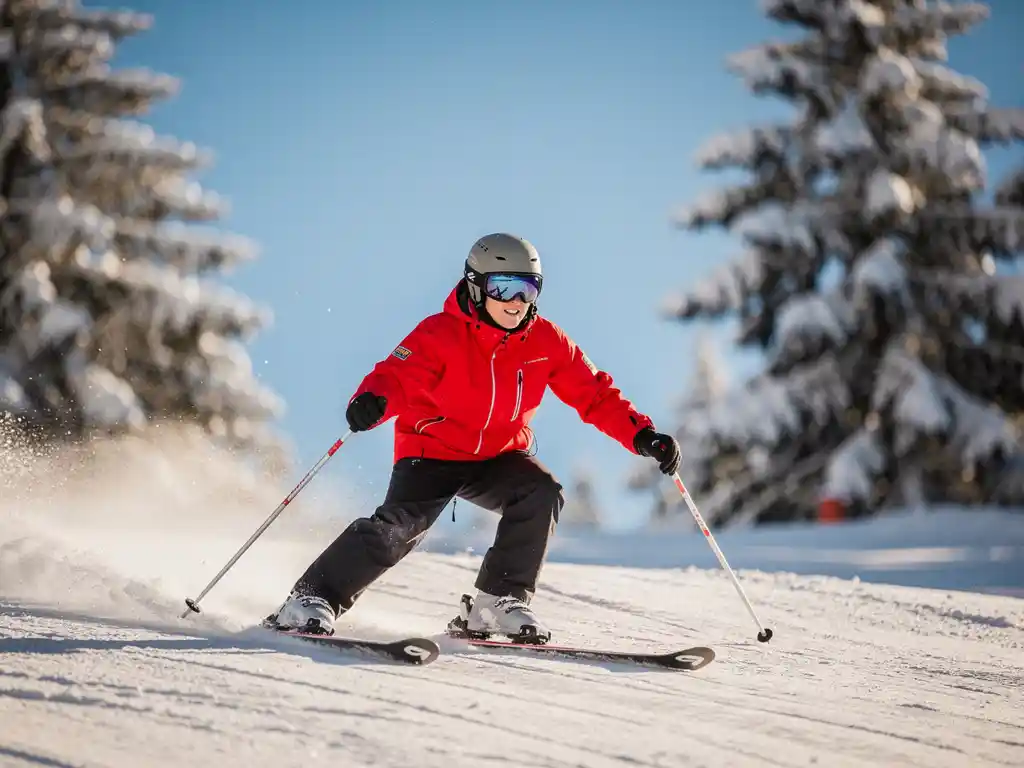
As a beginner, you first learn the basic stance on skis, how to stop safely, and how to change direction using the snowplow position. These initial ski techniques form the foundation for everything that comes after. In this article, we answer the most frequently asked questions about what you can expect during those first hours and days on the slopes.
What does a first ski lesson actually look like?
A first ski lesson almost always begins on flat terrain or a gentle slope, well away from the busy runs. Your instructor will first show you how to put on your skis, how to stand, and how to distribute your weight. After that, you’ll practice stepping, sliding, and falling without fear. Stopping and steering come later.
Don’t expect a spectacular descent on day one. A good beginner ski lesson is built around small, manageable steps. Your instructor will assess your level and adjust the pace accordingly. That might sound boring, but it’s precisely this approach that ensures you’ll come down the blue run with confidence after just a few lessons.
A typical first lesson goes like this:
- Getting familiar with your equipment: boots, bindings, and poles
- Practicing the basic stance on flat ground
- Learning to walk and glide on skis
- First exercises with the snowplow position
- Controlled braking and stopping on a gentle slope
The atmosphere in a good ski lesson is relaxed and encouraging. Falling is part of the process, and an experienced instructor makes it a natural part of learning — not something to be embarrassed about.
What is the snowplow and why is it the first technique you learn?
The snowplow is a ski technique in which you push the tips of your skis toward each other and the heels outward, so that your skis form a V-shape. This position gives beginners immediate control over speed and direction without requiring advanced balance or strength. That’s why it’s the first real ski technique beginners learn.
The power of the snowplow lies in its simplicity. By applying more or less pressure to the inside edges of your skis, you control how hard you brake. Push your heels far apart and you brake firmly. Keep the V-shape narrower and you glide more smoothly downhill. This direct connection between action and reaction quickly gives beginners a sense of control.
The snowplow is also the foundation for making your first turns. By shifting slightly more weight onto your left ski, you turn right, and vice versa. You don’t yet need to rotate your entire body or shift your weight dramatically. That simplicity makes it the perfect starting position for anyone just beginning to ski.
How do you learn to stop and brake on skis?
As a beginner, you stop on skis by intensifying the snowplow position: push your heels further outward and apply pressure to the inside edges of both skis. The wider you open the V-shape and the more pressure you apply, the faster you slow down until you come to a complete stop. This is the safest and most reliable braking method for beginners.
Many beginners make the mistake of leaning their body backward when they feel nervous. It feels safer, but the effect is actually the opposite: your skis lose grip and you go faster. The key is to bend your knees slightly and keep your weight gently forward, even when braking. Your instructor will emphasize this again and again — and for good reason.
In addition to the snowplow brake, you’ll also learn how to cut across a slope at an angle to reduce speed, a technique known as traversing. This is useful on steeper sections where you want to pause briefly or catch your breath. Braking and stopping are not secondary skills — they are the foundation of safe skiing and are practiced extensively in every beginner lesson.
What is the difference between the snowplow and the parallel technique?
The biggest difference between the snowplow and the parallel technique is the position of the skis. In the snowplow, your skis are in a V-shape; in the parallel technique, they run side by side. The parallel technique is more efficient, faster, and used on more challenging runs, but it requires greater balance, strength, and body control than the snowplow.
In the parallel technique, you no longer steer with the V-shape. Instead, you turn your entire body and shift your weight in the direction of the turn. Your knees, hips, and shoulders all work together. The skis carve through the snow rather than braking against it. This creates a much smoother and more dynamic feeling, but it also demands a solid foundation.
The transition from snowplow to parallel is gradual. Many ski schools use an intermediate step called the wedge turn, where you start from the snowplow position and bring your skis closer to parallel at the end of the turn. This builds the technique organically. Don’t expect to be skiing fully parallel after one week, but you’ll take your first steps in that direction sooner than you think.
How do beginners make their first turns on skis?
As a beginner, you make your first turns from the snowplow position by shifting slightly more weight onto the ski on the outside of the turn. Want to go left? Apply more pressure to your right ski. Want to go right? Press on your left ski. You barely need to rotate your body — the weight shift does the work.
The secret to a good turn is not pulling into it, but leaning into it. Many beginners try to actively rotate their body, but this actually disrupts their balance. Let the ski do the work by calmly shifting your weight and bending your knees slightly in the direction of the turn.
Start by practicing individual turns to the left and right on a wide, gentle slope. Once that feels comfortable, link them together into a zigzag pattern from turn to turn. This is the moment when skiing really starts to become fun: you have control, you’re moving fluidly, and for the first time you feel the rhythm of the mountain.
When is a beginner ready for a more difficult run?
As a beginner, you’re ready for a more difficult run when you can safely brake, stop, and make controlled turns on a blue run without panicking. You don’t need to ski perfectly, but you do need to be in control — able to set your own pace and avoid dangerous situations.
A good rule of thumb: if you can ski a blue run from top to bottom without falling and without picking up uncontrolled speed, you’re probably ready for a new challenge. Always check with your instructor first. They know your level inside and out and can tell you exactly whether you’re ready or whether another day on the blue run will benefit you more.
Red runs are steeper and narrower than blue runs, and snow conditions can be more demanding. Never attempt a more difficult run on your own if you have any doubts. Skiing is most enjoyable when you challenge yourself just enough without pushing past your limits. Finding that balance is a skill in itself.
Do private lessons or group lessons help beginners progress faster?
In most cases, private lessons help beginners progress faster than group lessons, because the instructor can give you their full attention and tailor the pace and exercises to your specific learning style and level. In a group lesson, however, you also learn from fellow skiers, and the atmosphere is often more relaxed — which works better for some people.
Benefits of private lessons for beginners
With a private lesson, you receive direct, personal feedback on every movement. Your instructor immediately sees what you can adjust and adapts the lesson in real time. This is especially valuable in the first few hours, when small corrections make a big difference. If you feel anxious or face a specific challenge, your instructor can focus on it entirely.
Benefits of group lessons for beginners
A group lesson is more affordable and gives you the chance to learn alongside others. You see how fellow skiers make the same mistakes and how they work through them — which is both instructive and reassuring. Group lessons also have a social dimension: you share the fun, the frustration, and ultimately the pride of your first successful run.
The best choice depends on your personality, budget, and how quickly you want to progress. Many beginners opt for a combination: one or two private lessons to build a solid foundation, followed by group lessons to practice and enjoy the social experience.
How Ski-Pro helps you find the right ski lesson
As a beginner skier, you don’t want to spend endless time comparing options and second-guessing yourself. You just want to get on the slopes as quickly as possible, with the right guidance. That’s exactly where we come in. Through Ski-Pro, you can easily compare and book lessons with more than 250 certified ski schools and instructors throughout the Alpine region. Whether you choose a private lesson in Tyrol or a group lesson in the French Alps, we make it straightforward and accessible.
Here’s what you’ll find with us:
- A wide range of private and group lessons for beginners
- Transparent pricing so you’re never caught off guard
- Certified instructors matched to your level and location
- Easy comparison by price, availability, and reviews
- Lessons in popular destinations such as Austria, Switzerland, and France
Your first snow adventure starts with the right lesson. Compare today and take that first step onto the slope with confidence!
Frequently Asked Questions
How long does it take before a beginner can ski independently?
Most beginners have enough of a foundation to ski a blue run independently after 3 to 5 days of lessons. This varies from person to person and depends on factors such as your athletic background, how often you take lessons, and how quickly you pick up the technique. Don’t expect to be fully independent after just one day, but with consistent guidance you’ll make noticeable progress quickly.
What equipment do I need as a beginner skier, and should I buy or rent it?
As a beginner, we strongly recommend renting skis, ski boots, poles, and a helmet rather than buying them. Rental equipment is professionally fitted to your size and level, which benefits both safety and comfort. Only consider buying your own equipment once you’re certain that skiing is right for you and you plan to hit the slopes regularly.
Is it normal to fall a lot during my first days on skis, and how do I fall safely?
Falling is a completely normal and even useful part of the learning process. To fall safely, bend your knees, sit back into the snow, and let go of your poles so you don’t injure yourself. Try not to reach out or stay rigid when you fall. Your instructor will practice this with you so you can learn without fear.
Can I still learn to ski well as an adult beginner, or is it too late?
It is absolutely not too late to learn to ski as an adult. Adults have the advantage of understanding instructions more easily and approaching technique more consciously. The learning process may require a little more patience than it does for children, but with the right guidance and realistic expectations, adult beginners can also make rapid progress. Many ski schools offer lessons specifically designed for adult beginners.