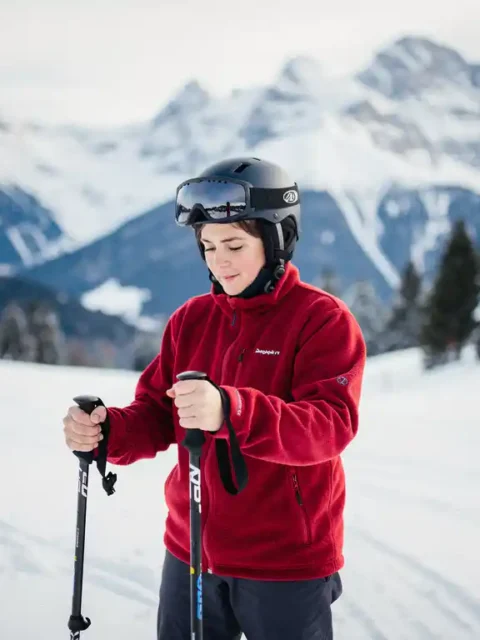

How do you keep your knees bent while skiing?
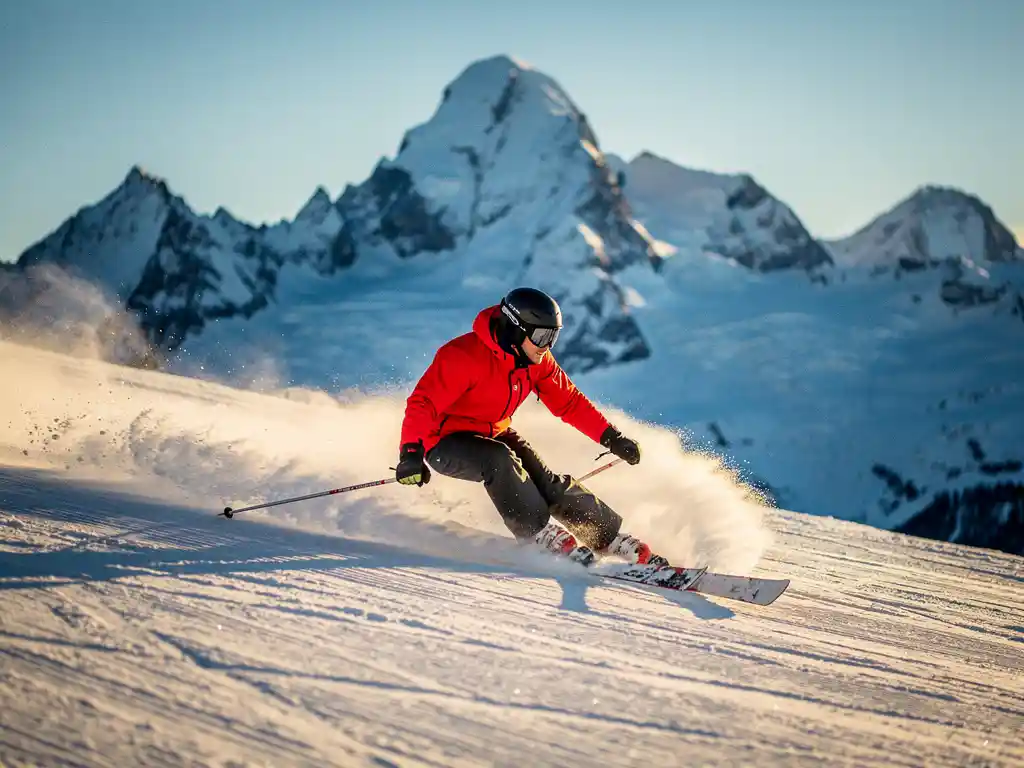
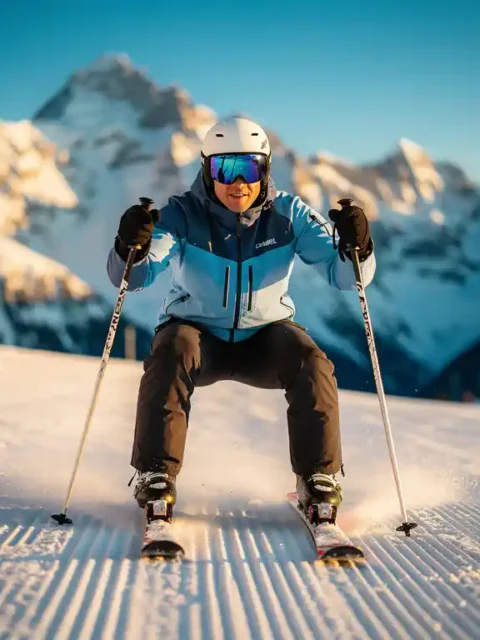
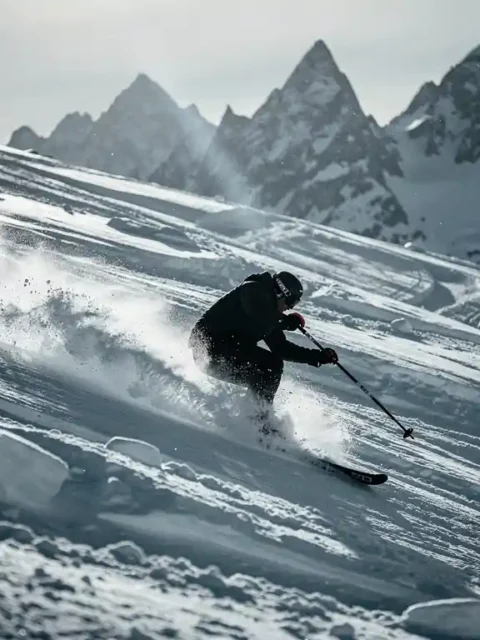
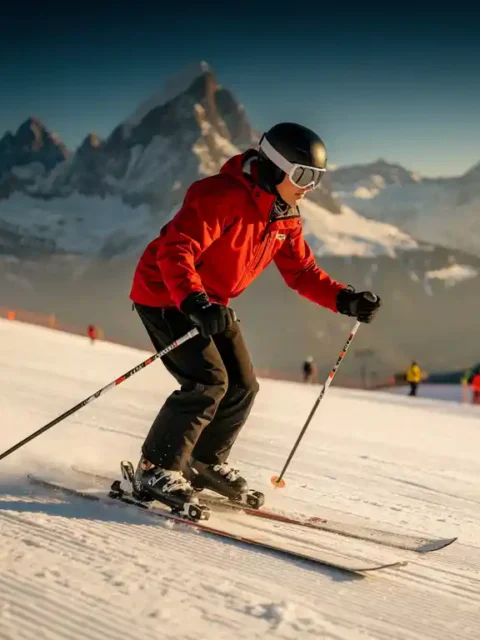
Keeping your knees bent while skiing means consciously flexing your hips, knees, and ankles into a springy, dynamic stance. This sounds simple, but for most beginners it feels unnatural. The urge to stand upright is strong, yet a slight knee bend is precisely the foundation of proper skiing posture. In this article, we answer the most frequently asked questions about knee position on the slopes.
Why is it so hard to keep your knees bent?
Keeping your knees bent while skiing is difficult because your body naturally seeks an upright position. Your balance system is accustomed to flat surfaces, and as soon as you stand on a slope with skis on your feet, your body automatically defaults to its most familiar position: standing straight up. That is exactly what you do not want on the slopes.
On top of that, skiing places significant demands on your muscles. Maintaining bent knees takes energy, and as soon as you get tired, your legs straighten almost on their own. Your body looks for rest — but on skis, that “resting position” is actually dangerous. You lose grip on your skis, your weight shifts backward, and your control vanishes in an instant.
There is also a mental component. On a steep slope, leaning forward feels scary. Instinctively, you lean back — and your knees straighten along with it. It is a vicious cycle that many beginners recognize. The good news: with the right awareness and practice, you can break this pattern faster than you think.
Which muscles do you need to stay in a bent skiing position?
To maintain a bent skiing position, you primarily use your quadriceps (the large muscles at the front of your thighs), your glutes, and your core muscles. Together, these muscle groups allow you to hold a stable, responsive stance over longer distances and on varied terrain.
The quadriceps are the real heroes on the slopes. They absorb the impact of every turn and keep your knees at the desired angle. This is also why beginners often have heavy legs after a day of skiing — these muscles simply are not used to this kind of sustained load.
Your glutes support hip stability and prevent you from collapsing in the wrong places. Your core muscles — those around your abdomen and lower back — keep your upper body calm and controlled while your legs do the work. Without a strong core, you automatically compensate with your back, which throws your posture off balance.
How do you know if your knees are bent enough?
Your knees are bent enough when your shins press lightly against the tongue of your ski boot, your weight rests noticeably on the middle of your foot, and your hips are slightly lower than your shoulders. A useful rule of thumb: when you look straight down, your knees should cover the tips of your ski boots.
A practical test is the so-called “bounce test.” Stand still on a flat section and bounce gently a few times. Do you feel pressure on your shins? Then you are in the right position. Feel nothing, or does your weight rest more on your heels? Then you are standing too upright and need to tilt slightly more forward from your ankles.
Many beginners think they are in a bent position when in reality they are only rounding their back. That is a classic mistake. The bend must come from the ankles and knees, not from the lower back. Ask an instructor or a fellow skier to watch you for a moment. A fresh outside perspective reveals in just a few seconds what you cannot feel yourself.
What exercises help improve your knee position?
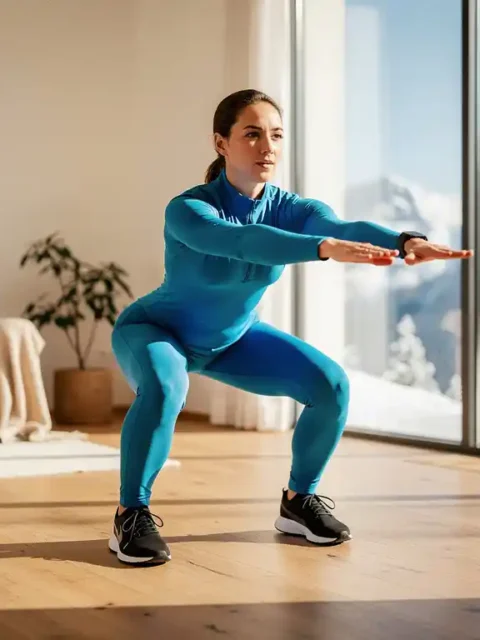
The best exercises for improving your knee position for skiing are squats, wall sits, lunges, and balance work on a BOSU ball or balance board. These exercises strengthen exactly the muscles you need while simultaneously training your sense of proper posture.
Strength exercises for the slopes
- Squats: The classic squat is the best preparation for a skiing stance. Place your feet shoulder-width apart, bend your knees as if you are sitting down in a chair, and keep your back straight. Perform the movement slowly and in a controlled manner.
- Wall sit: Lean your back against a wall and slide down until your knees form a 90-degree angle. Hold this position for as long as possible. This simulates exactly the static load you experience on the slopes.
- Lunges: Step forward and lower your knee toward the ground. Alternate between left and right. Lunges train balance and single-leg strength, which directly mirrors the alternating demands of skiing.
Balance exercises for a better feel on skis
- BOSU ball: Stand on the dome side of a BOSU ball and try to maintain your balance with slightly bent knees. This trains your stabilizing muscles and improves your reaction time.
- Balance board: Using a wobble board at home in the weeks before your ski trip is an excellent way to prepare your knees and ankles for the dynamic movements on the slopes.
Ideally, start these exercises four to six weeks before your ski trip so your muscles have time to adapt to the demands.
What are the most common knee position mistakes in skiing?
The most common knee position mistakes in skiing are standing too upright, letting the knees collapse inward (knock-knees), compensating with the back instead of the knees, and shifting your weight too far backward. All of these errors lead to less control and a greater risk of injury.
- Standing too upright: The most common mistake among beginners. You feel more stable, but your skis respond more slowly and you have less grip on the snow.
- Knees collapsing inward: Also known as “knock-knees” or valgus alignment. Your knees cave inward, placing significant stress on the knee joints and reducing your control.
- Rounding the back instead of bending the knees: Many beginners think they are sitting low enough, but they are only bending their back. The bend must come from the ankles and knees, not from the spine.
- Weight shifted backward: When your weight rests on your heels, you lose control of your ski tips. Your skis go where they please, and making turns becomes considerably harder.
Awareness is the first step. Once you know what to look out for, you will correct yourself much more quickly on the slopes.
Does a ski lesson help with learning the correct knee position?
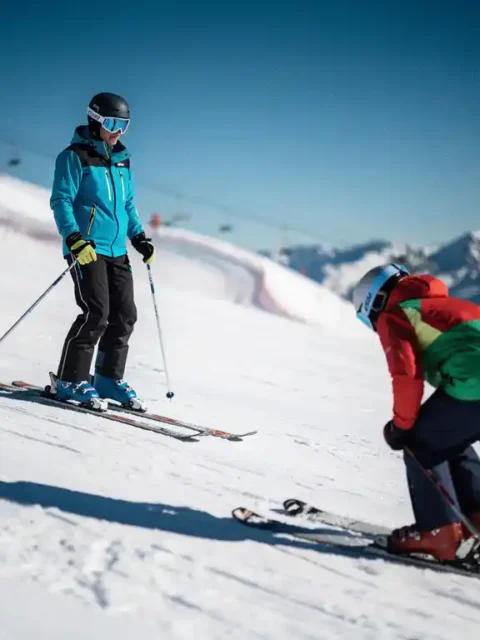
Yes, a ski lesson is enormously helpful for learning the correct knee position. A certified ski instructor can see at a glance what is going wrong with your posture and provides immediate, personalized corrections. That is something no video or article can fully replace — especially for beginners who do not yet have a feel for the right position.
In a ski lesson, you learn not only the technique but also how that technique is supposed to feel. A good instructor uses vivid cues such as “push your shin into the ski boot” or “sit as if you are leaning against a bar stool” to help your body experience the correct posture. That physical experience sticks far better than theory alone.
Group lessons are affordable and enjoyable, but if you want to make rapid progress with your proper skiing posture, a private lesson is the most effective option. Your instructor can focus entirely on your specific mistakes and adjustments, without having to account for the rest of the group.
How Ski-Pro helps you find the right ski lesson
Want to truly master that knee position? Then a great ski lesson is the fastest route to success on the slopes. Through Ski-Pro, you can easily compare and book lessons with more than 250 certified ski schools and instructors in the Alps. Whether you choose a group lesson in Tyrol or a private lesson in Switzerland, we help you find the perfect match. Here is what we take care of for you:
- A clear overview for comparing ski schools by location, price, and level
- Transparent information on availability and costs
- Personal advice on which type of lesson suits you best
- Easy online booking, so you can focus on enjoying the snow
You have come to the right place if you want to start your winter sports adventure stress-free and well prepared. Compare ski schools and book your lesson today!
Frequently Asked Questions
How quickly can a complete beginner learn the correct knee position?
Most beginners notice a clear improvement in their knee position after just one or two full days of lessons, especially if they have been doing exercises like squats and wall sits at home beforehand. However, the true feel for the correct position develops over multiple runs and ski days. Consistency is key: the more often you consciously pay attention to your posture, the faster it becomes second nature.
What should I do if my knees hurt during or after skiing?
Knee pain while skiing is often a sign that your knees are collapsing inward (valgus alignment) or that your muscles are too fatigued to maintain the correct posture. In that case, take a rest, slow down, and ski shorter runs. If you regularly experience knee problems, consult a physiotherapist before your next ski trip so you can work specifically on stability and muscle strength.
Does the type of ski boot matter for my knee position?
Yes, absolutely. A ski boot that does not fit properly or has the wrong stiffness makes it much harder to maintain the correct knee position. A boot that is too soft provides insufficient support, while a boot that is too stiff limits your range of motion. Always have your ski boots professionally fitted at a specialist shop, because a proper fit is the foundation of everything.
Is it worth practicing on a balance board at home if I have never skied before?
Absolutely. Practicing on a balance board or BOSU ball in the weeks before your ski trip helps activate your stabilizing muscles and gets your body used to holding a bent position under light load. On the slopes, you will notice that you gain control of your movements more quickly and tire less easily. It is a small investment of time that pays off directly on the snow.