
How do you brake as a beginner skier?
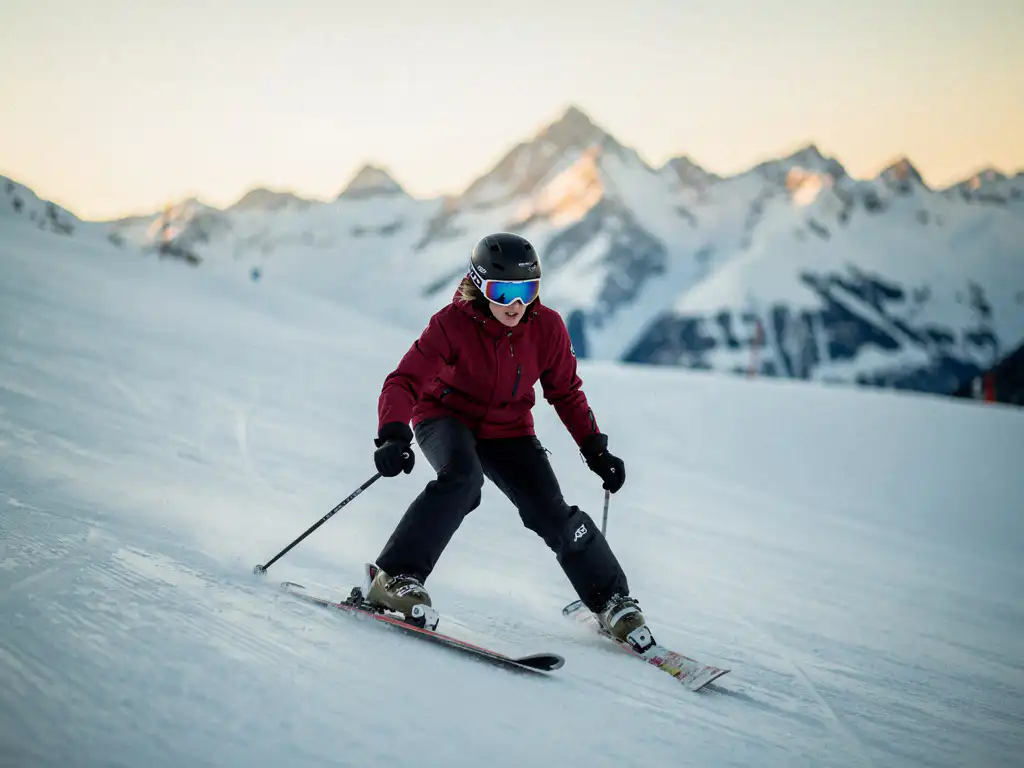
As a beginner skier, you slow down by using the snowplow position: you point the tips of your skis toward each other in a V-shape and press the inner edges of your skis into the snow. This technique reduces your speed immediately and gives you control over your descent. In this article, we answer the most frequently asked questions about braking on skis, from your first snowplow to making the switch to parallel turns.
Which braking position do you learn first on skis?
The first braking position you learn as a beginner skier is the snowplow, also known as the pizza wedge or snowplow position. You bring the tips of your skis close together and push the tails wide apart, so your skis form a V-shape. By applying pressure to the inner edges, you create resistance against the snow and reduce your speed.
The snowplow is the absolute foundation of ski technique for beginners. It is easy to learn, gives you an immediate sense of control, and works on virtually every blue or green run. You don’t need to use a lot of force — it’s about positioning your skis correctly and distributing your weight. Once you have this position down, everything else builds on top of it.
What makes the snowplow so valuable is that it serves two purposes at once: braking and steering. By shifting a little more weight onto your left ski, you turn right. By shifting more weight onto your right ski, you turn left. This is how you make your first real turns on the slope.
How do you set up the snowplow correctly?
You set up the snowplow correctly by placing your skis in a V-shape, bending your knees slightly, and distributing your weight evenly across both skis. Actively press the inner edges of your skis into the snow by turning your ankles inward. The wider the V, the more resistance you create and the more effectively you brake.
Step by step, a correct snowplow looks like this:
- Stand upright with your skis parallel to each other.
- Slowly push the tails of your skis outward so the tips come toward each other.
- Bend your knees slightly, as if you are about to sit down.
- Tilt your ankles inward to press the inner edges of your skis into the snow.
- Keep your upper body relaxed and your eyes focused on the slope ahead of you.
A common mistake is that beginners lean their weight too far back. This feels safer, but it actually reduces your control. Keep your weight slightly forward, over your ski boots. Also relax your shoulders — tension in your upper body makes steering more difficult.
Why does braking sometimes fail on steeper slopes?
On steeper slopes, braking sometimes fails because gravity pulls harder than the resistance your snowplow generates. The steeper the slope, the more strength you need to hold your skis in the correct position. At that point, beginners often lack the muscle strength and technique to keep the snowplow wide enough.
There are a few reasons why the snowplow breaks down on steep terrain:
- The V is too narrow: The steeper the slope, the wider your snowplow needs to be to provide enough resistance.
- Weight too far back: On a steep slope, the tendency to lean backward is strong, which reduces the grip of your skis.
- Tension in the body: Fear causes you to freeze up, making it impossible to execute the technique correctly.
- Entering at too high a speed: If you are already going too fast before you try to brake, the snowplow will struggle to slow you down.
The solution is to tackle steeper slopes only once you have fully mastered the snowplow on flatter runs. Always traverse diagonally across the slope rather than heading straight down, so you accelerate less quickly. And trust your instructor to prepare you step by step for more challenging terrain.
What is the difference between slowing down and stopping on skis?
Slowing down on skis means reducing your speed while continuing to move. Stopping means coming to a complete standstill. The difference lies in the intensity of the technique: when slowing down, you use a small snowplow; when stopping, you make the V as wide as possible and press firmly on the inner edges of your skis until you come to a halt.
For beginners, stopping is often harder than slowing down, because it requires more strength and nerve. A good way to stop is the so-called hockey stop, but that is for advanced skiers. As a beginner, the safest way to stop is by:
- Making your snowplow as wide as possible.
- Applying maximum pressure to the inner edges of your skis.
- Bringing your weight slightly forward for more grip.
- If necessary, traversing diagonally into the slope until you gradually come to a stop.
It is also perfectly fine to use a soft, flat area as a “landing zone” to come to a stop. Experienced skiers plan their stop in advance — they pick a spot and work toward it. As a beginner, it is well worth practicing this too.
When do you switch from the snowplow to parallel turns?
You switch from the snowplow to parallel turns when you have fully mastered the snowplow, can keep your speed under control on blue runs, and can steer your turns smoothly. Most beginners are ready to take their first steps toward parallel technique after a few days of intensive lessons.
The transition does not happen overnight. An intermediate step is the so-called stem turn: you begin the turn in a snowplow and bring your skis parallel halfway through. This way, you gradually get used to the feeling of skiing parallel without completely letting go of the security of the snowplow.
Signs that you are ready to make the switch:
- You ski on blue runs in a relaxed manner and without panic.
- You can consciously adjust your speed by varying the width of your snowplow.
- You make fluid turns without having to think too hard about every step.
- Your instructor tells you that you are technically ready for the next step.
Do not force the switch too early. Parallel turns feel like freedom and speed, but they require a solid foundation. Skiers who skip the snowplow often miss the fundamentals they will need later on more challenging terrain.
Which ski lesson helps you learn to brake most quickly?
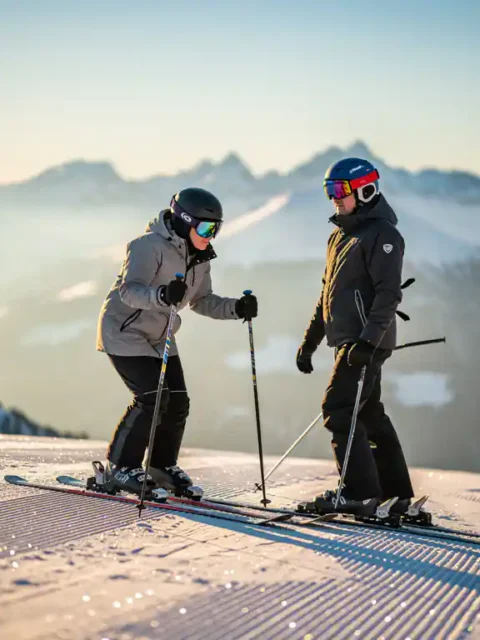
A private lesson with a certified ski instructor is the fastest way to learn how to brake properly. An instructor tailors the explanation directly to your level, corrects your posture in real time, and provides exercises that match exactly what you need. Group lessons work well too, but the personal attention in a private lesson significantly accelerates your learning process.
What sets a good beginner ski lesson apart:
- The instructor starts on a flat or gently sloping run so you can practice the snowplow without stress.
- Attention is paid to body posture, not just the position of your skis.
- You receive direct feedback after each exercise so you can correct mistakes immediately.
- The lesson builds up step by step: from standing still to moving, from moving to steering, from steering to braking.
Whether you choose a group lesson in Winterberg or a private lesson in Tyrol, the quality of your instructor makes the biggest difference. Not every ski school is the same, and as a beginner you want to be sure you are in good hands.
How Ski-Pro helps you take your first steps on the slope
As a beginner skier, you don’t want to spend endless time searching for the right lesson. You just want to get on the slope as quickly as possible, with an instructor who is truly the right fit for you. That is exactly what we help you with. Through Ski-Pro, you can easily compare lessons from more than 250 certified ski schools and instructors throughout the Alpine region. Whether you are looking for a group lesson for your family or a private lesson to quickly get your braking technique under control, we make it straightforward and affordable.
What you will find with us:
- Hundreds of certified instructors at all levels, including beginners.
- Transparent pricing so you are never caught off guard.
- Lessons at top destinations such as Austria, Switzerland, and France, as well as closer to home in Winterberg or Willingen.
- Easy online comparison and instant booking, without any hassle.
You dream of your first real run down the mountain. We make sure you start it well prepared. Compare and book your ski lesson today and hit the slopes with confidence!
Frequently Asked Questions
How long does it take to learn to brake properly on skis as a beginner?
Most beginners have the basic snowplow down after one or two lessons. To brake confidently and in a controlled manner on blue runs, you generally need two to four days of practice. A private lesson with a certified instructor can significantly speed up this process, as you receive immediate personal feedback on your posture and technique.
What common mistake should beginner skiers absolutely avoid when braking?
The most common mistake is leaning your weight too far back out of fear of speed. This feels safer, but it actually reduces the grip of your skis and makes braking harder. Always keep your weight slightly forward, over your ski boots, and keep your knees bent for maximum control.
Can I practice braking on skis on my own without an instructor?
Yes, you can, but only after a certified instructor has taught you the correct technique. Always practice the snowplow first on a flat or gently sloping run, and gradually work your way up to steeper slopes. Practicing on your own without a solid foundation increases the risk of developing bad habits that are harder to correct later on.
What type of ski lesson is best suited if I specifically want to learn how to brake and stop?
A private lesson is the most effective choice if you want to focus specifically on braking and stopping, as the instructor tailors the lesson entirely to your learning needs. Through platforms like Ski-Pro, you can easily compare certified instructors in your ski area and book directly. Group lessons for beginners are a good and affordable alternative, as long as the group is small and the instructor can give you sufficient attention.